Topic
Sign in
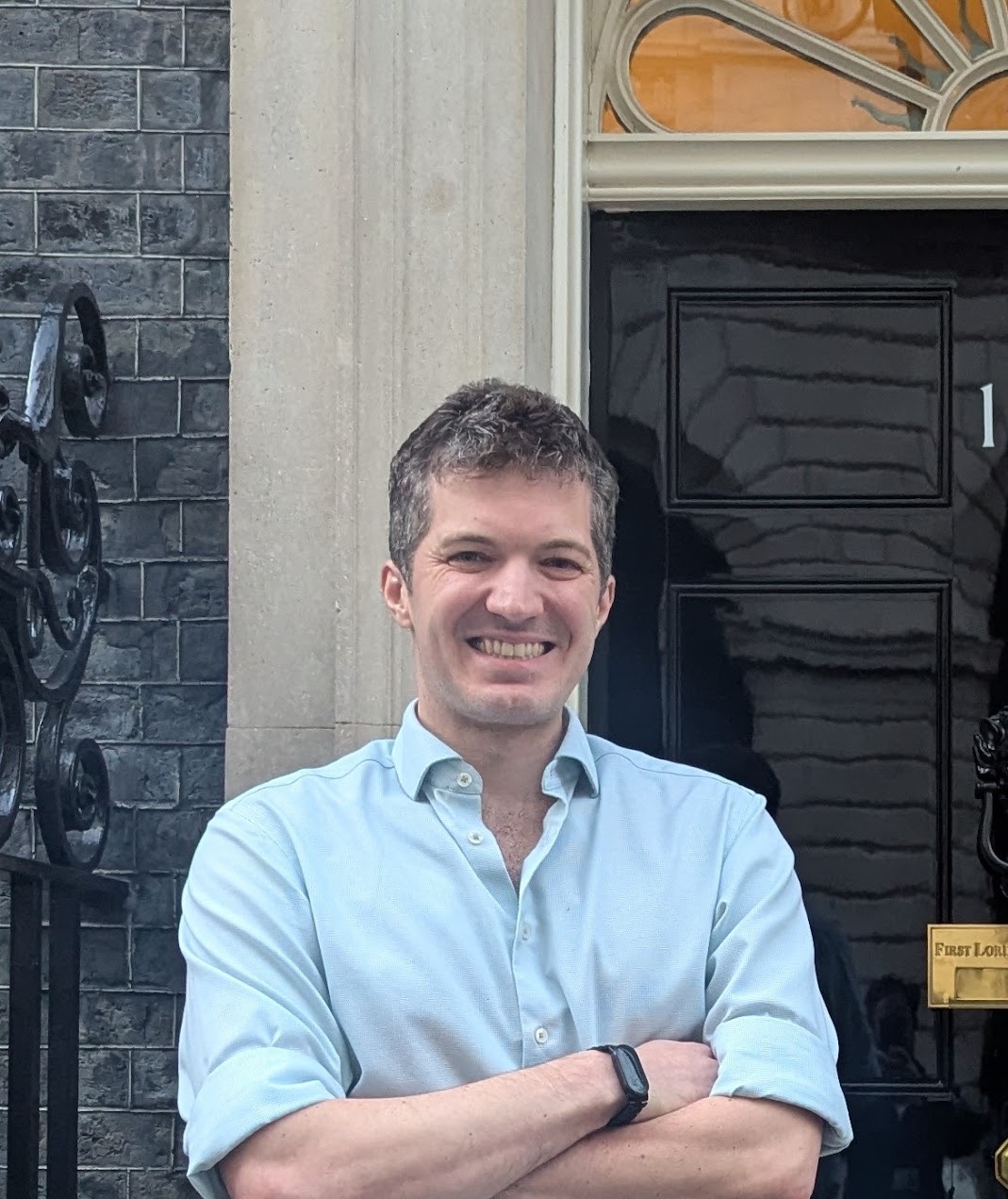
Yiannis Ravanis

Yiannis Ravanis

Fellowship Candidate

I'm an engineer and creative technologist with a background in Electronics & Electrical Engineering. I began my career in R&D for autonomous vessels, where I was design authority for perception on a world-first GPS-denied autonomous docking system, building bespoke robotic perception systems with LIDAR, infrared cameras, and applied ML, while also working as an agile coach leading continuous delivery and organisational culture change.

I build systems and I bring people together. I've run hackathons and collaborative painting workshops. I like making containers where other people can do their best work. I figure things out by building, testing, and iterating: scrappy, empirical, fast.

For the past year I've been building ideologos.com, a "Socratic AI" that helps people form their own opinions rather than telling them what to think. Ideologos acts as an ideological midwife, helping you discover the "unknown knowns" that comprise your ideology.

I want to understand governance paradigms, what each is good at, why it emerges, why it fails. I want to experiment with what comes after representational party based democracy. Our votes can now cary meaning. Can these new technologies change how we practice group decision-making?

I'm interested in exploring democratic AI governance as one of the few real levers on the metacrisis and the climate crisis underneath it. AI governance in both directions: governing AI democratically, and using AI to help communities govern themselves.

I don't think this is obviously solvable, but if we can learn to govern a small community well, maybe it fractalises.

I'm drawn to Newspeak House because it's one of the few places that treats this as a craft to practise and experiment with, not a topic to theorise.


Topics they ❤️

You can build AI to support decision-making in a variety of ways. I have tinkered with some of these, and others are untested ideas.

For example..

  • AI as negotiation or conflict management coach: one-on-one conversations to help someone plan how to navigate a situation (basically an AI version of me)
  • AI as a live conversation mediator (basically an AI version of me doing a different thing)
  • AI as asynchronous group decision support. This could mean a lot of things, depending on where the group communication happens and how large the group is.

I am an expert in mediation and negotiation, you are an expert in building things. I would be thrilled to guide you in building cool stuff.

Many institutional problems are not really persuasion problems. They are legitimacy problems. People may agree something needs to change but disagree about who has the right to decide, whether the process is fair, whether the evidence is trusted, or whether the people leading the work understand the consequences.

I can help you think about how legitimacy is built in practice: through participation, transparency, competence, sequencing, evidence, consultation, ownership and visible fairness.

This matters in government, but also in communities, movements, organisations, civic projects and any environment where formal authority is weak or contested.

Everyone thinks their idea works, and then they test it. But how do you test something? How do you make something repeatable and robust, especially if you haven’t got bucketloads of cash? I can walk you through how to run lean, rigorous evaluations that actually prove whether you're shifting the needle or just inhaling your own exhaust.

Why do we drive on the right side of the road and not the left? Why do we call it a spork and not a foon? There was no big meeting at which these things were determined.

When engineering group decisions, you are focusing on an intentionally designed process that leads to an intentionally achieved outcome. However, many group decisions are made accidentally.

It's important to notice when decisions are being made. Sometimes you might want to try to optimize the process, sometimes you might be OK with letting it happen naturally. But what you don't want to do is stumble into some outcome that doesn't work for you.

Understanding these dynamics is also important for creating social change. For example, we can use these principles to think about how to overturn dominant conventions in a society.

Ultimately, engineering a group decision process is about being intentional. We can discuss how group decisions emerge accidentally, and how you might intervene to best accomplish your goals. Of all the topics I cover, this is the most philosophical and least defined.