People
Dean
- Edward SaperiaDeanFaculty
Founder of The London College of Political Technology. I manage Newspeak Hall and coordinate the faculty and fellowship programme.
I'm primarily interested in novel infrastructures for network development and knowledge production. Some projects I've founded or co-founded:
- docs.plus, a re-imagination of the wiki in modern UX (think google docs × discord)
- Merge Tournament, a novel fair mechanism & software tool to help a large group agree on a text in a fixed time
- MP Office Manual, a comprehensive guide for MPs on how to set up their offices (2024)
- Tech for Good Organisers UK, a network of organisers of UK civic tech communities
- Reorganise, a book about technology in worker organising (2022)
- Election Tech Handbook (2024, 2019, 2017)
- Coronavirus Tech Handbook (2020)
- topic.forum, the software you're using right now!
Other roles: Co-Chair Democracy Network, Board Campaign Lab, Advisor Centre for the Acceleration of Social Technology Previously: Director Nesta Civic AI Observatory, Board Compass, Head of Community TechHub, Head of Community Green Party of England & Wales, Conference Director Wikimania London (Wikipedia global conference), Assistant Vice President Barclays Investment Bank

Faculty
 Aendra RininslandFaculty
- [email protected] for emails, Gcal invites, etc.
- aendra.01 on Signal, @aendra on Discord
- @aendra.com on Bluesky, @[email protected] on the Fediverse
- Occasional blog/newsletter posts at aendra.com.
- Code projects on GitHub and Tangled
- she/her or ze/hir
I’m a journalist, engineer and digital designer who has spent the last decade building information-rich experiences for news and civil society organisations. I’ve previously had bylines at The Guardian, The Economist, The Times and Sunday Times, Hackney Citizen and Financial Times (my day job, where I’ve been since 2016); I also just completed a major project for World Bank Group.
In addition to the data visualisation work I do, I’m also the maintainer of the premier feed for newsmedia content on the Bluesky social media platform, as well as the creator of many tools for that platform. I’m also a founding member of the Northsky Social Cooperative, which seeks to create protected spaces for the LGBTQ+ community online.
Online culture is something I’m extremely passionate about, particularly where it intersects with the trans and broader LGBTQ+ communities. Electronic music and rave subculture are also topics I’m very well versed in.
I’m always happy to chat over email or IM and usually respond within 24h. Alternately, I’m often around Newspeak House due to the meetups I host here, so am happy to meet in person if given a bit of notice.
 Alex VinceFaculty
I teach Strategy, Civics & Serious Games at Newspeak House, which will give you an insight into how governance works in Britain and how you might get big things done. You might think about it as politics without the political: not party positioning, but the practical mechanics of power, institutions, legitimacy, delivery and decision-making.
My interest is in how people move from “this is broken” to “this is changeable”. British governance is full of formal diagrams, constitutional language and institutional myths, but most real decisions are shaped by timing, incentives, relationships, capacity, risk, legitimacy and the ability to coordinate people under pressure. I’m interested in helping fellows understand that machinery well enough to act on it.
My background is in the UK Civil Service, working across reform, leadership, stakeholder engagement, delivery, crisis recovery and public-sector systems. I’ve worked on large-scale convening across senior government, reform networks, operational recovery, policy development and complex public administration problems where the question is not simply “what is the right answer?” but “what can actually be made to happen?”
I’m particularly interested in serious games because they make hidden systems visible. A good game can show you why institutions behave irrationally, why bad incentives persist, why contracts collapse, why coordination fails, why everyone can be acting sensibly and still produce a terrible outcome. Games give people a safe way to practise judgement before the stakes are real.
I can help fellows think through questions like: How does government actually work? Where does power sit when no one seems to be in charge? How do you build legitimacy for change? How do you design interventions that survive contact with institutions? When should you use persuasion, pressure, coalition-building, process design or escalation? And how do you turn a good idea into something that can survive politics, bureaucracy and implementation?
My current and previous work has included:
- Working in and around central government on reform, crisis management, leadership development and institutional coordination.
- Designing and running programmes that bring together senior leaders across the Civil Service.
- Government Wargamer and facilitator of Megagames
- Working on operational recovery and public-sector delivery problems where political, contractual and institutional incentives collide.
- Designing practical tools, briefings and exercises to help people understand complex systems under pressure.
- Developing serious games and simulations about governance, conflict, strategy, crisis management and institutional failure.
I am at Newspeak for most Ration Clubs. I expect to run at least two sessions per term, with more if there is interest. I am especially useful in 1-1 conversations where a Fellowship Candidate brings a live problem, project, game design, institutional puzzle or strategy question.
I’m happy to help people sharpen a messy idea into a more practical theory of change. You are most likely to get value from speaking to me if you are trying to understand how something really works, where the leverage might be, or how to design a game or intervention that teaches people something serious.
Bring me messy problems - a broken institution, a half-designed game, a civic project, a campaign that has lost its way, a public-sector puzzle, a theory of change that feels too vague, or a governance problem where the formal answer clearly is not the real answer. I am most useful when helping people make the implicit explicit: who matters, what they want, what they fear, what can be changed, what cannot, and where the next useful move might be.
Topics- Crisis, escalation and decision-making under pressure
- Designing civic and institutional interventions
- How governance actually works in Britain
- Leadership, Convening, and Institutional Stewardship
- Legitimacy, Authority, and Consent
- Serious games as tools for learning and strategy
- State capacity and institutional failure
- Strategy and getting big things done
 Andreas VarotsisFaculty
I teach impact and evaluation in civic technology: building cool technology to improve society, and then designing nifty experiments to show just how much difference you’re making in the world (so you can justify it to all those sceptics).
My primary interest at Newspeak House is around government tech and AI: how it’s built, who builds it, and how we show it works. I like bringing together government technologists and people who care about public AI infrastructure in unconferences, hackathons, and general schmoozing.
I have...
- Worked as a police officer for 10-ish years, including doing lots of big data analytics and research in the Metropolitan Police.
- Worked for the data science team of 10 Downing Street, and helped found the Incubator for AI.
- Now work at Palantir, primarily focused on UK defence.
I try to be at Newspeak House a few times a month - you can usually catch me at Ration Club, or before some of the various events I go along to. I generally prefer to work through 1-1 chats, either in person or virtual (and again, if I’m not responding, please just nudge me). I’ll aim to run one organised session per term, though very dictated by demand.
 Anouk RuhaakFaculty
- [email protected]
- Follow me on Linkedin
I am a data governance expert, helping organizations and communities design and implement data models that put people first, from data trusts to data commons. I believe that who controls data matters, and I work to make that control more democratic, transparent, and fair.
I am the chair of Stichting Data Bescherming Nederland (SDBN), a foundation using strategic litigation to fight for privacy rights. We are currently taking legal action against companies like X, Amazon, and Adobe for violating those rights.
In past lives, I have been a Senior Fellow at the Mozilla Foundation, a Fellow at AlgorithmWatch, a Visiting Scholar at the Ostrom Workshop, a political economist, a data journalist, and a software developer. Each of those roles shaped how I think about power, accountability, and the role data plays in our lives.
I do not live in London, but will be at Newspeak House once a month. When I’m away I would be happy to jump on a call for a quick chat, while I’d prefer to hold longer conversations IRL. The easiest way to reach me is to ping me on Signal: @kuona.99
 Areeq ChowdhuryFaculty
I am an experienced public policy adviser who has spent more than a decade thinking about how the internet and artificial intelligence are transforming society. As a public policy adviser, I help inform decision-makers and shape policies to address societal challenges related to technology.
I have worked across government, financial services, and politics - including roles in the UK Civil Service, KPMG, London City Hall, and the UK Parliament - and have held senior policy positions at the Royal Society, Future Advocacy, and as the Founder and Director of WebRoots Democracy.
At the Royal Society, I was Head of Policy (Data and Digital Technologies) and, working with some of the world’s leading scientists, led the Society's policy programmes on artificial intelligence, disinformation, and data governance. Some notable reports we published include Science in the age of AI: How artificial intelligence is changing the nature and method of scientific research (2024) and The online information environment: Understanding how the internet shapes people’s engagement with scientific information (2022). The latter report built on my long standing interest in disinformation with my most notable contribution to the field being a 2019 project at Future Advocacy to produce deepfake videos of Boris Johnson and Jeremy Corbyn endorsing each other to be Prime Minister and warning society of the need to regulate AI-generated content. Relatedly, I am a co-author of a 2023 paper published in Royal Society Open Science on deepfake detection with and without content warnings.
At WebRoots Democracy, much of my work centred on digital democracy and the potential of remote online voting for elections which may be particularly relevant to your fellowship. If you are interested in learning more about the challenges and opportunities associated with online voting, I would suggest reading The Cratos Principles: An essential guide to assessing online voting systems for use in elections (2020). This was my primary area of focus during my own fellowship at Newspeak House back in 2017.
From 2022 to 2026, I served as an elected Councillor in the London Borough of Newham and was the Green Party’s candidate to be Mayor of Newham in the 2026 local elections, finishing a close third place with 23% of the vote - an historic result for the party in Newham. As a Councillor, I led a successful campaign for Newham Council to oppose the police’s use of unregulated live facial recognition surveillance technology, which built on the WebRoots Democracy report Unmasking Facial Recognition: An exploration of the racial bias implications of live facial recognition surveillance in the United Kingdom (2020). Through my political activism, I have gained a lot of interest and practical experience in campaigning and can share my views on what works, what doesn’t work, and what would be useful in political campaigns.
I would be fascinated to hear your ideas, views, and questions on any of the above topics and to be a sounding board for your projects during your fellowship.
- https://areeqchowdhury.com
- [email protected] for communication and calendar invites.
- linkedin.com/in/areeqchowdhury
I aim to be at Newspeak House once a month (exact day tbc). I can also be available for calls on Microsoft Teams. Please email me if you would like to meet and we can book a time to chat.
 Daniel MackisackFaculty
I manage the Civic Tech Field Guide, working with Matt Stempeck to curate and catalogue tools, projects and other resources from across the globe. I also serve as advisor to several civic tech projects across gamification, participation and citizen science, and am the founder and chair of Celestial Commons (the world's first participatory space policy project).
My personal and academic interests lie in the social fabric of democracy and tech’s role in its formation/erosion. In particular, how information propagates and is verified socially; how trust networks underpin political form; and how spatial, temporal and experiential distance affect democratic decision making and social cohesion. These interests emerge from the 5 years I spent in the Arab Spring revolutions and other political movements, mapping changes in social trust networks.
Other relevant past experience includes serving as:
-
Product Lead and Advisor for the Innovation in Politics Institute
-
Editor and Development Lead for democracy-technologies.org
-
Advisor with the Career Entrepreneurship Development Center at Cairo University
Policy and Public Affairs Diplomat with the British Foreign Office -
Co-Founder and Product Lead for Stone Transparency
In addition, I have also:
-
Led the development of multiple e-learning platforms for political innovation and participation.
-
Independently developed governance sims and citizen participation tools for the space sector.
-
Developed and led team workshops on collective creativity and decision-making internationally.
I aim to be present at Newspeak House in person (usually based in Berlin) once every few months for ‘office hours’, in addition to being regularly accessible via email. If you want to book some of my time, please feel free to reach out and we can organise a zoom chat.
-
 Ed MakloufFaculty
I teach the evolution of voting and ritual aware design at Newspeak House.
I wrote a book on the evolution of voting and collective decisions, the Majority Myth, which considers elections as ceremonies of collective mind-changing.
I'm the director of the Collective Dynamics Lab, which prototypes and tests interfaces of democracy — next-generation voting systems and decision experiences that include ritual, narrative, and psychological acceptance.
I'm also Ambassador for the Sen Foundation, which supports and promotes the dissemination of the philosophy of the Arhuaco, an indigenous people based in Colombia.
I aim to be at the house 3 times per month, and run two sessions per term if there is interest. I tend to be available for online discussions on weekday mornings. If you want to book some of my time please reach out: [email protected]
 Hannah O’RourkeFaculty
I teach political organising at Newspeak House, which means I’m the first stop for all things political.
Apart from being around Newspeak House I spend my time running Campaign Lab, a network of progressive activists, technologists, data scientists and researchers who are interested in campaign innovation on the left.
My interest is on how we can tool up the progressive ecosystem to take on the far right and also how political practices are changing in the wake of new technology. I am particularly interested in how we can make politics more open, collaborative and future focused.
More about me:
- Worked in parliament as a caseworker and then parliamentary assistant on 2015 election campaign
- Ran Labour Together (now Think Labour) where I convened the election review and produced the Power Now! report and Labour’s covenant.
- Co-founded Campaign Lab
- Worked on the MP Office Manual and Demos' Democracy on Default Settings
- Co-author of Reorganise Work
- Articles on Labour List
I tend to be at Newspeak House every other Monday at the Campaign Lab Hack Night and on Wednesdays at Ration Club. I plan to run one session per term, perhaps more if there is a lot of interest, but I prefer to work through 1-1 IRL meetings. I can be slow at responding to messages so do try to catch me at Ration Club or nudge me. If you want to book some of my time you can book a slot here.
Topics- AI in Campaigning in 2026
- Bridgebuilding and Navigating Political Conflict
- Constructing Legitimacy
- Cut-Through: Getting Things in Front of Busy People
- Designing Campaign Tools
- How Political Parties, Lobbying and Power work in the UK
- Hyperlocal Politics
- MPs’ Offices: How Representation Actually Happens
- Running Experiments in UK Electoral and Campaign Contexts
- The Mechanics of Political Attention
 Harry BurdonFaculty
I teach economics at Newspeak House. I have a decade of experience applying economic and statistical analysis in legal disputes and issues of competition between firms. I am an Associate Director at the Economic Consulting practice at Grant Thornton, and have degrees from The London School of Economics (LSE) and University College London (UCL).
My interests are data analysis, econometrics, causal inference and microeconomics. My unbiased opinion is economics offers a useful lens for understanding a broad range of issues.
I plan to run one or two sessions per term. I also attend Ration Club some Wednesdays. I’m happy to meet in person (at Ration Club or otherwise) or on a call. Contact me over any of the channels below (please heckle if I forget to reply)
Topics- Algorithmic discrimination
- Asymmetric information
- Causal analysis theory
- Econometrics, empirical problems, and regression analysis
- Game Theory
- If economic assumptions are "wrong", are the models built on them wrong too?
- Multiple equilibria: understanding the fragility of economic, political and social systems
- Systems design for resource allocation
- Voting systems
- Ways that statistics goes wrong
 Hoagy Davis-DiggesFaculty
I teach open web data at Newspeak House, looking at tools to find and extract data from the internet.
AI tooling has made it possible to construct a much wider range of tools built on top of unstructured dataset, part of my current work is focused on using these tools to build products based on continuously updating data across large sets of different website.
I have...
- Worked in parliament as a researcher
- Worked as a developer for 38 Degrees
- Worked as data manager for the English National Opera
- Cofounded a legal NLP startup
- Built and currently maintain workincharities.co.uk
I’m at Ration Club fairly regularly, and will often arrange to discuss something informally there. I plan to run one session per term. If you wish to cover something in further depth then please contact me and we’ll arrange a time to meet 1-1.
 James MouldingFaculty
I teach network development, political campaigning and serious games at Newspeak House.
Besides spending my time around Newspeak House, I help convene the Democracy Network, working to strengthen the relationships, resources and impact of those people and organisations working to build a better democracy in the UK. I’m also a freelance serious games practitioner, focusing on developing games to support political and civic organising.
My main interest is in how we can support those building power in their workplaces, on the streets and in civil society, through the tools, infrastructure and shared resources they need to do their work effectively.
But it’s more than that, it’s about creating the spaces and sense-making experiences for people to inhabit different perspectives, test new approaches and make mistakes - to develop their agency in challenging situations and as autonomous political subjects.
Some things I've done:
-
Worked at tech for good startup OpenSensors
-
Helped political campaigns crowdfund at CrowdPac
-
Co-founded AirPublic air quality sensor startup
-
Residential Fellow at Newspeak House
-
Worked on Jeremy Corbyn’s Digital Democracy Manifesto
-
Launched Corbyn Run, UK’s first viral election game
-
Co-founded UK Labour Party game design studio and community Games for the Many
-
Co-founded Campaign Lab
-
Co-founded Common Knowledge
-
National coordinator of Extinction Rebellion UK
-
Ran campaigns at Zero Hour
-
Worked on Centre for Democracy
-
Currently Network Lead at UK Democracy Network
-
I deliver serious games with Stone Paper Scissors and Class Wargames
I am East London based and tend to co-work at Newspeak House and occasionally join for Ration Club on Wednesdays. I prefer 1 to 1 in person meetings. I can often be slow to responding to messages, feel free to nudge me.
-
 John BrydenFaculty
- [email protected]
- Follow / message me on LinkedIn
- My Google Scholar Profile
John Bryden is a mathematician, data scientist and researcher who uses models and machine learning to understand complex social and biological systems. His work has ranged from evolution and network science to social media, misinformation and political behaviour, including leading research at Indiana University’s Observatory on Social Media.
He recently founded Categorum, a data science company focused on turning large volumes of online conversation into useful, interpretable evidence. He is especially interested in how models shape the way we understand the world — and where they can mislead us.
Topics- Building Evidence: Data Science in the Age of AI
- Can an Algorithm Detect Misinformation?
- Listening to Politics at Scale
- Playing with Models: From Zen Gardens to the Self
- Reinventing Cybernetics: AI, Knowledge and Political Control
- Simulation modelling with LLMs
- Systems Thinking: Understanding Political Dynamics
 John EvansFaculty
I am a chat developer and cooperative practitioner. My focus is on chat, workers coops and in person consent-based decision making. I also like jokes and wordplay and that sort of thing but I haven't put any in here because politics is very serious.
I'm the project lead for Chat Hackers, a collaboration with Campaign Lab to build Whatsapp tools for organisers.
I made Spacetube, a tool that connects groups together via their internal chat systems e.g. Slack, Discord, Matrix, Whatsapp, Rocketchat and Signal.
I've worked for Digital Commons, who make Land Explorer, and Common Knowledge, who make Mapped. I've worked for Momentum, Coop Supermarket Central England, Public Interest News Foundation and the Clapham International Film Festival.
Topics- Accept Mess To Understand Power
- Anything Is Possible With Matrix
- Connect → Communicate → Cooperate
- Genres of Online Meetings and Calls
- Givers Gain: Meet 2000 People in a Room of 10
- Interacting With the Land Registry
- Maps and Land Data on Websites
- Organisers Love/Hate Whatsapp
- Sociocracy, A Framework for Practical Workplace Democracy
- What can you do on different chat platforms?
- Worker Cooperatives Are The Best
 Jon NashFaculty
I’m the co-founder of Prime Radiant, a research and technology company.
I’ve spent the last decade working across technology, entrepreneurship and public policy. After founding a startup in the United States alongside former Facebook and ABC executives, I became a Fellow at Demos where I led the Rewiring the Web project and the Combined Choice project, exploring how technology can improve democratic systems.
I’ve had the opportunity to contribute to significant policy discussions, including reforms to data protection law and the role of regulatory institutions in the UK. Alongside this work, I’ve founded and advised technology companies, raised venture, angel and grant funding, and built products spanning research, mapping, public participation and data analysis.
While my background spans both the private and public sectors, my core focus has always been on making technology work better for society.
I expect to be at Newspeak House regularly throughout the year and am happy to arrange one-to-one conversations with fellowship candidates. The easiest way to reach me is by email. I hope to run an in-person session each month.
 Joshua BeckerFaculty
I am a researcher and professor at the UCL School of Management, with a PhD in communication and an educational background in philosophy. My research focuses on group decision making e.g. "collective intelligence."
My mission is to support effective collective decision-making. My research specialty lies mainly in two areas, (1) belief accuracy, (2) decision-making amidst disagreement.
Some roles and projects:
-
Associate Professor at UCL School of Management
-
I teach negotiation at UCL (post-graduate programme)
-
Editor at Collective Intelligence journal
-
Contributor to "human-AI protocol for community problem solving" with Brookings Institute
-
Contributing to "Collaborative Policymaking" for the European Commission
-
Volunteer neighbor mediator with Calm London
-
(2008-2011) volunteer coordinator & skills trainer at Community Mediation Maryland
-
Free online course: https://online.negotiation.education
-
Publications: https://scholar.google.com/citations?user=Y2tHZMwAAAAJ
I believe that there is no "teaching", only "learning facilitation." Students are like horses: I can show you where the water is, but I can't drink for you.
If you would like to learn about something related to one of my topics, let me know. We can organize something for the cohort as a whole or explore individual educational activities.
I live quite close to Newspeak and I'm always happy to come by for a chat. I can also offer you a coffee and a great view from my office, the 50th floor at UCL's secret campus in Canary Wharf.
Conflict Management & Decision Coaching
I have nearly 20 years experience as a practitioner holding space for difficult conversations. I follow professional ethical guidelines that include confidentiality* and neutrality.
Neutrality means that I will give advice in the form of general best practice, but I will not give advice in the form of telling you what to do.
My philosophy is this: I am an expert in conflict, negotiation, and decisions. You are an expert in your conflict, your negotiation, and your decisions. I will not tell you what to do, but I will help you think through what your goals are and how you may be able to achieve them.
Please do not hesitate to treat me as a first point of contact for anything you'd like to discuss.
*Exceptions to confidentiality will be made for credible risk of serious harm to any person (including risk to self) or where disclosure is required by law. Safeguarding concerns will be reported to the Dean, limited to the minimum information necessary.
Topics- Collaborative Policymaking
- Emergent Decisions (Conventions and Norms)
- Generating Accurate Beliefs (The Wisdom of Crowds)
- Half-baked AI Negotiation Coach: "Prep Partner"
- Idea Generation (Crowdsourcing)
- Kyoto (Play)
- Negotiation & Conflict Management Skills
- Nonviolent Communication - The Book
- Reaching Agreement (Negotiation)
- Technology & Group Decisions
- You Can Build AI to Facilitate Decision-Making When People Disagree
-
 Lewis WestburyFaculty
-
[email protected] for communication and calendar invites etc
A chat with Lewis to book in a conversation -
instantiator.dev for tech, nonsense, and social links
I'm a software developer and tech lead, and I've been working in software development for about 20 years. I was faculty in 2024-25, and 2025-26, and ran some classes and workshops on reasoning about application security ("protecting your users").
I've worked in a bunch of places, including a software services company where I got my start as a dev, a big tech company (back when it was medium-sized), contracting, Government Digital Service (as a civil-servant-developer) and, most recently, I've just completed a few years at the Centre for Collective Intelligence at Nesta (a social innovation charity), where we built Zeitgeist (an application that delivers deliberative workshops online and in-person).
I volunteered in public safety for about 9 years, and then ran a community for technologists in public safety for a few more (back when I was a residential fellow at Newspeak House).
I’d be glad to run some workshops and help you develop your indie developer skills:
-
Architectural components
-
Data protection for users
-
Automating of build, test, and deploy
If you'd like to talk some more, plan your project, or bounce some ideas around, let’s arrange a time - or just book in: 🗓️ A chat with Lewis
My availability is pretty ad-hoc, but assume I can get to Newspeak House about once a month for an in-person session.
-
 Matt StempeckFaculty
- Email: [email protected]
- Personal site with publications, writings, creative projects: https://www.mattstempeck.com/
- @mstem on X Mastodon Github etc.
Matt Stempeck is the librarian of Newspeak House. He curates the Civic Tech Field Guide, the most comprehensive collection of democracy tech projects anywhere, with over 10,000 hand-categorised civic tech resources. He helps the college learn what's worked, what hasn't, and how not to be the latter, and also help initiatives to connect into related work being done across the field.
Matt's also the Director of Democracy & Technology at Evens Foundation, based in Brussels.
His professional background includes stints as Microsoft's Director of Civic Technology, Hillary Clinton's Director of Digital Mobilization, and MIT Media Lab's Center for Civic Media's leftover-catering-consuming Master's student. He's based in Lisbon, Portugal and will be at Newspeak House for Matriculation Weekend.
We publish a weekly newsletter sharing new tool launches, open jobs, upcoming fundraising deadlines, and events, you can sign up for it here
Past Roles / Projects
-
Led the Digital Mobilization team for the Clinton campaign in 2016
-
Was Director of Civic Tech at Microsoft in NYC for 4 years
-
Did my Master's at MIT Media Lab's Center for Civic Media, where I built the first app for fighting digital disinfo, quantified media attention to news stories, and did my thesis on participatory, tech-facilitated aid in disasters.
-
Ran digital social change campaigns in DC for 4 years
Availability
If you want to book some of my time, please feel free to reach out and we can organise a zoom chat. Daniel has more capacity on a weekly basis but I'm keen to stay involved.
 Oliver MarshFaculty
I work on how communications technologies affect public discourse, politics, and democracy. This includes topics like information operations & disinformation; relationships between "old" and "new" media; algorithmic (de)amplification of content; attempts to regulate the internet; communications as informational and emotional phenomenon; and how choices by companies, politicians, and governments affect all those things.
I have usually acted as a "node" or "translator" between different actors - tech specialists, policymakers, civil society, media, experts and non-experts, etc. I've learned a lot about being in this role and I'd be very happy to talk about those experiences too.
My past work includes in government (In the UK Prime Minister's Office, setting up a social media analysis and counter-disinformation team called the Rapid Response Unit); as an independent researcher and consultant for organisations including The Institute for Strategic Dialogue, Demos, CASM Technology, the International Public Policy Observatory; and most recently as Head of Tech Research for the German civil society organisation AlgorithmWatch.
My PhD, from the Department of Science and Technology Studies at University College London, was on how definitional and emotional meanings of "science" interact online.
Photo: Studio Monbijou, Licensed CC BY 4.0
 Peyman OwladiFaculty
I've been leading tech projects for two decades, at every scale from codebases with tens of millions of lines of code to tools shipped in a weekend, and I'm most interested in what happens to all of that now that software development keeps getting faster.
I'm the founder of Poteris, a not-for-profit tech collective of around a dozen people founded in 2020. We work with charities and campaigners to take care of the tech side of their organisations, and we build our own products: we have recently spun out Chalk, an AI-powered tool that cuts teachers' resource-making from ~50 minutes to ~4, used in 550+ schools, and we also built Rep Coach, an AI tool that helps trade union reps practise organising conversations. I’ve been a fractional CTO at Learning with Parents (an EdTech charity), and recent clients include The Bureau of Investigative Journalism, and TUC Digital Lab. I also advise nonprofits and startups on digital strategy as a board member and CTO mentor, including Motives AI, now a Y Combinator company.
I come at political technology from both sides. As well as building it, I've been a campaigner: volunteering in the Labour Party locally as a constituency secretary, later helping get things organised nationally, and organising with other groups along the way. That's made me a user of campaign tech at well as a builder of it, and I've helped a number of groups set up their tech stacks. I'm also a longstanding regular at Campaign Lab events.
Before Poteris I spent a decade working on Cisco's router operating systems, including leading efforts to improve infrastructure for teams working across three continents, and I've since been a startup CTO, tech contractor, and a regular at hackdays. I have a maths background. Poteris itself is one of my favourite experiments: we run flat, with equal pay, and I'm always happy to talk about our experience with it.
Last year I taught the Leading Tech Projects module here. Do feel free to reach out any time using the contact details above!
Topics- Agile after AI
- AI adoption in charities and schools
- Choosing a Tech Stack in 2026
- Doing things differently: Equal pay, flat structure, and a four day week
- Don't use an agent where a script will do
- Move fast without breaking things - security for smaller scale projects
- What can nonprofit tech build with £10k, £100k, £1m?
- What can you build without a developer?
- Why tech projects fail
 Sarah MeiklejohnFaculty
My background is as an academic: I am (at 20%) a Professor in Cryptography and Security at University College London, having started there in 2014. I also worked for five years at Google as a researcher.
Cryptography, security, and privacy are my core research interests, but if you browse my publications (on my website or Google Scholar) you'll see that I have quite broad interests and have also worked recently in areas like machine learning and human-computer interaction.
I'm reasonably responsive via email ([email protected]) and happy to arrange meetings at Newspeak House.
- I don't use social media so if you see an account that claims to be mine please let me know!
- Any pronouns are fine
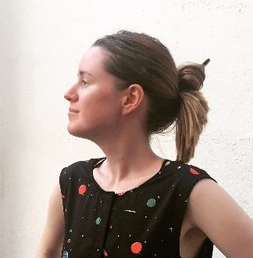 Sinead DoyleFaculty
-
Email: [email protected]
Sinead is a Digital Strategist and Service Designer. As an Associate Director at Transform, she helps clients set a vision for their digital products and services. She guides multidisciplinary teams through the service design process, to produce better, simpler customer experiences. Over fifteen years in digital, she has worked across strategy, creative, and media, at agencies and consultancies, on projects spanning public and private sectors.
Sinead was Lead Service Designer on the Covid Vaccination Programme with NHS England in 2020. She co-led the MoD’s Defence Innovation Unit training programme, upskilling a large cohort of senior staff. In the run up to Brexit she made a crowd-sourced map of EU funded projects in the UK (Look Around EU). She is currently Account Director on the design workstream of HMCTS Reform programme, digitising citizen-facing court processes within the Ministry of Justice. She is also working on an approach to sustainable design for adoption across a 50-strong design practice.
-
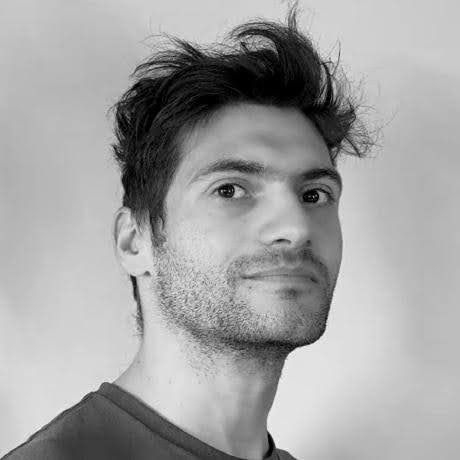 Theodore KeloglouFaculty
I’m a software engineer working on pod.network, a decentralised protocol and infrastructure designed for trading with high throughput, low latency, and censorship resistance.
In the past 15 years, I’ve worked at multiple companies as a software engineer in various sectors, namely energy (Kraken Energy), biotech (Wellcome Sanger), and financial tech (Stream).
Some projects I have started or co-started in the past:
-
Shoshin College, an experimental school in London, UK (in-person only)
-
mataroa.blog, a minimal blogging platform
-
Laniakea Books, a publishing house for authors that write new books in the public domain
-
otherwise.london, a website for alternative spaces in London, UK (both communal living and other activities)
-
allthevaccines.org, an open-source attempt to centralise information on all human vaccines
Topics- Blockchain Foundations
- Choosing long-term projects
- Decentralised Finance
- Digital Deliberative Spaces, Infrastructure, & Methods
- Ethereum
- How can companies avoid becoming corrupted?
- Iroh Protocol
- Knowledge and Science Infrastructure
- Large Scale Encrypted Communications
- Multiplayer Agent Harnesses
- Nostr Protocol
- Open Weights Models & Local Inference
- Shelter Protocol and chelonia.js
- Starting New Intentional Learning Communities
-
 Zarinah AgnewFaculty
- Email: [email protected]
- WhatsApp: +1 415 608 3535
- X: @zarinahagnew
- Website: https://www.zarinahagnew.com | https://www.cip.org/zarinah
- Publications: https://scholar.google.co.uk/citations?user=4h5r2iMAAAAJ
Zarinah Agnew is a neuroscientist by training. After spending over a decade in academia, they left to study the science of groups of brains - that is, humans in collectivity. Alongside their work with the college, Zarinah is Director of Research at the Collective Intelligence Project, which works to direct technological development towards the collective good.
On the side, Zarinah also runs three nonprofits aimed at experimental aspects of society, collective transformation and para-institutions. The Social Science Observatory is dedicated to the study of social science in the wild, Alternative Justices works towards abolitionist community-based harm prevention and response, and District Commons engineers experimental spaces where humans can ‘be otherwise’.
Together, these strands allow both the prefiguration of new social configurations, as well as the study of their transformational potential.
If you need or want to book a chat. I recommend booking at least one call with me in your first month. From that point on I am here if and when needed or wanted.
Topics- Artificial Collective Intelligence
- Ecotopia & Techno Utopia: Harmonizing Nature and Technology in Post-work Futures
- Future Crafting
- Postcolonial Futurism
- Separatist Utopias
- The Science of Collectivity
- Utopian Family: Alternatives to the Traditional Family Model
- Utopian Justice: Abolition, Community Justice & the Question of Crime
- Xenofeminism: Futurity, Gender & Technology
Fellowship Candidates
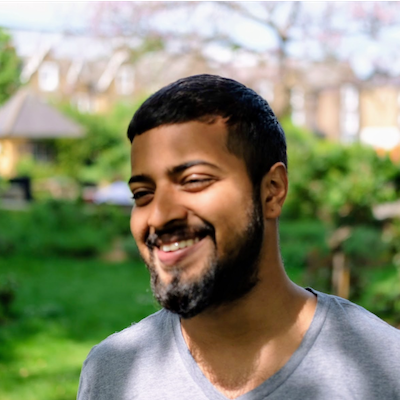 Anchit SomFellowship Candidate
I'm Anchit Som. I currently work as a Product Manager in Access, Triage and Navigation at NHS England. In my role, I design and develop platform products that power the 111/999 triage service used by 56 million citizens. I'm also involved in defining the next generation of AI Triage experience to be made available on the NHS App.
Before that I trained as a Service Designer at the Royal College of Art, where I founded a decarbonisation startup that was a finalist in King Charles’ Terra Carta Prize. I grew up in India and Hong Kong, and have worked in technology roles across public sector healthcare, travel, and finance. My work has been featured in various publications including the Harvard Business Review, Financial Times, Venture Beat, Wallpaper Magazine and BBC News.
Through my work, I have often probed the boundary between public and private, and what the state is actually for. Digital public infrastructure is the clearest modern version of the question. Some states build their own rails and run them as public goods, while others buy the equivalent and become tenants of it. Britain has done a mix of the two. I sit on that line most days at the NHS, where the answer lands in a radically different place from one service to the next, and it’s something I would love to explore as a general Political Technology problem at the fellowship.
The other thing I'm curious about is what it means to be a citizen in a digitally enabled world. Forty years of treating public services as products has taught all of us to behave like customers: to compare, to complain, to opt out, to turn to the market to fix it. Being a citizen asks for more than that and often offers far less help doing it. Finding out what your MP has actually done, as opposed to what they've said, takes hours most people don't have, so we take the media's account of it instead. I want to know whether lowering that cost of participation changes what people ask for, and how they take part.
I like to build my knowledge in public policy through courses and books. Seeing like a State by James Scott has been particularly inspiring. I write about my observations on Substack, and I build little experiments, like an MP vote predictor, to test the thinking against something that actually runs. What I've been missing is a room of people to build alongside, and the prospect of a cohort and faculty to collaborate with is what excites me most about the year ahead.
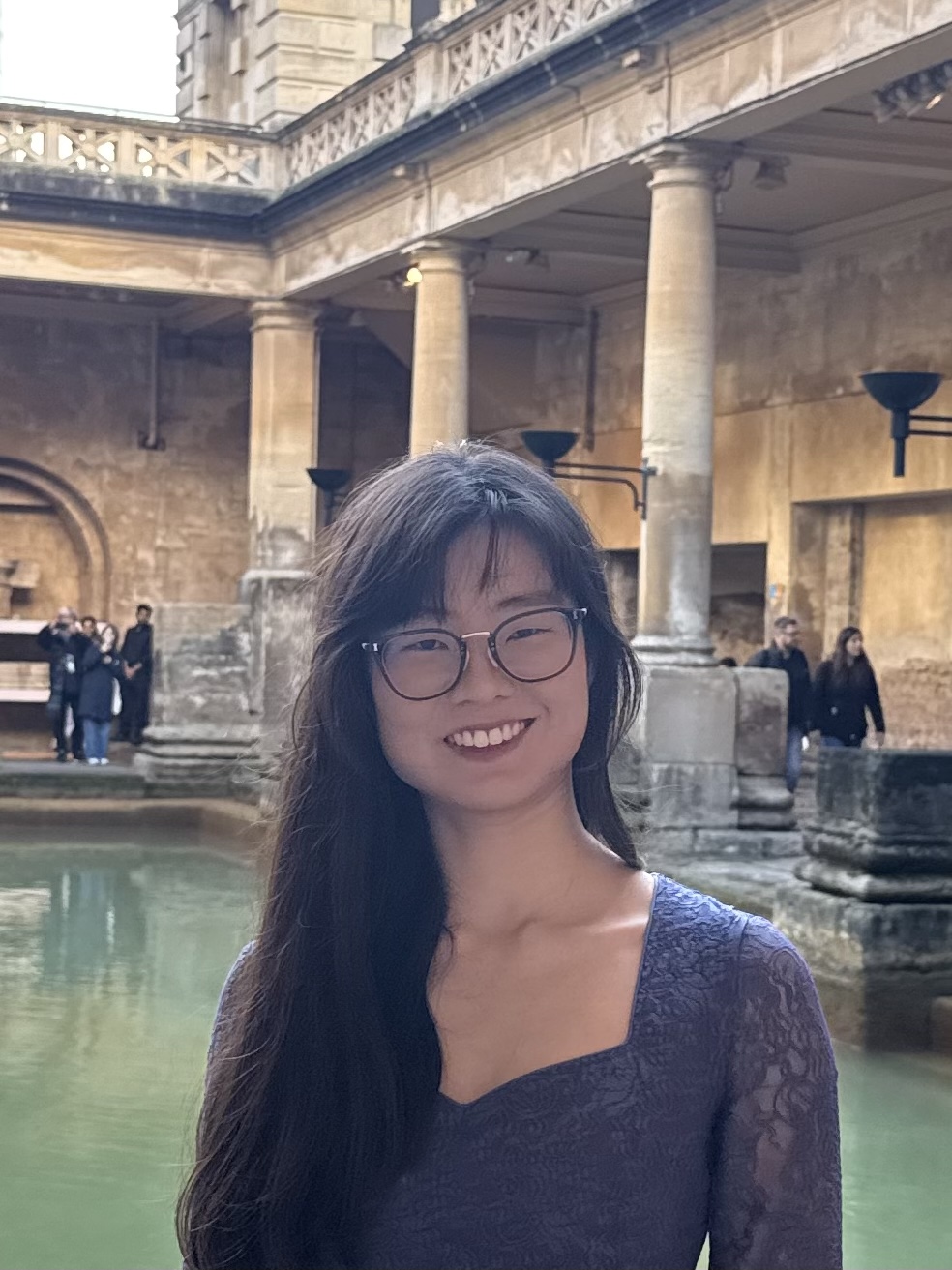 Clara YeoFellowship Candidate
There are more things in heaven and earth, Horatio,
Than are dreamt of in your philosophy.
*— Shakespeare, Hamlet (Act 1, scene 5)My experience and interests can be summed up as law, governance and policy, and theatre.
I spent six years as a lawyer in a City firm, gaining experience in financial regulation, corporate governance, and environmental law.
My work for small charities has included campaign strategy, policy research design and fieldwork, and stakeholder outreach.
I’ve attended over 1,000 theatre productions. I’m deeply curious about the technical aspects of what makes theatre tick, and I also appreciate the aesthetic and emotional experience that theatre elicits in audiences.
I’m especially interested in immersive, interactive and/or participatory theatre, an interest which was sparked during the pandemic when virtual reality experiences and theatre on Zoom filled the void of live theatre.
I evaluate independent theatre productions across London for a set of annual awards that recognise excellence in off-West End theatres. This has honed my analytical rigour and attention to detail in theatre criticism. Partly in recognition of theatremakers’ incredible dedication and hard work, my theatre reviews attempt to be balanced and constructive.
I’ve dabbled in performance, stage management and tech as part of an acclaimed interactive theatre production in the West End which was attended by billionaires and at least one Nobel laureate / tech CEO.
I recently participated in a ~50 participant multi-day simulation of the 1492 papal conclave. The simulation was originally designed by Ada Palmer to introduce Machiavelli’s The Prince as part of an Italian Renaissance history course.
I’m intrigued by and/or curious about:
-
Theatre and games (including but not limited to tabletop games and video games) as ways to effect change;
-
Narratives and meaning-making;
-
The pedagogy of experiential learning;
-
The effect of culture on politics;
-
Enhancing the effectiveness of campaign / cause-led messaging;
-
Systems thinking, and other paradigms or frameworks;
-
Fostering interdisciplinary synergy and serendipity;
-
“Wicked problems”;
-
Community building.
I’m looking forward to joining the vibrant and energising community at Newspeak House.
—
My Newspeak House-related projects: https://nh.clarayeo.org/
My Newspeak House-related writing: http://moreclear.substack.com/
I publish my theatre thoughts at: https://theatrethoughts.substack.com
-
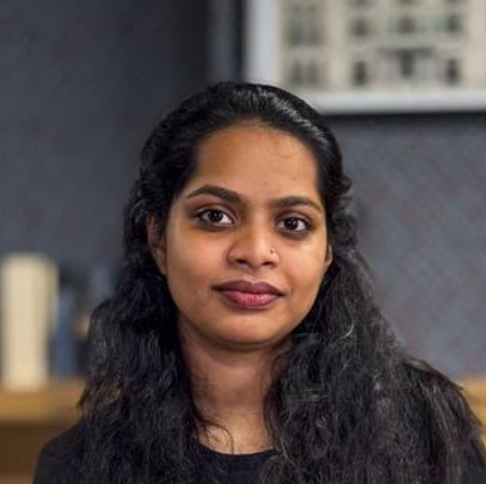 Disha ShanbhagFellowship Candidate
Hi, I'm Disha Shanbhag. I'm a design and policy researcher working at the
intersection of technology, design and public services in the UK, Europe and other
international contexts. As a trained anthropologist with an MSc in Digital
Anthropology from University College London, I believe in bringing a user-centred,
relational and inclusive approach to public sector digital transformation across a
range of sectors and themes.I currently work at PUBLIC, a digital transformation advisory firm focused on the
public sector, where I lead procurement and innovation projects. Over the last two
years I've delivered 15+ projects supporting UK central and local government
departments, startups and private sector companies in navigating the complexities
of selling to government. I hold certifications from the Chartered Institute of
Procurement and Supply (CIPS), and I'm currently developing a model for using
procurement as a lever for AI governance in the UK.Beyond work, I write for Interweave, a GovTech newsletter covering Eurasian tech
policy, startup ecosystems and procurement innovation. I'm increasingly interested
in how existing inequalities shape the commercialisation and adoption of public
sector technology in Global Majority contexts.The Newspeak House fellowship is a rare opportunity to expand my design research
toolkit and develop my interest in public sector technology beyond the fairly niche
corner I've worked in so far. I'm particularly excited about building a community of
practitioners and translating my research into easy to use tools as a part of this
fellowship.If any of this sounds interesting, feel free to reach out to me at
[email protected] or on LinkedIn.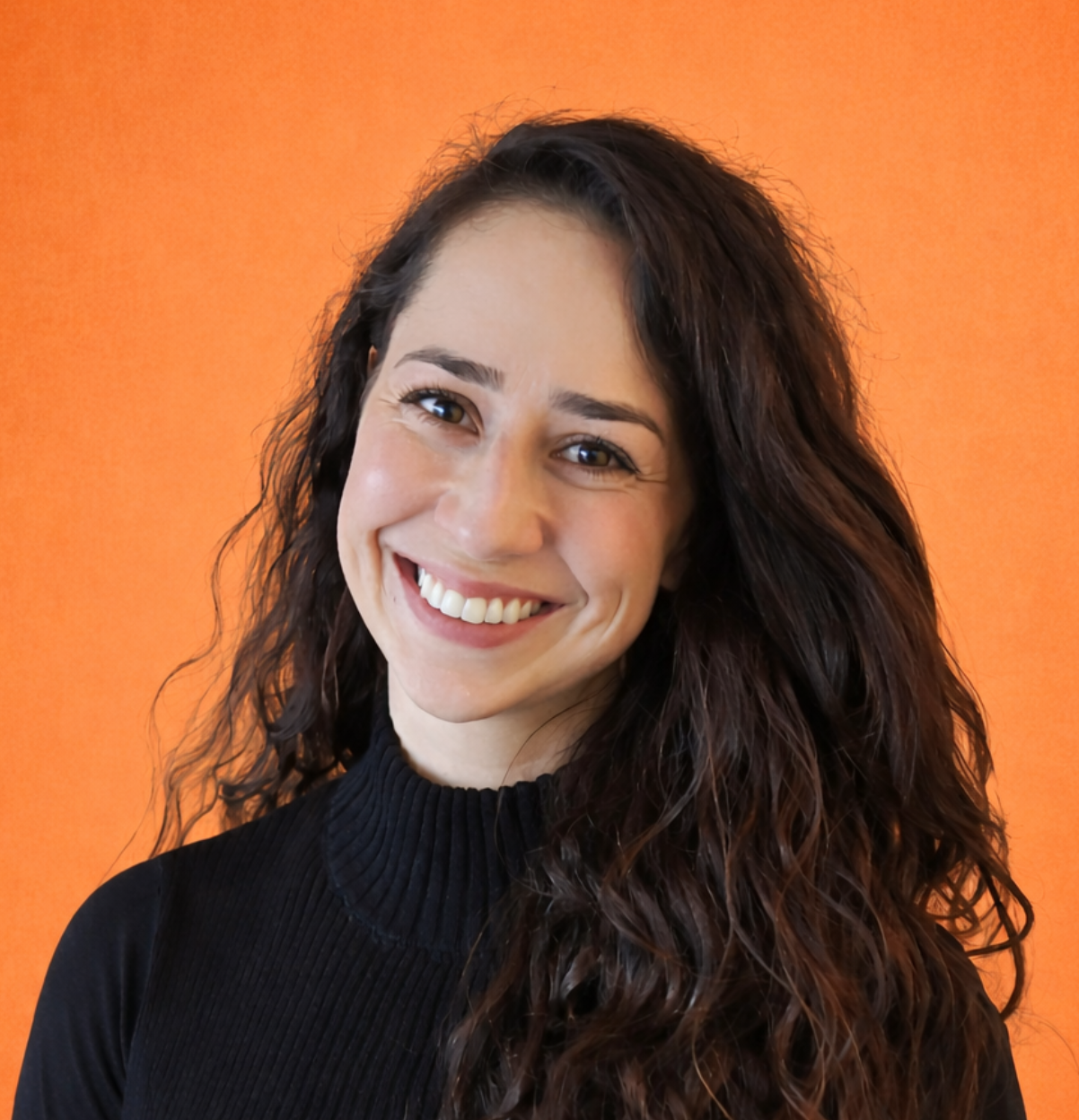 Fernanda MunhozFellowship Candidate
- Email me on [email protected]
- Signal is: nanda.73
- LinkedIn is: https://www.linkedin.com/in/fernanda-munhoz/
I’m interested in the spaces between traditional sectors, the gaps and intersections where there’s an opportunity to build something that didn’t exist yet, or connect things that weren’t connected before. For the last ten years, that’s mostly been my job. Finding those gaps, building things and connecting the dots, in organisations of every size, from a team of two to the biggest employer in the country.
Concretely, my career has included building the first digital directory of domestic abuse services in the UK; running an award-winning chatbot for women at risk of abuse in South Africa; helping hospitals digitise patient data in the NHS; campaigning in and out of the streets on women’s rights and justice with Amnesty International; and, more recently, helping build new infrastructure to fund social movements and incubate new charities across Europe and beyond.
I have a BA in Politics and an MA in Human Rights, and that background shapes how I approach all of this. I believe in a human rights-based approach: that people have inherent rights and dignity simply because they are human, and that institutions and organisations have a responsibility to respect, protect and enable those rights. For me, that means building with people, not for them, challenging institutional assumptions, centring lived experience, and thinking about who has power, agency and ownership over the solutions we create. This is where politics and technology meet for me, and it’s a thread I will bring to my work and explorations at Newspeak House.
Gender justice is the other constant running through my work. For over a decade, I’ve worked on issues from building feminist tech and advocating for women’s rights to supporting the strategy and governance of organisations working towards gender justice, including as a Board Member of the Latin American Women’s Rights Service. It’s the area I care most deeply about, and one I continue to explore.
I’m coming to this fellowship because I’m curious. I want to connect with people who challenge my thinking, introduce me to new perspectives, and help me find the next gaps and opportunities. I’m hoping those connections will leave me inspired and with new ideas about where I can contribute.
 Joel Naoki CHRISTOPHFellowship Candidate
I was born in the Netherlands to a French-Japanese family and grew up there and in Germany. Since then, I have moved on my own to eight more countries, bringing the total to ten I have lived in for a year or more. I speak eight languages. That sounds like a party trick until you are the person in the meeting who can read the English and the Chinese versions of the same agreement and see that they do not say the same thing.
I am an economist. My subject is how to govern powerful technologies when no single government controls them. Artificial intelligence and nuclear weapons take up most of my time. When states or firms agree to limit something dangerous, what makes the limit stick? I look at how you check that a promise is being kept: measuring the computing power behind advanced AI systems, weapons inspections under arms control treaties, the economics of why some agreements hold up while others get ignored.
I studied at University College London and the Barcelona School of Economics, spent a year at Tsinghua University in Beijing reading politics and international relations, then did several years of doctoral research in Florence. Since then I have been a Summer Fellow at the Centre for the Governance of AI in London, a Technology and Human Rights Fellow at the Harvard Kennedy School, and a fellow at the Economic Research Institute for ASEAN and East Asia in Jakarta, where I looked at how Southeast Asian governments might treat AI as a shared regional resource. I have written for Lawfare, Tech Policy Press and the World Economic Forum.
I build organisations too. I founded 10Billion.org, an open-source movement of around 300 people across 30 countries, with local groups in Berlin, Jakarta and Manila. I ran Effective Thesis, a nonprofit that helps students choose research questions that matter.
My nuclear work runs through Pugwash, where I help run the International Student Young Pugwash leadership team. I am a Nuclear Futures Fellow with Ploughshares Fund and Horizon 2045, and in 2026 I received the Gorbachev/Shultz Youth Award from Voices for a World Free of Nuclear Weapons.
I spend my working life designing rules that are supposed to survive people who would rather they did not, almost always on paper, almost never anywhere I can watch them fail. A house of fifteen people with a treasury, a guest room and a doorbell is the smallest version of that problem I have found, and the only one where I get to see the whole thing at once.
[email protected] · 10billion.substack.com · linkedin.com/in/joelchristoph
- MKMadison KarasFellowship Candidate
I work in spaces that bring together independent media and journalism, research and technology. Currently, I'm focused on how service design, cooperative models, and more robust contribution systems can benefit everyone in an information system, from producers to consumers.
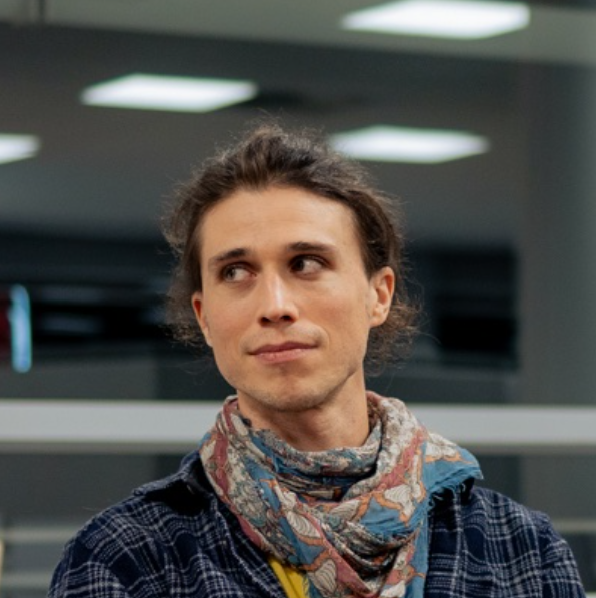 Mario MorvanFellowship Candidate
I am a researcher and technologist working towards a better-informed society. My background spans academia, public service, and the co-operative and charity sectors, across applied research, software engineering, science outreach, and community tech initiatives. While my past work focused on AI applications in astronomy and healthcare, my current research interests lie in digital libraries and commons, computer-supported cooperative work, and collaborative knowledge graphs.
A Wikimedian since 2022, I am fascinated by the successes and limitations of Wikipedia and peer production more generally. I am exploring the potential of collective modelling to shape more effective and equitable systems for producing knowledge and informing decisions. In particular, I am passionate about building better tooling for collective claim-checking, impact assessment, ideation and value alignment. I value collaboration towards shared goals, so if these problems interest you too, please get in touch.
Beyond reliable information, shouldn't everyone also have access to — and a say in — quality housing, food, healthcare and education? I have been active in the UK and French housing co-operative movements, and in the popular education charity Réseau Salariat, developing ideas and experiments such as Food social security and the Wage for life. There is much to learn from these living examples of strengthened collectives and public services, and I am eager to push these guiding questions further as current digital and economic transformations make them ever more relevant.
Everyone should have access to lifelong, quality education and training in a changing world, and to community spaces for collective learning and building. Taking part in this programme is a way for me to continue (un)learning, to (net)work towards (dis)solving problems unconventionally, and to challenge and refine my understanding of the sociotechnical landscape in order to better contribute to it. It is also about collective development: envisioning and experimenting together with building blocks for our futures.
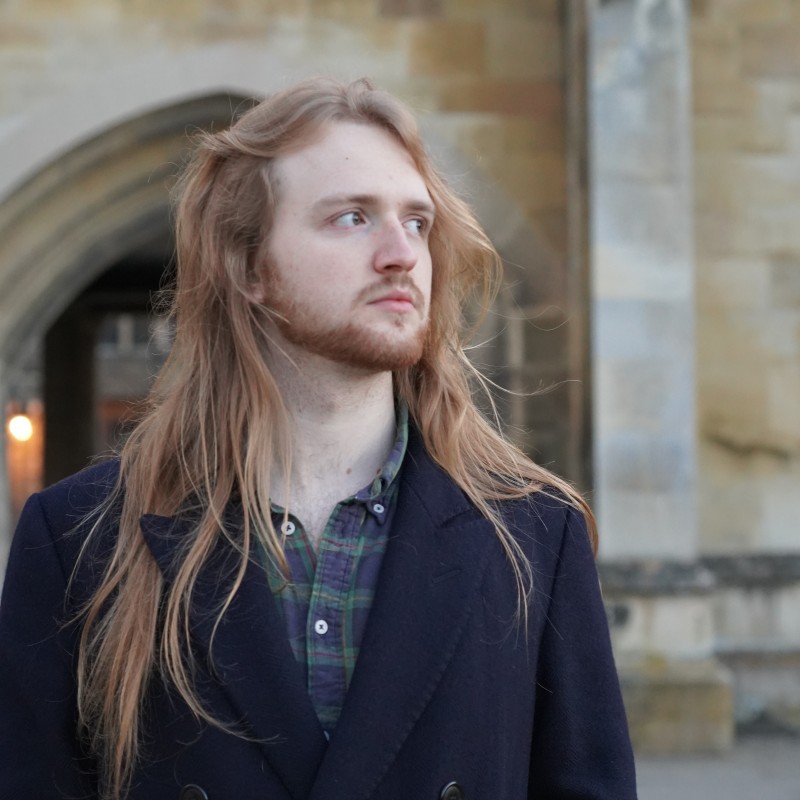 Nathaniel CookeFellowship Candidate
[full bio coming soon]
Senior Policy Adviser (National Security & Resilience) @ Government Office for Science | Existential & Global Catastrophic Risk
I do things that (try to) reduce the odds of world-changing (or world-ending) catastrophes, from pandemics and nuclear war to ecological breakdown and AI-powered totalitarianism.
These mostly focus on the ways our social, political, and economic systems put us at risk: fragile international networks, short-termist political systems, destructive concentrations of power, and more.
There's plenty of work to be done; let me know if you're interested!
Also a big fan of martial arts, science fiction, folk music, and books.
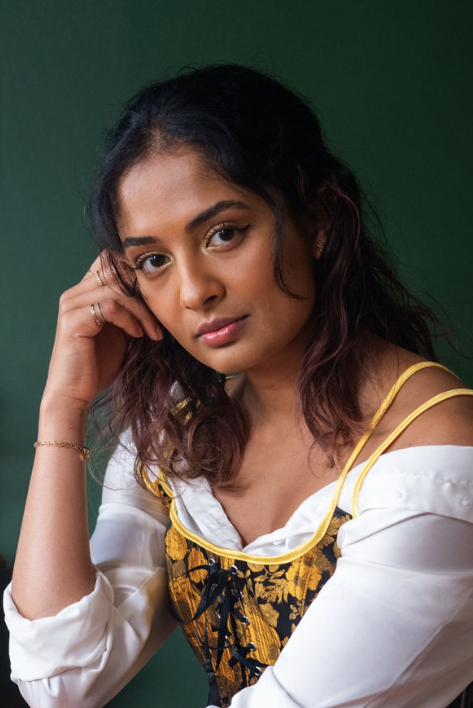 NibaFellowship Candidate
I’m Niba Audrey (@NotesByNiba), a science communicator, video host, filmmaker, and former research scientist. Most of my work is driven by a simple idea: when complex information is made genuinely accessible, without losing the excitement that makes people want to understand it, people are better equipped to make decisions that actually make sense for them.
I spent seven years as a plant developmental geneticist, studying how living things grow, respond, and organize themselves. That background still shapes the kinds of questions I’m drawn to. I’m fascinated by intelligence and communication, whether the subject is a plant, an octopus, a human being, or an artificial system.
More recently, my research and civic interests have increasingly focused on AI safety, public understanding of AI, cognition, consciousness, and technology governance. A lot of the most important conversations about AI move quickly and assume a level of technical knowledge that most people have never had a reason to develop. I’m interested in making those ideas easier to understand without flattening their complexity. For me, accessibility is not about telling people what to think. It is about giving people enough context to understand what is at stake, then trusting them to think for themselves and make informed choices about technologies that are already beginning to shape their lives.
Through my work with the Buddhism and AI Initiative, I’ve also been exploring what Buddhist philosophy and contemplative traditions can contribute to questions about what intelligence and consciousness are, and what it might mean to build technology with human flourishing in mind.
Science communication is the through line in all of this. I host for SciShow and KQED’s Big Ideas, and I’ve hosted and produced science stories for PBS, Seeker, Stanford, Lawrence Berkeley National Laboratory, and Live Science, a science news journalism outlet. My PBS series Hungry Planet explores the science and culture of food around the world, and my work across digital and broadcast media has reached millions of viewers.
I’ve been an AAAS Mass Media Fellow and a Jackson Wild Film Fellow. I was also a Science Communication Resident at the Simons Institute for the Theory of Computing, and both a Fellow and later a Resident at the STEM Advocacy Institute.
What draws me to Newspeak House is the chance to become more thoughtful and effective at translating difficult, consequential ideas into forms that people can actually use. AI is moving quickly, and public understanding needs to keep pace. I want to deepen my own understanding while becoming better at helping others engage with these technologies in ways that feel informed, empowering, and grounded in their own values.
You can find my work at www.notesbyniba.com and @NotesByNiba across every major social media platform.
 Noam HerbergFellowship Candidate
I’m a political organiser and political technologist interested in how technology, research and strong communities can make democratic politics work better and, ultimately, help progressive movements win change.
I’m currently Community and Partnerships Officer at Campaign Lab, a non-profit bringing together campaigners, researchers and technologists to experiment with new approaches to political campaigning. My work spans community building, partnerships, technology and applied research, and I’ve helped develop projects exploring AI, social listening, political persuasion, digital organising and new tools for MPs and campaigners. I’m particularly interested in the gap between academic or technological innovation and what actually works in the messy reality of political organising: how we can test ideas rigorously, turn useful experiments into practical tools, and make sophisticated technology accessible to people without technical backgrounds.
Alongside my professional work, I’m Chair of Finchley and Golders Green Labour Party. I worked on the 2024 general election campaign and stood for Barnet Council in 2026. I’m also a trustee of a local food bank. I’m rooted in the practical work of campaigning, from knocking on doors to organising volunteers, but I’m equally interested in drawing a line from that experience to bigger questions about institutions, technology, political strategy and how people participate in democracy.
Before moving into politics, I studied philosophy, with a particular interest in Wittgenstein, completing my MA at UCL. I’m fascinated by political behaviour, institutions and collective action, as well as broader questions about how technological change alters power, and our ability to act together. More recently, I completed the UCL Policy Lab Fellowship for Emerging Leaders alongside people working across politics and social change ecosystem.
I’m excited about this programme because I want to get better at understanding and driving political change. I’d like to learn from people approaching civic and political problems from very different directions, develop my own thinking through collaboration and criticism, and bring back ideas that can be tested in real campaigns and communities. I also want to think seriously about the effects of technology particularly AI on our politics and attempt to understand and participate in the systems and technology that will bring radical change to political action.
Email: [email protected]
Work Email: [email protected]
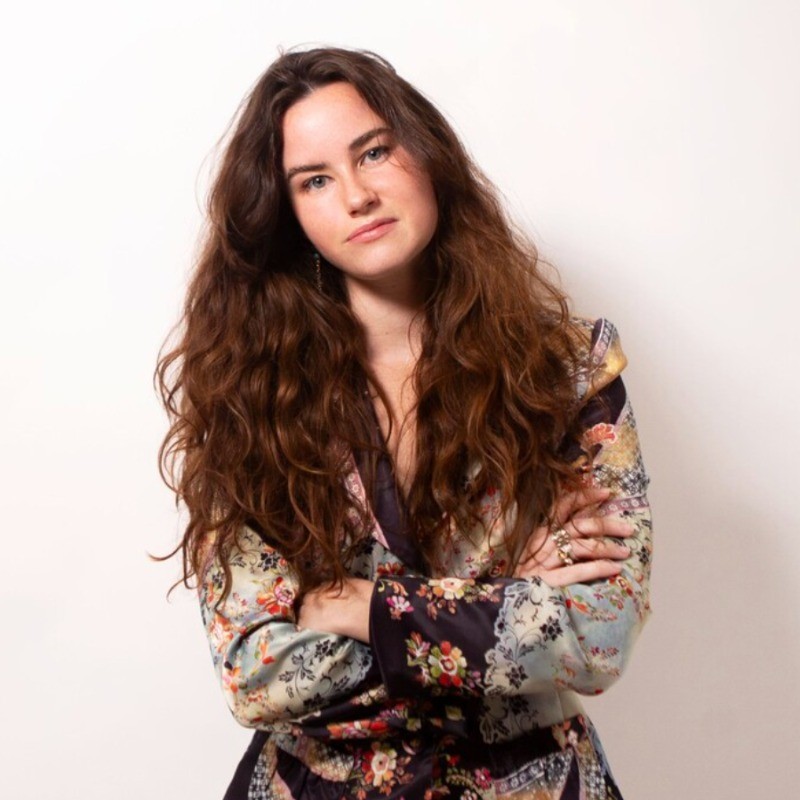
Phone: 07534421068 Rhianwen RowlandsFellowship Candidate
I'm Rhianwen (Rhi) Rowlands a communications professional, musician and researcher based in Stoke Newington.
I have an interest in propaganda, hauntology, liberation politics and how software can be used to demystify complex topics. I currently work as a communications specialist in a third sector organisation focused on making the textile industry more sustainable. Much of my job is making complicated research legible to non-specialists.
From my perspective, one of the key challenges for the Left ™ in this moment, is accurately combatting mis/dis-information. I’m interested in using software to develop counter-messaging/methods using accurate material and socio-cultural analysis. I think that part of this involves actively developing the ability to stretch our imaginations and what we conceive of as politically possible.
I am currently building two software projects. The first, called fr narratives, tracks narratives and messaging across far-right telegram networks. I want to understand what messaging is pushed and how it spreads; whether it is coordinated or catches on organically. The data so far shows these networks splitting into sub-communities where channels play the same role in sharing and framing news stories/events as they happen.
The second is a data-centre transparency tool intended to help inform ongoing public discussion and sharpen critique of infrastructure development not benefitting the public. There is currently no requirement in the UK for companies to report data centre cooling or building methods in any standardised way. What does exist is scattered across planning applications, company accounts and paywalled commercial databases. My aim is to assemble that material into a single open dataset, highlight what is missing and why, and provide an accessible map of locations around the UK with information on the differences between these sites and the purposes they serve.
I also have a musical project, Sharks on Vinyl, and am currently interested in developing a set that incorporates live coding elements. I co-founded PlugJam, an electronic-music open mic night in Cardiff that's still ongoing. PlugJam gave me a lot of experience organising events and building a community. Live events inevitably face challenges, logistically and technically, and it was a crash course in problem solving under pressure and getting things back on track.
I'm excited about joining Newspeak House to learn from people who are building projects and thinking about novel approaches and ways of thinking. I’m looking forward to being in a room with people building civic tech and trying to make a positive impact.
 Tess BuckleyFellowship Candidate
I'm a digital ethicist and musician working at the intersection of memory (individual & collective), movement (public protest & friction) and music (jazz & celtic), building systems and facilitating experiences that help people reimagine collective futures and relationships to each other.
‘Key’ words that would get a conversation going include: embodiment, friction, identity, memory, agency…
My research and civic interests span a few threads I keep returning to: AI assurance and ethics in practice, the human infrastructure needed for responsible innovation, disability and design (particularly how facial recognition, hiring tools, and training datasets fail people with facial differences), and (closest to my heart right now) responsible technology in music. I've published on operationalising ethical principles in AI music generation and written on ableism in biotechnologies, harmful media tropes, and the philosophical frameworks used to "fix" disability. In 2021 I co-led Community Credits, an artivism project on making curb cuts visible as public art, honouring the disabled communities who fought for infrastructure everyone now benefits from. I am currently writing & excited about: “Embodied vocality, facial difference, and the ethics of voice technologies” - an autoethnography on performing with facial paralysis and chronic pain, and what that teaches about voice tech, authenticity, and flattening.
Academically, I hold a MA in AI and Philosophy from Northeastern (valedictorian, specialised in ableism in biotechnologies) and a BA from McGill (International Development x Philosophy x Communications, specialised in ownership and authorship in multiplayer models). Professionally, I started out in event production and convening by co-founding École Publique, an experimental creative collective in Montreal running accessible, political-minded events, and hosting two radio shows on CKUT 90.3FM as well as supporting an alternative radio platform project. After my postgrad, I worked as an AI Ethics Senior Analyst on a dataset on corporate digital responsibility that was paid for by investors that wanted to understand portfolio risks before placing capital, I then supported a specialised model for sustainability disclosure. I'm currently Senior Programme Manager in Digital Ethics and AI Safety at techUK, working across UK government, regulators, civic society and 1,000+ tech companies to make ethical principles operational through assurance and standards. Alongside this I sit on the board of HiQuu, a patent-pending multisensory performance infrastructure, and have joined BRAID UK’s Stakeholder Forum. In 2024, I thoroughly enjoyed curating a public three day symposium on AI x Music at Conway Hall for the Bloomsbury Festival with permanent and programmed activities. I'm also a released musician (an EP and three singles out, with a second EP landing fall 2026) and I still take on the odd crochet commission as "@sslow_fashionn" (I love heritage craft & analogue skills & boats).
Right now, mid-way through a summer residency at Stochastic Labs in Berkley, California, I'm working at the intersection of music and memory, some projects include: a hand-sewn textile "book" encoding words with diodes, microcontollers and conductive thread in Baudot code, an immersive hanging installation of strands that ‘sing’ when approached, touched and tangled, a sensor-rebuilt version of my Nana's bodhrán frame drum, and a live "sing-back" chamber that makes collective remembering and process audible. Alongside a collective playlist tool for recalling personal stories inside shared songs, a community workshop that teaches attendees about offline small language models through textile craft, and a pair of crocheted, connection-triggered garments built for contact improvisation which pose the question: what does intimacy/touch sound like? Across all of it, the throughline is the same: identity and memory aren't things we hold alone, they're made through friction, touch, and connection with other people, and worth deliberately rebuilding as shared, participatory experience.
I'm genuinely excited to weave these threads together and expand my practice with the Newspeak House cohort this year. My focus is on grassroots movements, and aiming to breathe more life into a long-form essay nine months in the making: "The Public Reimagining for AI Justice: Strategic Lessons in Empowering and Organising to Overcome Centralised Power from Past Civil Rights Movements." The chance to sit inside a community so deliberately built around tech, politics, and public life and to keep asking strange, sincere questions alongside people doing the same feels like exactly the kind of friction I am looking for and quite frankly makes good work possible.
Cheers to liminal and entangled becomings >
 William WongFellowship Candidate
I'm a computational artist working in narrative-driven games and interactive storytelling, based between London and Hong Kong.
I work in a loop. An observation becomes an experiment, the experiment becomes an artwork, and the setup gets published so anyone can run their own version. The repository matters as much as the piece — someone should be able to take the apparatus, get a different result, and say so.
For years I pointed that loop inward, at self-exploration and personal reflection. More recently I've been working with data and public records, and finding stories already there — already being lived by many people at once — rather than ones I had to invent. I'm moving from computational artist toward digital storyteller: working with the record rather than the imagination.
I run Into Storymode, an initiative showing how people can use technology to tell their own stories and be understood by others. Within it I organise Playable Stories, a series where independent game designers open up their creative process in public. Organising has taught me more about how groups work than any of the building has.
Games are what drew me to this in the first place. They're a medium for systems rather than events — a rule you have to operate under lands differently from a rule described to you — which makes game design a way of showing how machinery works, not just what it does to people. I'm also interested in AI as an interface onto real records rather than a generator of plausible ones: the same models used to make evidence navigable instead of to fabricate it.
At Newspeak House I want to work on the expensive half of civic life. Broadcasting and coordinating are nearly free now. Deliberating, compromising, and understanding people who don't share your view are not, and no tool has helped much with those yet. I expect to spend the year running experiments where the point is what we learn rather than how efficiently things run — and publishing the setups, so others can run them too.
Email: [email protected]
Web: intostorymode.com
LinkedIn: linkedin.com/in/william-wong-37854577
GitHub: github.com/IntoStorymode and github.com/PlayableStories Yiannis RavanisFellowship Candidate
I'm an engineer and creative technologist with a background in Electronics & Electrical Engineering. I began my career in R&D for autonomous vessels, where I was design authority for perception on a world-first GPS-denied autonomous docking system, building bespoke robotic perception systems with LIDAR, infrared cameras, and applied ML, while also working as an agile coach leading continuous delivery and organisational culture change.
I build systems and I bring people together. I've run hackathons and collaborative painting workshops. I like making containers where other people can do their best work. I figure things out by building, testing, and iterating: scrappy, empirical, fast.
For the past year I've been building ideologos.com, a "Socratic AI" that helps people form their own opinions rather than telling them what to think. Ideologos acts as an ideological midwife, helping you discover the "unknown knowns" that comprise your ideology.
I want to understand governance paradigms, what each is good at, why it emerges, why it fails. I want to experiment with what comes after representational party based democracy. Our votes can now cary meaning. Can these new technologies change how we practice group decision-making?
I'm interested in exploring democratic AI governance as one of the few real levers on the metacrisis and the climate crisis underneath it. AI governance in both directions: governing AI democratically, and using AI to help communities govern themselves.
I don't think this is obviously solvable, but if we can learn to govern a small community well, maybe it fractalises.
I'm drawn to Newspeak House because it's one of the few places that treats this as a craft to practise and experiment with, not a topic to theorise.