Topic
Sign in
John Evans

John Evans

Faculty

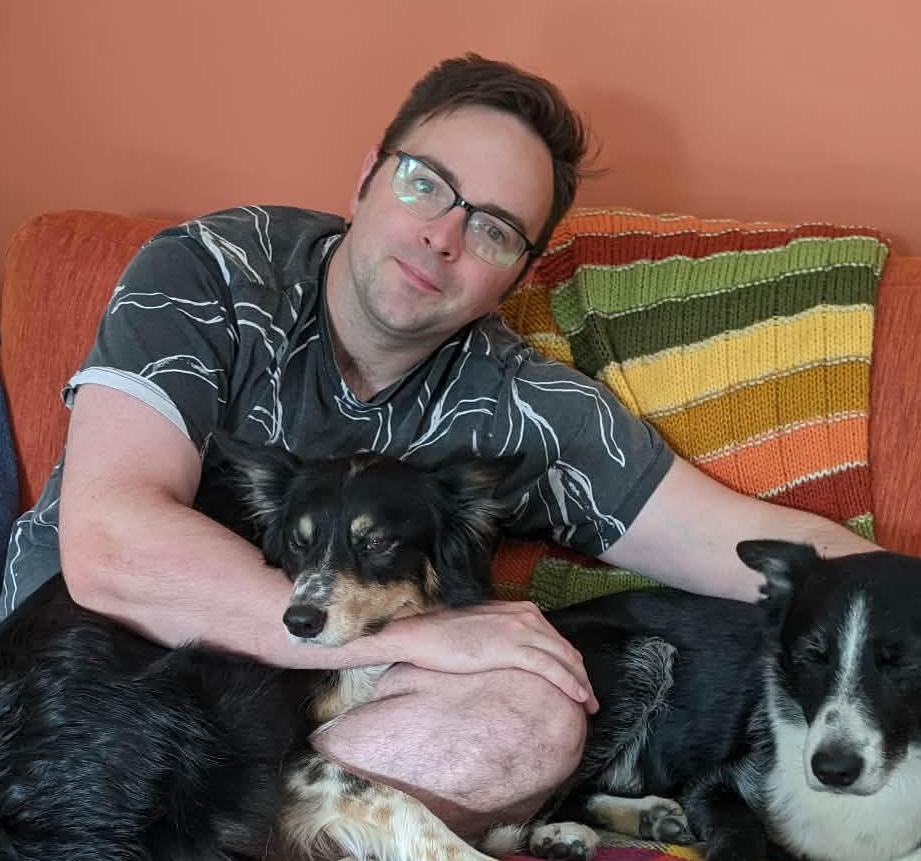
I am a chat developer and cooperative practitioner. My focus is on chat, workers coops and in person consent-based decision making. I also like jokes and wordplay and that sort of thing but I haven't put any in here because politics is very serious.

I'm the project lead for Chat Hackers, a collaboration with Campaign Lab to build Whatsapp tools for organisers.

I made Spacetube, a tool that connects groups together via their internal chat systems e.g. Slack, Discord, Matrix, Whatsapp, Rocketchat and Signal.

I've worked for Digital Commons, who make Land Explorer, and Common Knowledge, who make Mapped. I've worked for Momentum, Coop Supermarket Central England, Public Interest News Foundation and the Clapham International Film Festival.

Topics

Givers Gain is the only event I will go to that has the word "networking" in the description.

The aim of the session is to make helpful introductions for people attending the session, by combining the networks of each individual that attends. The basic principle being "I may not be able to help you, but I probably know someone who can".

Anyone can run one of these sessions. It works best with groups between 10-20 people in size. Too few and the network isn't big enough, too big and the session becomes unwieldy. Closer to 20 is probably the best size if you can get it.

The session works in 2 rounds. In the first round, people take turns describing themselves and the kind of person they'd like to be introduced to. Then there's a break, and people think if they have any introductions to make. Then in the second round, people take turns sharing the introductions that they can make.

How To Describe Yourself

You have 90 seconds in total, so you need to be succinct. The template to follow is:

  • Your name (so people can make the introduction. Contact details are shared at the end)
  • Your organisation or practice (the domain of life your introduction is for)
  • Why you're good at what you do (why people should want to be introduced to you)

How to Describe Your Desired Introductions

You need to describe the kind of person you want to meet, the more specific the better. It might feel like being specific is ruling people out, but it actually isn't. People find it easier to create a partial match with more information than a perfect match with less information. Being specific helps people make the partial matches.

The template that I'm familiar with uses 3 levels of introductions, called :

  • Bread and butter. This person is your day-to-day business, you meet and work with this kind of person all the time, but it's always good to know more of them.
  • The Cream. This is the kind of person that if you met them, it would give you a great quarter, or a great year. It's your normal business, but it's a big substantial chunk.
  • The Dream. This is the kind of person that could take your organisation or practice to a whole new level.

Ideally you'd have your bread and butter, cream and dream ready before your turn in the round. It takes some practice to be able to think of them and present them within the time limit.

Giving Referrals

While people are introducing themselves and describing their ideal introductions, take notes. You'll have time to think of people during the break.

The referrals should be to people, not business ideas. "Have you tried calling local shops?" is not a referral, for example.

If you give someone a referral, it's your responsibility to act on them. It can be as simple as sending an email that says "I met someone at a networking event who wanted to meet people like you, can I introduce them to you?". All you need to do is make the connection.

After the Session

After the session, keep your notes in your back-pocket, because you may come across or think of connections later and ideally this can be a regular group you attend and you make it better by creating more connections.

I would be happy to run a Givers Gain session for the cohort and faculty to demonstrate how it works.

If we were to analyse our online meetings and calls using the tools of film or television criticism, what would we learn?

The first question a critic usually asks of a piece is the genre that it fits into, because then it can be compared and contrasted with other pieces trying to do the same sort of thing. It's fairer, for example, to judge the overall quality of a horror film primarily on its scariness, rather than the humour or romance, because the critic can presume that scariness was the aim of the film and what the filmmakers put their energy into achieving.

A critic works out the genre partly by considering the content of the story, but equally often by the expression of the content. In our horror example, this usually means shots that have less light, discordant music, visually unappealing objects and probably a lot of screams.

If we asked what genre our typical calls and meetings are, we could conclude from the expression that the static camera angles, the shots of people talking directly to camera and the occasional diagram (via screen-sharing) mean that the genre is documentary film-making.

But is a documentary always the right genre for your call? It would be possible for all your favourite films and television series to be presented in a documentary format, but this probably wouldn't be better than the genres they currently inhabit. They certainly wouldn't affect you emotionally in the desired way. So, is there anything we can take from other genres of film that could be more appropriate for the content of our call?

The simplest example I can think of is the genre of the heist, which is a sub-genre of action/thriller. At the beginning of a heist film, there's usually a series of scenes where the crew is assembled or introduced. This happens in the real world on calls all the time. How many times have you been introduced to another team or a different company, and needed to know and remember what they do? In a heist film, the characters are introduced in a way that makes it easy to remember their function on the team, and the relationships between the different members, by using music, costumes, set dressings, particular ways of speaking etc.

These modifications to a call's video and audio are now possible to do in real-time. So are we ready to leave the documentary genre behind?

I want to explain why communication is so interesting to me.

The sequence "Connect, Communicate, Cooperate" describes the necessary order for a group to form, order itself and take action in the world.

A collection of people needs to have some kind of connection in order to come together, whether that's living in the same place, working for the same company or having the same beliefs or interests.

Then they need to be able to talk to each other effectively. If their communication isn't respectful and effective the group will disperse.

Finally, they need to take action in the world through cooperation, by working together to achieve something.

What I want to highlight is that communication is unlike connection and cooperation because it doesn't have the same link to reality. You have to connect around something that already exists, and you have to cooperate around something that you're bringing into existence out of already existing parts, but with communication you have boundless freedom and possibility to explore within a group. If it can be conceived by the human mind, then it can be used in the process of communication.

Matrix is an open protocol for instant messaging. That means that anyone can run or write a client or a server that works with Matrix. It offers end-to-end encryption and federation, so your server can speak to anyone else's.

The API spec is available, and you can do absolutely anything that the clients can.

You can extend the specification, because the events are just JSON objects. If your client can interpret the events, then your custom events will display.

Chat Hackers uses the Whatsapp Bridge that runs on our Matrix server.

Spacetube, my tool that connects different platforms together runs through Matrix because of all the different bridges and interoperability tools.

Chris Owen, a member of the 2025 cohort made Polymorph, a chat client that changes its user interface for each room to match the content.

I made the Virtual Bath to demonstrate that it can be used as a source of events.

And you don't even have to use it for chat, I used Matrix as an easy back-end for data storage for the Anti-University Festival site from 2025.

Matrix is my first choice for interacting with chat.

On Land Explorer, we have a feature where you can look on a map at who owns the land in any part of England and Wales, if it's owned by a corporate body e.g. a company or a school or local authority or church. If you go to where Newspeak is you can see that next door is Flashback Records but the Newspeak building is just listed as privately owned.

This is a good representation of the state of the Land Registry Data, it's free to check on what public bodies own, but a private title lookup costs about £4.

The Land Registry does a data release every month, saying which titles have been added and removed. There's usually about 60,000 entries each month. The full dataset is about 20 million entries, and is about 16 GBs when combined with the polygons. You have to pay for the matched up polygons to titles.

The LR also maintains a dataset called INSPIRE that is the same set of polygons but without the Unique Polygon Reference Number, so you can't match the polygon to the owner. That's the information you get for £20,000/year.

I have worked with maps quite a bit, mostly for building Land Explorer (LX) and the Coop World Map (CWM), and then other smaller maps in a capacity as a freelance developer (PINF map, Strike Map)

I wouldn't describe it as particularly complicated, but it's helpful to know the various ways you can get a map in front of someone.

There's a difference between the software that displays the map and the source of your tiles, i.e. the thing that people load at different zoom levels of the map. So like on LX, you can use Mapbox as your web library and then tiles from Ordnance Survey, or on CWM we used MapLibre and MapTiler for the tiles. Google Maps gets you both. Usually the choice comes down to the relationship you want with your map and tile provider.

And then working with the data, there's a command line tool called ogr2ogr that will do most transformations that you could want. People make a dataset available in lots of different formats and I usually wanted to get a geojson from them so I could easily work with it in a React site for instance.

And then we used MySQL a lot because the database had built in polygon transformations so it would return queries like "which polygons are in this box" relatively quickly.

There's little things with working with maps that can be annoying, like working with Markers vs Layers and clustering and spiderfying and optimising for load time or performance etc.

I will say that staring at a map of the UK for 7 years off and on has really improved my innate knowledge of where things are.

The chat platforms roughly break into 3 groups:

  • Chat Apps Hate All Bots
    • Whatsapp, Signal, Facebook Messenger
    • This is the realm of adversarial interoperation, where you'll need to run some bridging software or something that someone else has built as well as dodging rate-limits and bot detection alarms.
  • Centralised Chat Platforms Allow Some Bots and Tools
    • Slack, Discord, Telegram
    • These have APIs and bot tokens that you sign up for and work through the documentation, occasionally finding that what you want to do needs to be adjusted to fit their model of interaction
  • Self-host and Create Whatever You Want
    • Rocketchat, Matrix, IRC, Nextcloud Talk, Mattermost
    • Getting the software up and running can be a pain, but once it's up you have maximum freedom. Read the docs to understand the domain, then build your dreams

The annoying part is you don't usually get to choose which platform you're working with. If you do get the opportunity to choose, think carefully about what you'd like to have further down the line.

I am a big fan of Michael Mann's Sources of Social Power. There is a first edition of volume 1 (prehistory to 1760 AD) in the Newspeak House Library and I recommend reading the first few chapters to understand the theory of social power that Mann puts forward so that you can apply it to your analysis of social power in the situations that you encounter. Chapter 1 is the theory and then it's an applied narrative after that. It's very readable.

The basics are that "Society" is not a bounded object that can be analysed. It's simplest to think about this geographically, if you consider the island of Great Britain, the people here participate in an ideological network with the United States, an economic exchange with continental Europe and China, a military alliance system that opposes China and a political hierarchy that is limited to just this island and a portion of the neighbouring one - the United Kingdom of Great Britain and Northern Ireland.

To make sense of this, we put aside the impossible task of analysing "Society" and get stuck into understanding particular organisations by way of their dimensions of social power i.e. what is it that this organisation compels people to do, and how does it do that. The theory of social power outlines 4 ideal types of ways organisations induce action by people, and every organisation uses some mixture of the 4, with 1 of them usually being primary: Ideology, Military, Economic and Political.

My ideal session to study this would start by just looking out the window and describing the forms of social power we can see, and then moving on to analysing your individual contexts to see what insights we can unearth.

A workers coop is a company that is owned and managed by the workers of that company. The reason they're good is also the reason that they're rare: they don't extract value from the workers. This makes the company a nice place to work, but it also makes them less attractive to investors and money-motivated founders.

Workers coops are democratic organisations in the wild. They make far more of a difference to the lives of the people working in them than the national democratic system. Being able to choose and influence your working life is more liberating than voting every 5 years for what colour tie the head of the government wears.

I have worked inside and with worker coops for the past 8 years, and lived in a housing coop* for the 4 years prior to that. I've had a lot of good experiences and some challenging ones, but in the end I am happy to stand up and say that for the vast majority of companies, they would be much better run as coops.

*workers coop = work minus the boss, housing coop = renting minus the landlord

Over the past decade, Sociocracy has become the main way that worker coops in the UK organise themselves internally. If a coop doesn't run on Sociocracy, they will very likely be familiar with the basics of how it works from seeing it in use in other coops or in ad hoc groups at conferences etc.

Every group uses it slightly differently, in the same way that in Zen everyone sits slightly differently: your (or your group's) natural differences are expressed in how you take the same position.

The basic system is that people first decide or define the purpose of their group, which usually happens before they adopt sociocracy i.e. when the group started for whatever reason. Then people make proposals, and as long as the proposal doesn't endanger the group or the group's purpose, the proposal can pass. The key part of sociocracy is that it operates in the zone of tolerance rather than preference: it has a bias to action.

There is a bit more to learn about the rounds system, where people's reactions, questions and concerns are voiced and answered, but that takes less than 5 minutes to explain. The real learning comes from actually trying it out!

Whatsapp* has become the default† messaging tool for grassroots organising, whether it's party political canvassing, a local campaign or forming a tenants or workplace union. And Whatsapp works pretty well at the basics: you can be confident that your message is going to be delivered to everyone in your group, and because most people already have it, it's quite easy to start a new one and get people into it. But it's not adapted for the task of running an active democratic collective.

That's why I focus on building tools that work on Whatsapp, not because I like Meta particularly but because that's where people already are. Users are the most important part of any tool, because they can take it from a good idea to something that works really well.

Whatsapp isn't an open source technology and its API is quite expensive. There are tools that connect to it though, using the Whatsapp for Web websocket. That's how the Chat Hackers project that I lead connects our tools to Whatsapp. There's also the Baileys npm package for writing a quick Whatsapp tool.

If you want to build something using Whatsapp, I am very excited to help you.


* I recommend not using branded capitalisation for products
† This is starting to change to Signal in some communities, thank god