Topic
Sign in
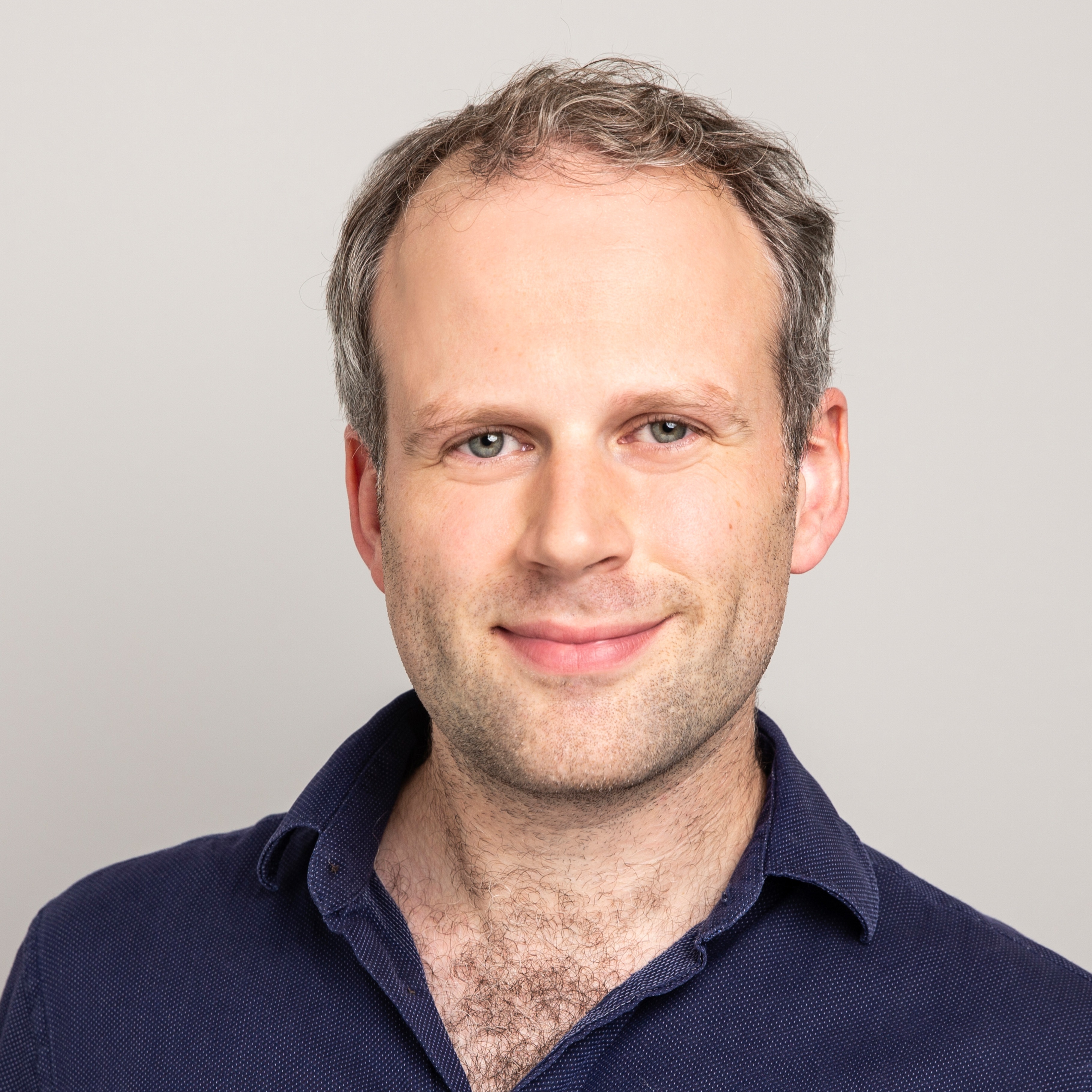
Oliver Marsh

Oliver Marsh

Faculty

I work on how communications technologies affect public discourse, politics, and democracy. This includes topics like information operations & disinformation; relationships between "old" and "new" media; algorithmic (de)amplification of content; attempts to regulate the internet; communications as informational and emotional phenomenon; and how choices by companies, politicians, and governments affect all those things.

I have usually acted as a "node" or "translator" between different actors - tech specialists, policymakers, civil society, media, experts and non-experts, etc. I've learned a lot about being in this role and I'd be very happy to talk about those experiences too.

My past work includes in government (In the UK Prime Minister's Office, setting up a social media analysis and counter-disinformation team called the Rapid Response Unit); as an independent researcher and consultant for organisations including The Institute for Strategic Dialogue, Demos, CASM Technology, the International Public Policy Observatory; and most recently as Head of Tech Research for the German civil society organisation AlgorithmWatch.

My PhD, from the Department of Science and Technology Studies at University College London, was on how definitional and emotional meanings of "science" interact online.

Photo: Studio Monbijou, Licensed CC BY 4.0

Topics

Much of my professional work has involved working between different professions - in particular I have interfaced between officials (in governments and regulators), academics, and civil society. But also even within government I found it useful to understand differing contexts between departments and (e.g.) analysts vs. policymakers - and develop skills to understand and navigate them.

I can talk to Fellows about practical skills and approaches that can be useful in collaborating across different mindsets and professions. This will include considerations of different incentives and pressures, and methods for learning from engagements, building in particular on thoughts I began in this post:

No, I don't have the answers of how to completely successfully go against the enormous power of Big Tech companies. But I can talk about the various types of efforts being deployed, some case studies (I list a few below, largely as examples), and where they might work together - including internationally, and by bringing in parties who do not normally focus on political technology.

  • Investigative Journalism: From the Facebook Papers to 404 Media
  • Political stands: From social media age bans to Palantir.
  • Public pressure: From Cambridge Analytica to the Anti Data Centre Movement
  • Regulation: From antitrust to tech regulation
  • Internal efforts: From Project Maven to Trust & Safety
  • Lawsuits: From chatbot harms to social media addiction.
  • External Research: From Crowdtangle to the Coalition for Independent Technology Research


I can also talk about some of the disadvantages and discomforts that may be involved, for instance where there is division of what "success" looks like, or trade-offs between (e.g.) completely accurate and truly engaging messaging.

There are numerous opinions and camps around the ethics of various technologies (most strongly and recently, AI), which can create frictions even amongst political technologists who are aligned on other values - let alone people who do not consider themselves political technologists. I can provide advice for Fellows who wish to discuss or navigate polarised views around tech. I will not attempt to convert Fellows to any particular perspective, nor help them to do so with others. I will instead help them consider how they can locate their own work, projects, and views within the existing space; and engage with & prepare for potential criticisms and opposition.

My experience in this topic: Besides my broader work in tech accountability and safety, also at the NGO AlgorithmWatch I was responsible for a lot of work at the intersection of differering views on tech, and a spectrum of organisations who took different approaches and stances. I developed AlgorithmWatch's principles for use of Generative AI, building on surveys which showed diverging views of AI in our organisation. I was also responsible for our research strategy, much of which challenged technologies while also often using (and sometimes encouraged use of) the same technologies.

There is growing appetite for alternative ways of designing social media to give users ways to escape X, Facebook, TikTok and the like - and not just in the political technology community. In some quarters, particularly in Europe, there is growing political attention to this topic with high profile initiatives like rebuild.net (championed by former EU Commissioner for Competition Margrethe Vestager) and #SaveOurSocials. Bluesky in particular is being used and discussed ever more widely.

There are various theories of change for how these platforms could displace existing Big Tech and/or protect democracy - many of which are perhaps over-optimistic and need to be challenged and refined.

I can discuss with Fellows about some of the core innovations and methods underlying alternative social media design - such as interoperability and federation, "public value" AI systems, pro-social design, and middleware.

I can also discuss framing questions around the hoped-for benefits of the design. Who do you hope uses it, and how, in order to achieve your desired change (and is that realistic)? What is your conception of your user groups and their needs, and does that need refining or researching? What existing tech, if any, are you hoping to displace - and if so, how?

Some material for starters:

https://www.betterconflictbulletin.org/

https://www.journalofdemocracy.org/articles/the-future-of-platform-power-making-middleware-work/

https://www.prosocialdesign.org/

https://www.oliver-marsh.com/sideways-looks-35-a-better-internet-part-1-also-hayfever/

https://www.oliver-marsh.com/a-better-internet-part-2-also-mermaids/

The problem of addressing false and misleading content online has a long history, but it became supercharged particularly after 2016. It has spawned much terminology - mis/disinformation, malinformation, FIMI, influence operations - and a range of countermeasures, from fact-checking to media literacy to regulations. New techniques - from fake accounts to deepfakes LLM poisoning - keep emerging, generating new countermeasures but also causing new panics.

The topic has become a major one in political technology discussions, and one which constantly generates new efforts and ideas - many of which do not engage well with existing discussions. There have also been changing views on the nature of the problem itself. Is the risk that minds will be changed in ways that swing elections, or cause mass violence, or even just sow distrust? Or targeted operations to deceive elites or radicalise vunerable individuals? Is the veracity or reliability of information really the best way to address online discourse? Should we be focused more on polarisation and radicalisation than deception - or are these all inextricably related anyway? Or is this problem all overblown anyway, with risks of bad solutions - some of which may threaten freedom of speech?

I can help fellows who wish to engage with "disinformation" navigate this history, and work on an informed basis through core questions: What do I think the problem is? Is my proposed solution meeting the right audiences? Has anyone else tried what I want to do? What might critique or resistance to my solution be?

Some material for starters:

https://www.oliver-marsh.com/sideways-looks--29--ai-pril-fools-also-dating-data/

"Why misinformation must not be ignored": https://pubmed.ncbi.nlm.nih.gov/39666498/

"In the age of AI, keep calm and vote on": https://www.politico.eu/article/artificial-intelligence-elections-ballots-vote-chinsinau-seattle-policymakers-technology/

We are seeing a growth in transparency and data access laws, to support scrutiny of tech companies. This is particularly the case in the EU, where the Digital Services Act supports researchers (including those outside the EU) to request data from very large platforms and search engines (Facebook, TikTok, Google Search etc.) for researching "systemic risks to the EU". This can, under some conditions, include access to internal company data.

Other rules and other countries, including the AI Act in the EU and implementation of the Data Access and Use Bill in the UK, may also open opportunities for access to platform data. All this builds on existing rules such as Freedom of Information and Subject Access Requests under the GDPR - though these existing rules are also somewhat at threat from political trends.

I can help Fellows who have projects involving access to data from large social media, search, and AI companies consider if and how they could use data access laws; or explain the rationale, debates, and politics underlying these rules and their ongoing development.

Some material for starters:

https://www.cnam.ie/industry-and-professionals/online-safety-framework/certifications-schemes/vetted-researchers/

https://algorithmwatch.org/en/wp-content/uploads/2025/08/DSA-40-12-explainer-2.pdf

https://dsa40collaboratory.eu/faq/