Topic
Sign in
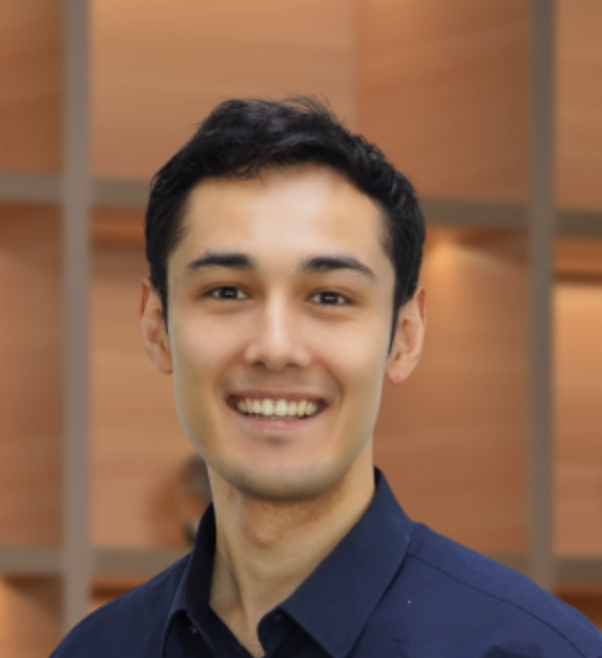
Joel Naoki CHRISTOPH

Joel Naoki CHRISTOPH

Fellowship Candidate

I was born in the Netherlands to a French-Japanese family and grew up there and in Germany. Since then, I have moved on my own to eight more countries, bringing the total to ten I have lived in for a year or more. I speak eight languages. That sounds like a party trick until you are the person in the meeting who can read the English and the Chinese versions of the same agreement and see that they do not say the same thing.

I am an economist. My subject is how to govern powerful technologies when no single government controls them. Artificial intelligence and nuclear weapons take up most of my time. When states or firms agree to limit something dangerous, what makes the limit stick? I look at how you check that a promise is being kept: measuring the computing power behind advanced AI systems, weapons inspections under arms control treaties, the economics of why some agreements hold up while others get ignored.

I studied at University College London and the Barcelona School of Economics, spent a year at Tsinghua University in Beijing reading politics and international relations, then did several years of doctoral research in Florence. Since then I have been a Summer Fellow at the Centre for the Governance of AI in London, a Technology and Human Rights Fellow at the Harvard Kennedy School, and a fellow at the Economic Research Institute for ASEAN and East Asia in Jakarta, where I looked at how Southeast Asian governments might treat AI as a shared regional resource. I have written for Lawfare, Tech Policy Press and the World Economic Forum.

I build organisations too. I founded 10Billion.org, an open-source movement of around 300 people across 30 countries, with local groups in Berlin, Jakarta and Manila. I ran Effective Thesis, a nonprofit that helps students choose research questions that matter.

My nuclear work runs through Pugwash, where I help run the International Student Young Pugwash leadership team. I am a Nuclear Futures Fellow with Ploughshares Fund and Horizon 2045, and in 2026 I received the Gorbachev/Shultz Youth Award from Voices for a World Free of Nuclear Weapons.

I spend my working life designing rules that are supposed to survive people who would rather they did not, almost always on paper, almost never anywhere I can watch them fail. A house of fifteen people with a treasury, a guest room and a doorbell is the smallest version of that problem I have found, and the only one where I get to see the whole thing at once.

[email protected] · 10billion.substack.com · linkedin.com/in/joelchristoph

Topics they ❤️

Given the plethora of highly interesting ideas, projects, domains, and disciplines that our rich world is built of, how can one choose what to work on?

There is an argument in favour of long-term projects (missions): there are some affairs in the world today that seem to be solvable only with substantial persistence and patience. These issues, which are both limited to a single discipline but more frequently across multiple, seem to require considerable multi-year commitment before meaningful progress can be achieved.

Therefore: the question of what to work on flips: it's not only what one wants to work on but also what needs to be worked. Yet, one is unlikely to devote one's life to something merely because it is needed, without also finding it compelling. We are interested in the intersection.

How does one choose a mission if they decide they want to work on one? The answer is nontrivial because of the requirements:

(a) it has to be something that is needed in the world -- (usefulness dimension)
(b) it has to be something in which they have above-average competence (only insofar as the good outcome is realised) -- (aptitude dimension)
(c) it has to be something they want to work on -- (preference dimension)
(d) it has to be something they want to work on long-term — a successful mission becomes one’s life’s work -- (commitment dimension)

The difficulty of the answer lies in the inexact comparison of the degree of each of these dimensions per issue. For example, here's a list of issues:

  1. Alzheimer’s
  2. Economic stability of Western countries
  3. Mental health of the young population

Let's reflect on each dimension.

(a) Usefulness: they are all extremely important; maybe one could claim economic stability is more important due to its impact to much more of the population of a country but that wouldn't be a convincing claim
(b) Competency: judging one's competency for each of these can be quite hard insofar as what skills are required for each problem/solution is genuinely unclear (even if a problem seems medical or economic, the practical path to the solution can require enterpreneurship or campaigning skills)
(c) Preference: people are interested in more than one disciplines. Helping people with medical problems can be fascinating and rewarding but so can scheming plans for eradicating homelessness.
(d) Commitment: all of these issues seem so distant and commitment a fairy tale unless one has already spent some time on them

I think this demonstrates the heart of the problem of choosing a mission. There are convincing arguments that each of the dimensions can be both very low and very high for someone. It's just very hard to say! So what do we do? I think our past experience is the best place to start.

  1. Which country-level or global scale problem keeps coming back to your mind?

  2. Is there a discipline or skill you feel you have a natural talent for?

  3. What is more likely to work out depending on who you know and where you are? Try not to be biased when answering this. The point is the good outcome for the world! (For example, don't feel guilty if you are the child of the prime minister or something; whatever power you have, use it for the benefit of all)

  4. What issue can really grab you? What do you see could be your life's work?

I feel these are good thinking paths to reflect and understand such a mission project. I've already been verbose but here are some more aspects:

  • If one feels their reflections yield little insight maybe there is a lack of experience. So try new things! Experiment, do things you wouldn't normally do!
  • It's worth thinking about one's mission intentionally. Find a weekend, clear your schedule, go on a walk, and just think about this — no other expectations other than spending time on thinking.
  • Choosing is better than not choosing, even if the choice ends up being suboptimal. That's not to say one should rush a choice. Take a few years to think about this, experiment, try things out. But I would argue in favour of choosing a mission, eventually.
  • I am not saying everyone should have a mission. Such an approach to a career/life is not for everyone. But I think it is for the people that are here at Newspeak House.

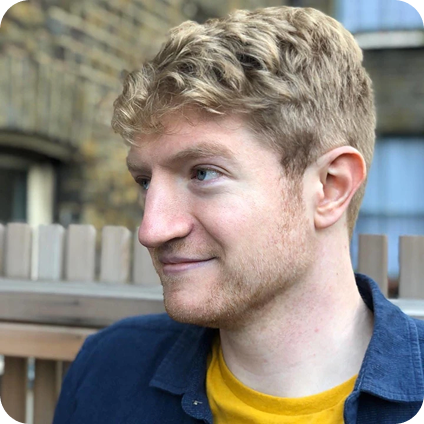
I can't say much about the place before I got the keys in 2011, but I'm happy to give my account of what happened after that. When the college started, the house was practically a ruin; no heating or hot water, a chunk of the roof was missing, the front door was broken and didn't lock!

Reid Hoffman famously said "If you're not embarrassed by the first version of your product, you've launched too late", and Newspeak House was no exception. Much like it feels with AI today, it was obvious that there was something important happening with technology and politics, people needed a place to meet to talk about it, and this was the best we had.

The history that is written is a combination of the events held here (newspeak.house/events) and the people who inhabited it (newspeak.house/fellowship); maybe you can ask your favourite model to give you an overview. Otherwise, feel free to ask some questions below and I'll do my best to tell you a story!

As a Residential Fellow of the first cohort of the Newspeak House Fellowship back in 2016, I have maintained a connection and presence in the Newspeak House space for over 10 years. I lived in the house for 15 months between 2016 and 2017, through a very politically turbulent year marked by the EU Referendum and the 2017 General Election. As a Fellow and member of the NH Faculty, I have engaged with and seen how various cohorts have spent their time in the space. I can offer my thoughts on how best to engage with the Fellowship and how to use your time most effectively in this space.

As the cohorts have changed, so too has the Fellowship, but the fundamentals remain the same - these include: the importance of gathering and convening your communities in the space. Using the building to run events and experiment. Actively managing the community and catalysing opportunities for diverse groups of people and organisations to mix, meet, build friendships and work together. Invite your people, invite your networks to the Ration Club weekly community dinner. Attend as many community events in the college as you can manage and discover new people and practices. Invite communities to run events in the space, introduce them to others and volunteer to help them run events in the space. Immerse yourself in and help strengthen the networks of those within your cohort, the wider Fellowship and existing communities and networking in Newspeak House. Use the space - it’s yours, want to run a conference, speed networking, festival or party - go right ahead. Ground your thinking, experiments and projects in the problems and challenges of existing political and civic communities. Actively reach out to faculty, we’re here to talk things through, assist and get stuck in - invite us.

Be political - Newspeak House is a space for working to build power, technology and the means to build a better world. Be bold, adaptive and experimental in your approach and act with an abundance mindset. You are here to collaborate together as a fellowship, not work in isolation - incubate each other's ideas and be a critical friend. The fellowship is an opportunity for you to explore, dip into things, and draw upon community resource - before contributing to broader civic and political technology impact through your end of year prototypes and projects. As Fellows of Newspeak House, you are stewards of a community resource - water it, nurture it.

If any of this sounds useful, get in touch. Your time here is what you make of it and remember, have fun.