
Topic
Sign in
Rhianwen Rowlands

Rhianwen Rowlands

Fellowship Candidate

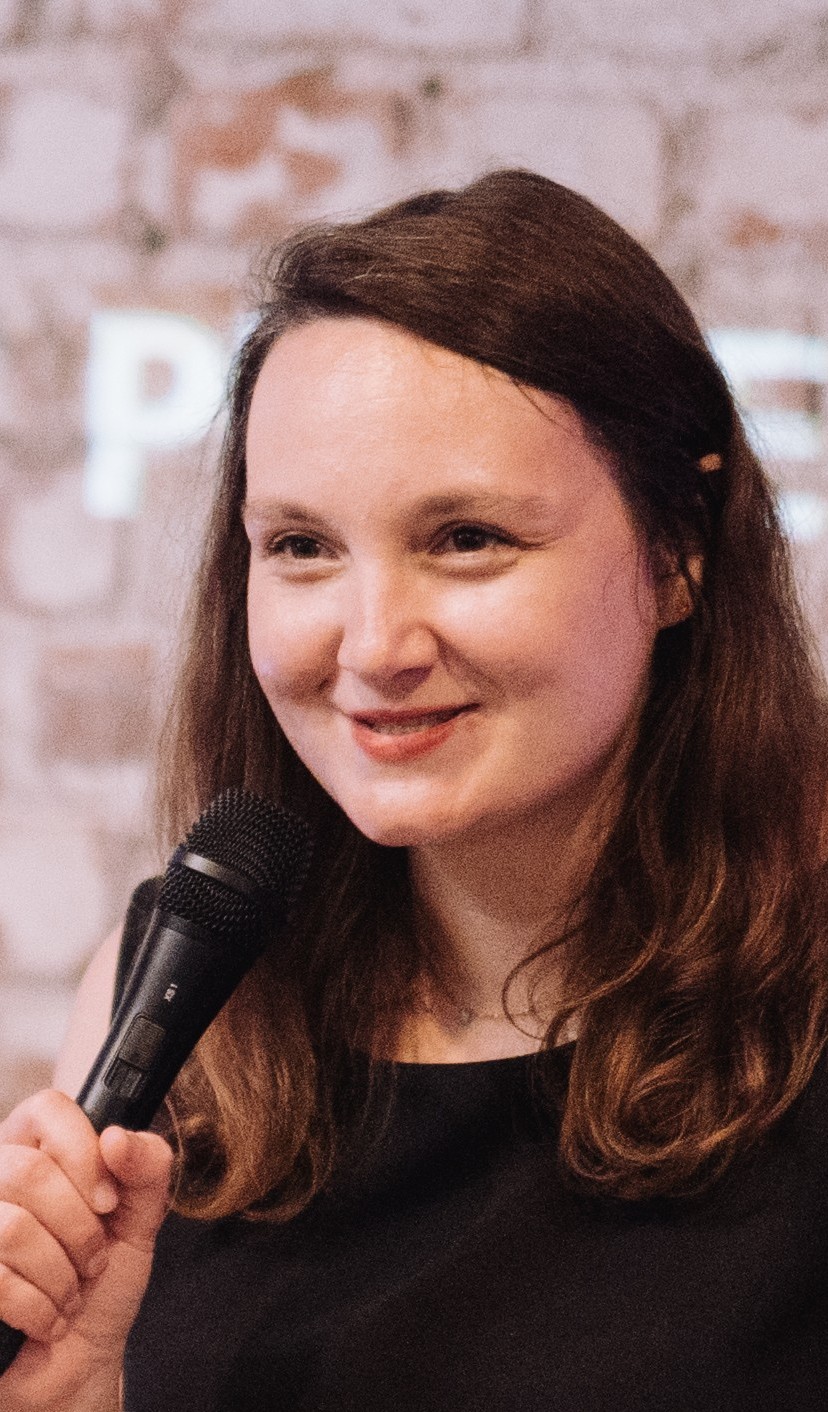
I'm Rhianwen (Rhi) Rowlands a communications professional, musician and researcher based in Stoke Newington. 

I have an interest in propaganda, hauntology, liberation politics and how software can be used to demystify complex topics. I currently work as a communications specialist in a third sector organisation focused on making the textile industry more sustainable. Much of my job is making complicated research legible to non-specialists. 

From my perspective, one of the key challenges for the Left ™ in this moment, is accurately combatting mis/dis-information. I’m interested in using software to develop counter-messaging/methods using accurate material and socio-cultural analysis. I think that part of this involves actively developing the ability to stretch our imaginations and what we conceive of as politically possible.

I am currently building two software projects. The first, called fr narratives, tracks narratives and messaging across far-right telegram networks. I want to understand what messaging is pushed and how it spreads; whether it is coordinated or catches on organically. The data so far shows these networks splitting into sub-communities where channels play the same role in sharing and framing news stories/events as they happen. 

The second is a data-centre transparency tool intended to help inform ongoing public discussion and sharpen critique of infrastructure development not benefitting the public. There is currently no requirement in the UK for companies to report data centre cooling or building methods in any standardised way. What does exist is scattered across planning applications, company accounts and paywalled commercial databases. My aim is to assemble that material into a single open dataset, highlight what is missing and why, and provide an accessible map of locations around the UK with information on the differences between these sites and the purposes they serve.

I also have a musical project, Sharks on Vinyl, and am currently interested in developing a set that incorporates live coding elements. I co-founded PlugJam, an electronic-music open mic night in Cardiff that's still ongoing. PlugJam gave me a lot of experience organising events and building a community. Live events inevitably face challenges, logistically and technically, and it was a crash course in problem solving under pressure and getting things back on track.  

I'm excited about joining Newspeak House to learn from people who are building projects and thinking about novel approaches and ways of thinking. I’m looking forward to being in a room with people building civic tech and trying to make a positive impact.

Topics they ❤️

I define a decision as the process of selecting one out of two or more alternatives.

In many cases, it can be valuable to put some work into generating as many ideas as possible. This is especially important for making decisions amidst disagreement — it takes some real creative work to find an idea that everyone will agree to.

In addition to finding creative ideas to reach agreement, you also simply want ideas that are good! If you are designing a technology, or planning a campaign, you don't just want to settle on the first viable idea that comes along. You want to push yourself and your group to come up with the best possible idea.

Colloquially, the process of coming up with ideas is known as "brainstorming." For design purposes, you must address two key tensions in brainstorming.

On the one hand, you want to maintain as much diversity as possible in your process — the more diverse your ideas are, the more likely you are to find a good one. If all of your ideas are very similar, you're not really exploring the possibility space. Thus, a good design practice might be to keep all of your group members isolated, so they don't start to herd together around the same set of ideas.

On the other hand, people inspire each other — we "riff" on each others ideas — once I hear an idea from you, it sparks an idea from me that I would not have thought about on my own.   So we don't actually want to keep people separate, do we? We want to keep them together, so they can bounce ideas off each other.

This is the tension you must consider in your design process — balancing diversity and creative synergy.

Another technique for generating ideas is crowdsourcing. The idea of crowdsourcing is that we can recruit members outside of a group to contribute ideas, often through a competition where the best idea gets a prize.

The advantage of crowdsourcing is that it puts a lot more people on the problem—and more people means more chance of finding a good idea. A very popular website for crowdsourcing is Kaggle.

One interesting idea I recently read (no link available) about crowdsourcing is that the type of feedback matters — sometimes, you might want to give feedback on the quality of the solutions, and sometimes you might want to give feedback on the way that people are designing the problem.   Each approach has different advantages.

These are a few examples of design principles you might consider, and we can discuss others.

With respect to developing your facilitation practice, I teach a very specific set of techniques for managing idea generation.

Video calls are a powerful tool for connecting people remotely.

During my time at the Centre for Collective Intelligence, I lead the development of Zeitgeist - a tool to run deliberative workshops, both remotely and in-person. We designed an interface that allowed participants to deliberate together and interact with workshop content.

In this topic, we’ll explore how small group video call experiences can offer a comfortable, natural, experience - and guide the development of an open source library that lowers the risk and effort to integrate video calls into applications.

Vendor lock-in

Building Zeitgeist, we faced a difficult architectural choice: Which video call provider to integrate? We did not have the resources to develop, host, or maintain our own.

There are plenty of video call service vendors to choose between. From those that offered the features we needed, we selected Amazon Chime SDK, primarily because it offered easy integration with our product. In Feburary 2026, Amazon sunset Chime. The SDK, whilst still available, is in maintenance mode: No new features or major changes are planned. Sooner or later, support will end, and Zeitgeist will need to migrate.

When you build an application that uses a video call service, you must use a video calling client library that can interact with the provider. These client libraries are created by the service providers, and they are not incentivised to support other providers. Most use their own terminology, and none have a common interface. This is vendor lock-in, and it represents a bit of risk for you:

  • What if they increase their prices?

  • What if they remove support for your region?

  • What if they adopt unethical practices?

  • What if another provider offers a feature you need?

It’s often a significant effort to replace a library like this, as you are likely to have heavily integrated it into your user interface.

An opportunity for OSS

At time of writing, there’s no open source, vendor neutral, video calling client library. (There are a few open source video calling services, but they require that you also host or work with a basic WebRTC provider.) There’s a niche for a library that can bridge the divide:

  • Unified terminology for common video calling concepts

  • Supports any number of vendors with a plugin architecture

  • Supports any number of application/UI frameworks by publishing multiple libraries

  • Provides an abstraction layer: import the library, build your UI, and connect to any vendor

  • Easily switch between vendors with small configuration changes

  • Easily extensible

I’ll be working on the beginnings of this, as an open source React library, over the coming year. Work we do on this topic will directly feed into the development of this library. Collaborators are welcome.

With the reach of generative AI, the term “slop” has risen in prominence. It represents a rejection of thoughtless content, often perceived to be low in quality or creativity.

Developers have always taken a view about the amount of effort they put in to a task - with a direct effect on the quality of code they deliver. This is a calculation based on deadlines, availability, resources, reputation, and plenty of other factors.

Opinion is strongly divided about AI-assisted coding. Some argue it supports increased productivity. Others cite poor quality outputs and unexpectedly high cost.

What does poor quality code look like?

I have been exploring the outputs from some generative AI coding tools. Some traits are pretty clear:

  • Use of obscure and made-up terms

  • Code mingled with narrative comments

  • Spaghetti code

  • Long or difficult to read functions

  • Inflexible, hard-coded assumptions

  • Dependencies on old libraries, difficult to upgrade

These issues are also referred to as technical debt.

Does it even matter?

Arguably, if code is only ever to be written by one person (or agent), then idiosyncrasies don't matter. Provided the developer knows where everything is, who cares if nobody else can figure it out? This may well be a naive position...

  • Do you trust your coding agent to get everything right?
  • What happens when you run out of credit?
  • Do you want to be able to maintain it yourself?
  • Are you sure nobody else will look at the code?

What can we do about it?

Over time, technical debt builds up in every project and the solution is to refactor the code - a sense-making process in which developers rewrite the offending parts. Solo developers and small teams working in isolation are particularly vulnerable to technical debt, but all teams experience it.

Running code reviews and writing code that any person can quickly understand is a good preventative measure. Some examples of established practices:

  • Clear and meaningful variable names

  • Use of well established design patterns

  • Use of existing frameworks, rather than re-inventing the wheel

  • DRY (Don’t Repeat Yourself)

  • KISS (Keep It Simple Stupid)

  • YAGNI (You Ain’t Gonna Need It)

  • SOLID (principles for object oriented development)

  • Separation of concerns (a precursor to the Single Responsibility Principle)

  • Clean Code (and opinionated superset of principles and approaches)

How are coding agents any different?

Coding assistants work alone. They aren't trained to expect code review nor do they have code quality metrics. As they work, they develop personal shorthand and assumptions, which then shapes and styles the code they produce.

I have been collating a set of guidance, skills, and scripts for coding assistants, to raise the quality of their outputs. It's available here: instantiator/dev-qual

For this topic, we’ll discuss factors that contribute to code quality, and how they can be measured and applied - both to AI-assisted and human developed coding. With some metrics in hand, I’ll support you to compose rules for your language or framework of choice, or enhance those already found in dev-qual.

Software development is necessarily social.

Developers need to communicate well for plenty of reasons:

  • to share an understanding of common goals and desirable outcomes

  • to share standards for quality

  • to share contracts and interfaces for interoperability

  • to share patterns for efficiency and readability

  • to share learnings to avoid common pitfalls

  • to write clear code that’s easy to review

Over the past few decades a variety of ways of working and digital tools have been developed to support this. The agile manifesto and agile software development offers principles and ways of working for teams, and  lean software development goes further, applying lessons from manufacturing to support larger organisations and optimise cross-team communication. Tools like Jira, Trello, Asana, GitHub Projects (and plenty of others) offer easily recognised interfaces to manage this communication.

Open source software is an ecosystem of interoperable tools including operating systems, command line tools, browsers, coding languages and libraries. Many interconnected systems are linked together by APIs running common protocols, with common data standards.

AI assisted coding is becoming prevalent, and may alter the way we work together. Developers can create far more complex projects in much smaller teams, or in isolation. Are shared contracts, open APIs, common data types, and interoperability at risk? What are good outcomes, and how can we incentivise them?

For this topic, we’ll discuss and test principles that could contribute to a manifesto for assisted coding. We’ll be thinking about this, and exploring a variety of ways of working. All ideas welcome!

I can't say much about the place before I got the keys in 2011, but I'm happy to give my account of what happened after that. When the college started, the house was practically a ruin; no heating or hot water, a chunk of the roof was missing, the front door was broken and didn't lock!

Reid Hoffman famously said "If you're not embarrassed by the first version of your product, you've launched too late", and Newspeak House was no exception. Much like it feels with AI today, it was obvious that there was something important happening with technology and politics, people needed a place to meet to talk about it, and this was the best we had.

The history that is written is a combination of the events held here (newspeak.house/events) and the people who inhabited it (newspeak.house/fellowship); maybe you can ask your favourite model to give you an overview. Otherwise, feel free to ask some questions below and I'll do my best to tell you a story!

Much of my professional work has involved working between different professions - in particular I have interfaced between officials (in governments and regulators), academics, and civil society. But also even within government I found it useful to understand differing contexts between departments and (e.g.) analysts vs. policymakers - and develop skills to understand and navigate them.

I can talk to Fellows about practical skills and approaches that can be useful in collaborating across different mindsets and professions. This will include considerations of different incentives and pressures, and methods for learning from engagements, building in particular on thoughts I began in this post:

This topic builds on Systems Thinking: Understanding Political Dynamics.

Simulation models give us a way to explore how politics systems behave, and what might happen when we change or interfere with them. Examples are how opinions spread through a population, how protests or political movements grow, how inequality accumulates, how institutions respond to pressure, or how different interventions might change the course of a system.

A simulation is a simplified representation of a system. We define the things in it, how they behave, and how they interact, then see what larger patterns emerge. Simulations can be mathematical, computational, physical, or even played out by people.

Traditionally, computer simulation required programming and mathematical expertise. LLMs change that. It is now possible to describe a system in ordinary language and have an LLM help turn it into a working model. That makes simulation modelling much more accessible, but it does not remove the hard part: deciding what to include, what to leave out, what assumptions you are making, and whether the results mean anything.

In this topic, I can help you will build simple models of social and political systems and experiment with them. I can help you choose a system, identify a possible mechanism, turn it into a toy model, use an LLM to implement it, and interpret the results.

The emphasis is on learning how to think with models rather than learning to code.

Core reading

No, I don't have the answers of how to completely successfully go against the enormous power of Big Tech companies. But I can talk about the various types of efforts being deployed, some case studies (I list a few below, largely as examples), and where they might work together - including internationally, and by bringing in parties who do not normally focus on political technology.

  • Investigative Journalism: From the Facebook Papers to 404 Media
  • Political stands: From social media age bans to Palantir.
  • Public pressure: From Cambridge Analytica to the Anti Data Centre Movement
  • Regulation: From antitrust to tech regulation
  • Internal efforts: From Project Maven to Trust & Safety
  • Lawsuits: From chatbot harms to social media addiction.
  • External Research: From Crowdtangle to the Coalition for Independent Technology Research


I can also talk about some of the disadvantages and discomforts that may be involved, for instance where there is division of what "success" looks like, or trade-offs between (e.g.) completely accurate and truly engaging messaging.

There are numerous opinions and camps around the ethics of various technologies (most strongly and recently, AI), which can create frictions even amongst political technologists who are aligned on other values - let alone people who do not consider themselves political technologists. I can provide advice for Fellows who wish to discuss or navigate polarised views around tech. I will not attempt to convert Fellows to any particular perspective, nor help them to do so with others. I will instead help them consider how they can locate their own work, projects, and views within the existing space; and engage with & prepare for potential criticisms and opposition.

My experience in this topic: Besides my broader work in tech accountability and safety, also at the NGO AlgorithmWatch I was responsible for a lot of work at the intersection of differering views on tech, and a spectrum of organisations who took different approaches and stances. I developed AlgorithmWatch's principles for use of Generative AI, building on surveys which showed diverging views of AI in our organisation. I was also responsible for our research strategy, much of which challenged technologies while also often using (and sometimes encouraged use of) the same technologies.

There is growing appetite for alternative ways of designing social media to give users ways to escape X, Facebook, TikTok and the like - and not just in the political technology community. In some quarters, particularly in Europe, there is growing political attention to this topic with high profile initiatives like rebuild.net (championed by former EU Commissioner for Competition Margrethe Vestager) and #SaveOurSocials. Bluesky in particular is being used and discussed ever more widely.

There are various theories of change for how these platforms could displace existing Big Tech and/or protect democracy - many of which are perhaps over-optimistic and need to be challenged and refined.

I can discuss with Fellows about some of the core innovations and methods underlying alternative social media design - such as interoperability and federation, "public value" AI systems, pro-social design, and middleware.

I can also discuss framing questions around the hoped-for benefits of the design. Who do you hope uses it, and how, in order to achieve your desired change (and is that realistic)? What is your conception of your user groups and their needs, and does that need refining or researching? What existing tech, if any, are you hoping to displace - and if so, how?

Some material for starters:

https://www.betterconflictbulletin.org/

https://www.journalofdemocracy.org/articles/the-future-of-platform-power-making-middleware-work/

https://www.prosocialdesign.org/

https://www.oliver-marsh.com/sideways-looks-35-a-better-internet-part-1-also-hayfever/

https://www.oliver-marsh.com/a-better-internet-part-2-also-mermaids/

The problem of addressing false and misleading content online has a long history, but it became supercharged particularly after 2016. It has spawned much terminology - mis/disinformation, malinformation, FIMI, influence operations - and a range of countermeasures, from fact-checking to media literacy to regulations. New techniques - from fake accounts to deepfakes LLM poisoning - keep emerging, generating new countermeasures but also causing new panics.

The topic has become a major one in political technology discussions, and one which constantly generates new efforts and ideas - many of which do not engage well with existing discussions. There have also been changing views on the nature of the problem itself. Is the risk that minds will be changed in ways that swing elections, or cause mass violence, or even just sow distrust? Or targeted operations to deceive elites or radicalise vunerable individuals? Is the veracity or reliability of information really the best way to address online discourse? Should we be focused more on polarisation and radicalisation than deception - or are these all inextricably related anyway? Or is this problem all overblown anyway, with risks of bad solutions - some of which may threaten freedom of speech?

I can help fellows who wish to engage with "disinformation" navigate this history, and work on an informed basis through core questions: What do I think the problem is? Is my proposed solution meeting the right audiences? Has anyone else tried what I want to do? What might critique or resistance to my solution be?

Some material for starters:

https://www.oliver-marsh.com/sideways-looks--29--ai-pril-fools-also-dating-data/

"Why misinformation must not be ignored": https://pubmed.ncbi.nlm.nih.gov/39666498/

"In the age of AI, keep calm and vote on": https://www.politico.eu/article/artificial-intelligence-elections-ballots-vote-chinsinau-seattle-policymakers-technology/

Economic models are often criticised for relying on absurd assumptions, such as perfect rationality. Despite this criticism, these models persist throughout our politics, policy, and in business.

If modelling is the art of simplifying a complex world through assumptions and abstractions, the question is not if these assumptions are true, but whether they are useful. What makes a good assumption? When does a simplification improve understanding vs worsen it? Let's discuss how economists approach these questions, from traditional modelling methods, to more recent developments in behavioural economics that adapt the assumptions with psychological research.

For further reading, Milton Friedman’s The Methodology of Positive Economics (1953)

Economic theory often seeks to identify a model's "equilibrium" - a stable state towards which the systems trends and then rests. However, many economic, political and social systems have multiple equilibria. This provokes questions: which equilibrium will emerge, what determines that outcome, and how stable is it?

Understanding this illuminates the robustness and fragility of the systems on which we rely. It also explains why seemingly arbitrary features can be highly influential.

For example...

  • Why a bank can be healthy one day and collapse with a bank run next.
  • How and why power within an organisation can be concentrated on a single individual.
  • Why political norms can remain entrenched for decades until suddenly they are not.
  • How your life could change from going great to collapsing quicker than you hoped (and, more optimistically, vice versa).

Organising events in Newspeak Hall is one of the great perks of studying at Newspeak House; a fully equipped event space that holds up to ~100 people. It's hosted thousands of events for the college, everything from meetups to conferences, unconferences, dinners, hackathons, parties, exhibitions, lectures, co-working, debates, book launches, concerts, world cafes, fishbowls, screenings, workshops, and roundtables.

If you're interested in designing something together, I am happy to offer advice and support with event design, facilitation, logistics, catering, promotion, community strategy, and almost anything else you might need. Don’t worry if you don’t have a very clear idea of what you’d like to do yet - we can figure that out together.

I also manage the diary of the hall; it's a busy programme of community events, private hires, and events organised by fellows and faculty. As Fellowship Candidates, you will book dates through your agent. You might not be able to secure a specific exact date, but usually we can find a slot. Typically single day events are booked around a month in advance.

Finally, events should always be considered as part of a wider community strategy. I've written a short guide on how I typically approach this, though community-building is a fast-moving field with many open questions...

What are the different forms and ways in which the collectives and political activities you work with are imagined? Getting clear about what metaphor is in play can help us stay honest when it comes to generalizations.

Metaphor often guides processes, obscures assumptions, and impregnates practical processes.
Revealing what the imagined pictures being used in politics are can be an excellent first step in figuring out what on earth is going on out there.

Most good work dies in an inbox. People spend weeks on a project, a proposal or an idea, and then thirty seconds on the message that's supposed to get someone to engage with it. Getting things in front of people is a genuine skill and one you can learn.

I've spent years operating in ecosystems where nobody has to reply to you: MPs, funders, journalists, party staff, senior volunteers, busy organisers. I can help fellows with the practical craft of cut-through: writing emails people actually answer, WhatsApps that get a response rather than a "seen", subject lines, timing, length, asks that are easy to say yes to, and knowing when a message should be a call instead. This also includes the wider game of visibility, how to warm someone up before you ask, when to use an intermediary, how to follow up without being annoying, and how to make your work legible to people with no time.

I can help fellows think about questions like: Why is nobody replying to me? What's the actual ask here? Who should this come from? How do I get my project in front of the person who can act on it?

Political communication increasingly isn’t just about having the strongest message, it’s about understanding how information moves. I’m interested in the relationship between message, messenger, medium and distribution: why some political ideas spread while others disappear, why the same message lands differently depending on who delivers it, and how platforms shape what people see, trust and act on. Most political actors obsess over the first and neglect the other three which is usually why their ideas disappear.

Some things I've learned from testing this in practice:

  • Messenger often beats message. In our crowdsourced message testing, the most persuasive messages came from people who shared demographics and political history with the audience, not from professional comms people. In our pilot work distributing broadcast clips into Reform-adjacent spaces, a named, working-class trade unionist's account outperformed an anonymous "in-group" account on every metric — roughly 5x the views — while avoiding the platform bans that killed the anonymous ones. Authenticity is a distribution strategy, not just a virtue.
  • Distribution Mechanics that grab attention are different depending on what platform you are on. If you want something to grab attention on TikTok you might make a very short video with a shocking hook. If you want to grab attention in a whatsapp group locally, asking a question and telling a "gossip like" story is way more effective.
  • Proximity drives salience. Ads featuring local candidates consistently beat national politicians; in one pilot, everyone who scanned a QR code on a leaflet lived within 1km of the local issue it discussed. People pay attention to politics that is recognisably theirs.

Through my work across campaigns, organising, experimentation and political technology, I’ve explored how political attention forms in practice , from local Facebook groups and messaging apps to campaign content, community networks and conversational spaces. I can help fellows think about questions like: How do people actually encounter politics today? When does messenger matter more than message? How do platform incentives shape behaviour? Why do some issues suddenly become politically salient? How do trust and legitimacy get built online? And how do you design political interventions that create participation rather than simply visibility?

I’m particularly interested in moving beyond broadcast models of politics towards understanding politics as something relational and distributed, built through networks, conversations, repeated interactions and trusted messengers rather than centralised communication alone.

A lot of political and organisational problems are not really persuasion problems, they're legitimacy problems. People often know what needs to happen but disagree on who gets to decide, whether the process was fair, or whether they trust the people leading it. I'm interested in how legitimacy gets constructed in practice: through participation, transparency, shared ownership, evidence and creating processes people recognise as fair. Following Martin Conway, I treat legitimacy as historically contingent, socially constructed and contested — the interesting question is never "is this legitimate?" but "how did it become legitimate, and why then?"

For example, the covid memorial was not legitimate but it was made so. This was done by making sure the first volunteers wore flouresent jackets, had a sign put up and by the afternoon multiple front bench politicians had visited it. Then the council accepted it and paid for its upkeep as a historic memorial. Its legitimacy was constructed. Technically everyone could have been arrested for criminal damage.

Another example in the #Honourtheoffer campaign which was crearting legitimacy through organising information. When Oxford alumni felt colleges weren't honouring their access commitments, the concern was fragmented across dozens of colleges with decentralised decision-making, which meant if one fell, they all would. A hashtag gave people shared language and over 8,000 signed the petition, but the pivotal move was mundane: a public spreadsheet listing every college against its commitments, updated openly and pitting them against each other. The spreadsheet didn't just record reality, it organised it and whoever structures the information becomes trusted to interpret it. League tables, polling and Wikipedia all work this way.

Across my work I’ve repeatedly operated in environments where authority is fragmented such as campaigns, parties, community groups, MPs’ offices, networks and coalitions. I can help fellows think about questions like: How do you make decisions people will actually follow? How do you create buy-in without formal power? How do you design participation that is meaningful rather than performative? How do you create legitimacy for new technologies or organisational change?

A lot of people understand UK politics formally but not operationally. I can help fellows understand where decisions actually get made: the relationship between parties, MPs, special advisers, local government, campaigns, funders, members, parliamentary structures and informal networks.

My background includes working in parliament, running Labour Together, convening election review processes and spending years operating between campaigns, think tanks and politicians. That means I can help translate abstract questions (“How do you influence Labour?” “Who matters?” “What does Parliament actually do?”) into practical strategy. I’ve run sessions on navigating UK political systems, identifying pressure points and understanding the difference between formal constitutional power and real-world political leverage.

Politics rarely works the way the diagram says it does. A lot of strategy is understanding timing, relationships, legitimacy, incentives and institutional rhythms.

One of the things I spend a lot of time helping people with is moving from “this is unfair” to “this is changeable”. Political systems often look impossible until you identify where decisions, incentives and coordination failures actually sit.

I can help fellows map systems and identify leverage: who controls implementation, who shapes narratives, where informal veto points exist, where legitimacy matters, and where small interventions create outsized effects. This includes practical tools for actor mapping, coalition design, identifying hidden decision-makers, sequencing campaigns and understanding institutional incentives. I’ve run sessions that focus less on ideology and more on operational politics: how things move in practice.

I can help fellows think through different routes to change: insider versus outsider strategies, coalition building, narrative pressure, institutional entrepreneurship, campaigning around moments of opportunity and understanding how influence accumulates. This includes practical questions like: Who needs persuading? What kind of evidence matters? When should you campaign publicly versus privately? How do you build influence without formal authority?

I’m particularly interested in helping people understand that lobbying is rarely just meetings, it’s often about creating conditions where a decision becomes easier to take.