Topic
Sign in
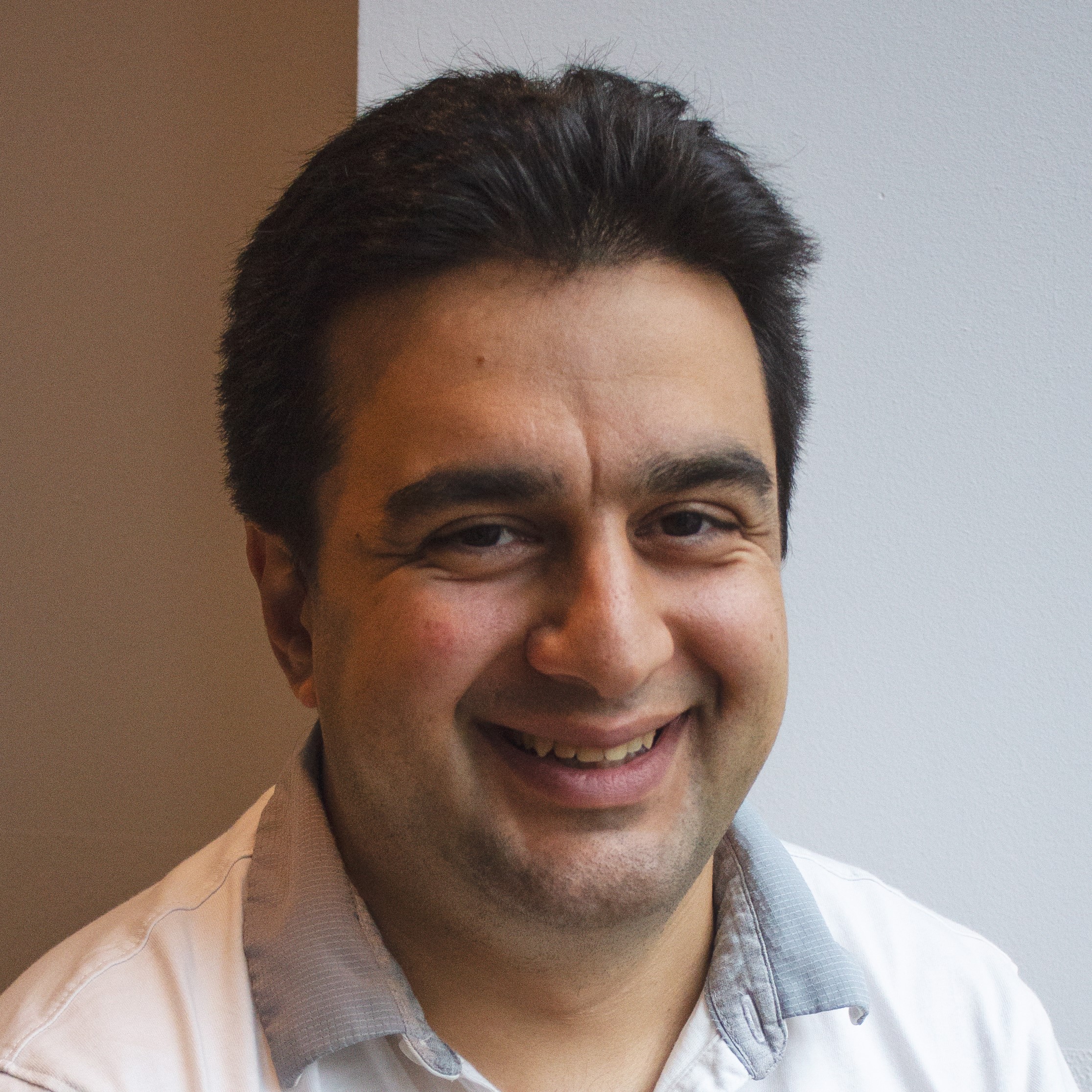
Noam Herberg

Noam Herberg

Fellowship Candidate

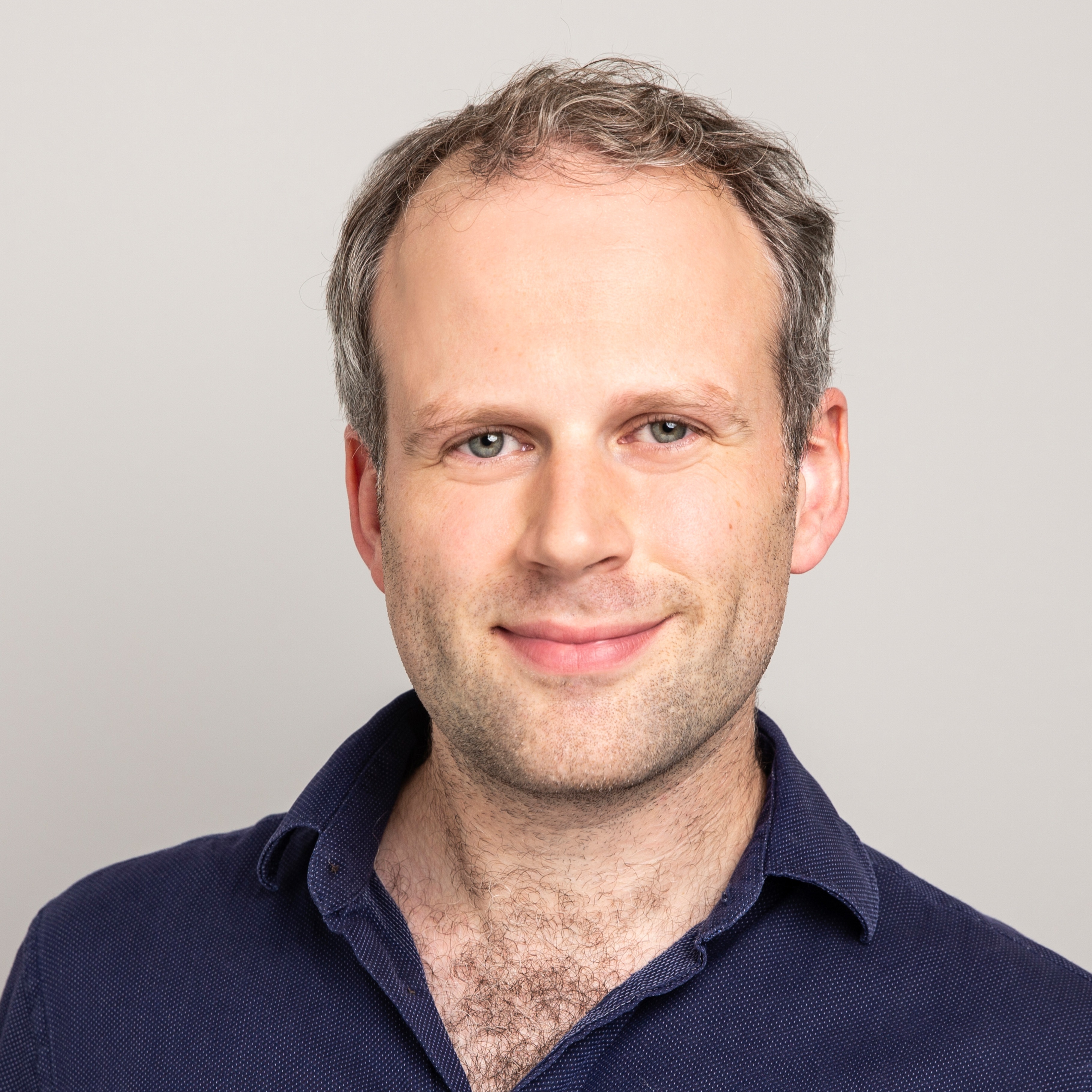
I’m a political organiser and political technologist interested in how technology, research and strong communities can make democratic politics work better and, ultimately, help progressive movements win change.

I’m currently Community and Partnerships Officer at Campaign Lab, a non-profit bringing together campaigners, researchers and technologists to experiment with new approaches to political campaigning. My work spans community building, partnerships, technology and applied research, and I’ve helped develop projects exploring AI, social listening, political persuasion, digital organising and new tools for MPs and campaigners. I’m particularly interested in the gap between academic or technological innovation and what actually works in the messy reality of political organising: how we can test ideas rigorously, turn useful experiments into practical tools, and make sophisticated technology accessible to people without technical backgrounds.

Alongside my professional work, I’m Chair of Finchley and Golders Green Labour Party. I worked on the 2024 general election campaign and stood for Barnet Council in 2026. I’m also a trustee of a local food bank. I’m rooted in the practical work of campaigning, from knocking on doors to organising volunteers, but I’m equally interested in drawing a line from that experience to bigger questions about institutions, technology, political strategy and how people participate in democracy.

Before moving into politics, I studied philosophy, with a particular interest in Wittgenstein, completing my MA at UCL. I’m fascinated by political behaviour, institutions and collective action, as well as broader questions about how technological change alters power, and our ability to act together. More recently, I completed the UCL Policy Lab Fellowship for Emerging Leaders alongside people working across politics and social change ecosystem.

I’m excited about this programme because I want to get better at understanding and driving political change. I’d like to learn from people approaching civic and political problems from very different directions, develop my own thinking through collaboration and criticism, and bring back ideas that can be tested in real campaigns and communities. I also want to think seriously about the effects of technology particularly AI on our politics and attempt to understand and participate in the systems and technology that will bring radical change to political action.  

Email: [email protected]
Work Email: [email protected]
Phone: 07534421068

Topics they ❤️

Government is facing a problem: AI is making it easier and easier for citizens to get stuff done...and it turns out government was never really designed for it.

It was only a decade ago(ISH) that we all hoped government could be made transparent and responsive through civic technology, hence freedom of information act and sites like What Do They Know.

But today, when anybody can ask ChatGpt to draft and comprehensive request, government departments find themselves sinking under demand, in an AI arms war.

It turns out friction is kind of important! Richard Thaler describes this as "sludge": friction on the system that's seemingly tiny, but enough to affect behaviour.

A world where we all have an AI agent might be the death of friction, and the trend of the last few decades which sees democratic governments being ever more transparent and accessible... But somehow less trusted than ever.

Let's have a bit of a discussion around efforts to make government more transparent, how that didn't seem to be working, and how just maybe we can design some intentional sludge to fix it?

The problem of addressing false and misleading content online has a long history, but it became supercharged particularly after 2016. It has spawned much terminology - mis/disinformation, malinformation, FIMI, influence operations - and a range of countermeasures, from fact-checking to media literacy to regulations. New techniques - from fake accounts to deepfakes LLM poisoning - keep emerging, generating new countermeasures but also causing new panics.

The topic has become a major one in political technology discussions, and one which constantly generates new efforts and ideas - many of which do not engage well with existing discussions. There have also been changing views on the nature of the problem itself. Is the risk that minds will be changed in ways that swing elections, or cause mass violence, or even just sow distrust? Or targeted operations to deceive elites or radicalise vunerable individuals? Is the veracity or reliability of information really the best way to address online discourse? Should we be focused more on polarisation and radicalisation than deception - or are these all inextricably related anyway? Or is this problem all overblown anyway, with risks of bad solutions - some of which may threaten freedom of speech?

I can help fellows who wish to engage with "disinformation" navigate this history, and work on an informed basis through core questions: What do I think the problem is? Is my proposed solution meeting the right audiences? Has anyone else tried what I want to do? What might critique or resistance to my solution be?

Some material for starters:

https://www.oliver-marsh.com/sideways-looks--29--ai-pril-fools-also-dating-data/

"Why misinformation must not be ignored": https://pubmed.ncbi.nlm.nih.gov/39666498/

"In the age of AI, keep calm and vote on": https://www.politico.eu/article/artificial-intelligence-elections-ballots-vote-chinsinau-seattle-policymakers-technology/

Economic models are often criticised for relying on absurd assumptions, such as perfect rationality. Despite this criticism, these models persist throughout our politics, policy, and in business.

If modelling is the art of simplifying a complex world through assumptions and abstractions, the question is not if these assumptions are true, but whether they are useful. What makes a good assumption? When does a simplification improve understanding vs worsen it? Let's discuss how economists approach these questions, from traditional modelling methods, to more recent developments in behavioural economics that adapt the assumptions with psychological research.

For further reading, Milton Friedman’s The Methodology of Positive Economics (1953)

Organising events in Newspeak Hall is one of the great perks of studying at Newspeak House; a fully equipped event space that holds up to ~100 people. It's hosted thousands of events for the college, everything from meetups to conferences, unconferences, dinners, hackathons, parties, exhibitions, lectures, co-working, debates, book launches, concerts, world cafes, fishbowls, screenings, workshops, and roundtables.

If you're interested in designing something together, I am happy to offer advice and support with event design, facilitation, logistics, catering, promotion, community strategy, and almost anything else you might need. Don’t worry if you don’t have a very clear idea of what you’d like to do yet - we can figure that out together.

I also manage the diary of the hall; it's a busy programme of community events, private hires, and events organised by fellows and faculty. As Fellowship Candidates, you will book dates through your agent. You might not be able to secure a specific exact date, but usually we can find a slot. Typically single day events are booked around a month in advance.

Finally, events should always be considered as part of a wider community strategy. I've written a short guide on how I typically approach this, though community-building is a fast-moving field with many open questions...

Most good work dies in an inbox. People spend weeks on a project, a proposal or an idea, and then thirty seconds on the message that's supposed to get someone to engage with it. Getting things in front of people is a genuine skill and one you can learn.

I've spent years operating in ecosystems where nobody has to reply to you: MPs, funders, journalists, party staff, senior volunteers, busy organisers. I can help fellows with the practical craft of cut-through: writing emails people actually answer, WhatsApps that get a response rather than a "seen", subject lines, timing, length, asks that are easy to say yes to, and knowing when a message should be a call instead. This also includes the wider game of visibility, how to warm someone up before you ask, when to use an intermediary, how to follow up without being annoying, and how to make your work legible to people with no time.

I can help fellows think about questions like: Why is nobody replying to me? What's the actual ask here? Who should this come from? How do I get my project in front of the person who can act on it?

A lot of people understand UK politics formally but not operationally. I can help fellows understand where decisions actually get made: the relationship between parties, MPs, special advisers, local government, campaigns, funders, members, parliamentary structures and informal networks.

My background includes working in parliament, running Labour Together, convening election review processes and spending years operating between campaigns, think tanks and politicians. That means I can help translate abstract questions (“How do you influence Labour?” “Who matters?” “What does Parliament actually do?”) into practical strategy. I’ve run sessions on navigating UK political systems, identifying pressure points and understanding the difference between formal constitutional power and real-world political leverage.

Politics rarely works the way the diagram says it does. A lot of strategy is understanding timing, relationships, legitimacy, incentives and institutional rhythms.

One of the things I spend a lot of time helping people with is moving from “this is unfair” to “this is changeable”. Political systems often look impossible until you identify where decisions, incentives and coordination failures actually sit.

I can help fellows map systems and identify leverage: who controls implementation, who shapes narratives, where informal veto points exist, where legitimacy matters, and where small interventions create outsized effects. This includes practical tools for actor mapping, coalition design, identifying hidden decision-makers, sequencing campaigns and understanding institutional incentives. I’ve run sessions that focus less on ideology and more on operational politics: how things move in practice.

I can help fellows think through different routes to change: insider versus outsider strategies, coalition building, narrative pressure, institutional entrepreneurship, campaigning around moments of opportunity and understanding how influence accumulates. This includes practical questions like: Who needs persuading? What kind of evidence matters? When should you campaign publicly versus privately? How do you build influence without formal authority?

I’m particularly interested in helping people understand that lobbying is rarely just meetings, it’s often about creating conditions where a decision becomes easier to take.
My starting point is that conflict is not a failure state: conflicts are necessary to politics, inevitable, and in fact creative. Politics is the reconciliation of paradox — it doesn't deny differences, it holds them. And conflict isn't always anger; often the worst kind is stuckness, a cycle of stasis and indecision. Most governance systems were built precisely to get unstuck: the Labour rule book exists because trade unionists and middle-class intellectuals with limited communications had to coordinate through enormous disagreement.

Over the years I've collected a toolkit of approaches beyond voting for resolving conflict and stuckness — getting concrete about interests rather than fighting at the values level; separating the minimal from the substantial; going process by process; thinking creatively about legitimacy beyond formal votes; constructing shared purpose or shared identity; building coalitions of the willing; repairing the relational; spotting when a fight is a proxy for something else; using stories; and, occasionally, harnessing constructive ambiguity. Each has different moral implications and costs, and knowing which to reach for is most of the craft.

I learned much of this running Labour Together through Labour's most divided years. We found format shapes what's sayable: roundtables built around a shared meal let members from opposing factions have conversations a CLP meeting's for-or-against structure makes impossible — the format did the bridging. And shared analysis has to come before shared strategy: the 2019 election review worked because a cross-factional commission and a survey of 11,000+ members meant everyone had co-produced the analysis and no one could dismiss it as spin. Campaign Lab applies the same craft to a different boundary, creating environments where technologists and campaigners can experiment together.

I can help fellows think through questions like: When is disagreement useful? How do you stop groups fragmenting? How do you build consensus without flattening differences? When do you compromise versus hold the line? That includes practical approaches to facilitation, coalition governance, designing decision-making processes, and creating enough trust for experimentation. I've spent a lot of time in spaces where people care deeply, disagree strongly and still need to move together.

I have been developing a project to build a more connected and impactful UK democracy sector for over five years. The UK Democracy Network is a civil society infrastructure organisation, comprising an established and diverse network spanning hundreds of organisations across the country, working on a range of issues from civil liberties to civic education. Our work is based on and works to improve upon existing network development, network weaving and network infrastructure practice.

We started the work based on an acknowledgement that those working to improve democracy in the UK were fragmented, not talking to each other enough and lacking access - and the trust required to develop - shared resources. Based on this, we founded our predecessor organisation, the Centre for Democracy at Newspeak House in 2020 and undertook network mapping and seeding activities. Since then, we’ve built a directory of UK organisations working on democracy, regularly extracted their organisational outputs: newsletters, events, grants and socials - and fed this into our comprehensive sector bulletin, sector resources and the connection and capacity building activities we offer to improve the impact of UK democracy orgs and the vital work they do. 

I can share my learnings, practical examples and experiences through undertaking this work. I can help fellows with questions like: what do British democracy organisations care about and work on? How do we build trust in large communities? How do we prevent information and resource bottlenecks in networks? How do you evaluate the impact of network activities? How can I apply network development practices to build trust and collaboration in my sector?

I have worked with maps quite a bit, mostly for building Land Explorer (LX) and the Coop World Map (CWM), and then other smaller maps in a capacity as a freelance developer (PINF map, Strike Map)

I wouldn't describe it as particularly complicated, but it's helpful to know the various ways you can get a map in front of someone.

There's a difference between the software that displays the map and the source of your tiles, i.e. the thing that people load at different zoom levels of the map. So like on LX, you can use Mapbox as your web library and then tiles from Ordnance Survey, or on CWM we used MapLibre and MapTiler for the tiles. Google Maps gets you both. Usually the choice comes down to the relationship you want with your map and tile provider.

And then working with the data, there's a command line tool called ogr2ogr that will do most transformations that you could want. People make a dataset available in lots of different formats and I usually wanted to get a geojson from them so I could easily work with it in a React site for instance.

And then we used MySQL a lot because the database had built in polygon transformations so it would return queries like "which polygons are in this box" relatively quickly.

There's little things with working with maps that can be annoying, like working with Markers vs Layers and clustering and spiderfying and optimising for load time or performance etc.

I will say that staring at a map of the UK for 7 years off and on has really improved my innate knowledge of where things are.

Whatsapp* has become the default† messaging tool for grassroots organising, whether it's party political canvassing, a local campaign or forming a tenants or workplace union. And Whatsapp works pretty well at the basics: you can be confident that your message is going to be delivered to everyone in your group, and because most people already have it, it's quite easy to start a new one and get people into it. But it's not adapted for the task of running an active democratic collective.

That's why I focus on building tools that work on Whatsapp, not because I like Meta particularly but because that's where people already are. Users are the most important part of any tool, because they can take it from a good idea to something that works really well.

Whatsapp isn't an open source technology and its API is quite expensive. There are tools that connect to it though, using the Whatsapp for Web websocket. That's how the Chat Hackers project that I lead connects our tools to Whatsapp. There's also the Baileys npm package for writing a quick Whatsapp tool.

If you want to build something using Whatsapp, I am very excited to help you.


* I recommend not using branded capitalisation for products
† This is starting to change to Signal in some communities, thank god

The genuinely new thing about AI-assisted development isn't speed – it's who can build. Campaigners, organisers, and charity staff can now make real, useful software: a volunteer rota, a form that feeds a spreadsheet, a lookup tool for your casework, a microsite for a local campaign, a script that turns voice notes into structured data. If it's for a known group of users, holds nothing sensitive, and resembles things that already exist, you can probably just build it.

Being a builder is still a disposition, though, not a default. You need some interest in technology, product thinking, and solving problems with tools to want to do this at all. And that's fine, because not everyone has to! The valuable new layer is non-developer builders who interface with non-developer non-builders: close enough to their colleagues to understand the real problem, close enough to the technology to build the answer.

The edges are where it gets interesting, and there are four worth knowing by name.

  • Sensitive data: the moment your tool holds information about real people – members, beneficiaries, voters – you've acquired security and legal obligations that no prompt will handle for you.
  • Reliability: the unexpected happens – an edge case, an outage, a malformed input – and a tool built without defences can lose data and disrupt the work it was meant to support.
  • Scalability: something that works great in your testing and with a few friends can easily fall over once you have hundreds of users, or even in some cases just because it's been running for a hundred days and has built up more data than the system was set up to handle.
  • Maintainability: Inevitably as you keep updating and adapting your tool, it gets increasingly complex. You get to the stage where fixing something in one place breaks something elsewhere and you're playing whack-a-mole with a blindfold on.

Cross any of those lines and you don't need to stop; you need a technical person in the loop, and ideally guardrails set up before you started: sandboxes, templates, review points, safe defaults.

For political and nonprofit orgs, where the person who understands the problem is almost never a developer, getting this deliberate rather than discovering the edges by incident is a structural advantage. The risk contrast to hold in mind is an agent running loose with full access versus a supported, safely-iterable workflow.

Key question/s: What's on your list that you could just build this week? Which of the four edges is your idea closest to? Who in your organisation is a builder who doesn't know it yet?

Reading/links

Sprint is long dead. A fixed two-week cadence stopped making sense once daily delivery became normal – and that was before generative AI. But the answer isn't to abandon agile: it's to strip away the ceremonies that accreted around it and rebuild your practice from the core principles and motivations, which apply better than ever.

Read the Agile Manifesto again, with it's four value statements and twelve principles. It says nothing about sprints, story points, or standups. Working software over comprehensive documentation; responding to change over following a plan. Written in 2001, it fits today's pace better than the pace it was written at. The ceremonies were one generation's implementation of those values at a particular speed of delivery; when the speed changes, you re-derive the practice from the principles rather than defending the rituals.

I'd argue AI is best understood as the latest step in a twenty-year speed-up of software development, not a discontinuity – and seeing it as continuity makes the right responses much clearer and less reactive. The questions people treat as new ("now we need to think harder about what to build") have been live for ages. In my own team, re-deriving the practice at daily-delivery cadence looks like: continuous merging ("if it's better than what we have and won't adversely affect our users, merge it"), work sliced to a day or less, and keeping the most important thing the most important thing.

Key question/s: Which ceremonies would you reinvent from scratch at today's speed, and which quietly disappear? What replaces the sprint, the standup, the retro?

Reading/links

Institutions behave differently in a crisis. Attention narrows, risk appetite changes, people bypass normal process, and short-term fixes can create long-term vulnerability. A lot of strategy is understanding how to act under pressure without destroying your position later.

I can help fellows think through crisis dynamics: escalation, accountability, political attention, operational grip, communications, trade-offs, and the point at which stabilising the system starts to undermine future leverage.

This is an area where serious games are particularly valuable, because they let people practise pressure before the real crisis arrives.