Topic
Sign in
Fernanda Munhoz

Fernanda Munhoz

Fellowship Candidate

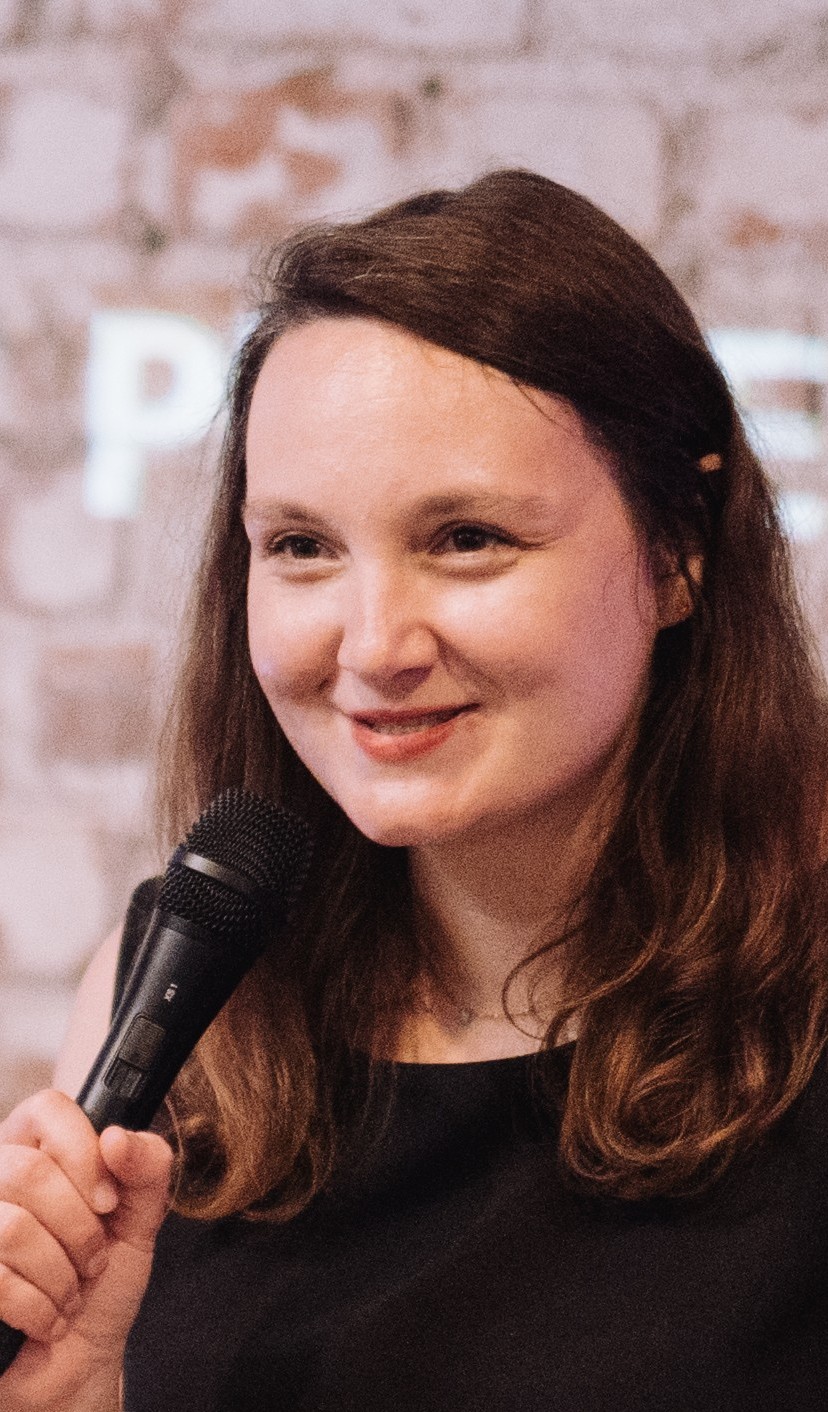
I’m interested in the spaces between traditional sectors, the gaps and intersections where there’s an opportunity to build something that didn’t exist yet, or connect things that weren’t connected before. For the last ten years, that’s mostly been my job. Finding those gaps, building things and connecting the dots, in organisations of every size, from a team of two to the biggest employer in the country.

Concretely, my career has included building the first digital directory of domestic abuse services in the UK; running an award-winning chatbot for women at risk of abuse in South Africa; helping hospitals digitise patient data in the NHS; campaigning in and out of the streets on women’s rights and justice with Amnesty International; and, more recently, helping build new infrastructure to fund social movements and incubate new charities across Europe and beyond.

I have a BA in Politics and an MA in Human Rights, and that background shapes how I approach all of this. I believe in a human rights-based approach: that people have inherent rights and dignity simply because they are human, and that institutions and organisations have a responsibility to respect, protect and enable those rights. For me, that means building with people, not for them, challenging institutional assumptions, centring lived experience, and thinking about who has power, agency and ownership over the solutions we create. This is where politics and technology meet for me, and it’s a thread I will bring to my work and explorations at Newspeak House.

Gender justice is the other constant running through my work. For over a decade, I’ve worked on issues from building feminist tech and advocating for women’s rights to supporting the strategy and governance of organisations working towards gender justice, including as a Board Member of the Latin American Women’s Rights Service. It’s the area I care most deeply about, and one I continue to explore.

I’m coming to this fellowship because I’m curious. I want to connect with people who challenge my thinking, introduce me to new perspectives, and help me find the next gaps and opportunities. I’m hoping those connections will leave me inspired and with new ideas about where I can contribute.

Topics they ❤️

Givers Gain is the only event I will go to that has the word "networking" in the description.

The aim of the session is to make helpful introductions for people attending the session, by combining the networks of each individual that attends. The basic principle being "I may not be able to help you, but I probably know someone who can".

Anyone can run one of these sessions. It works best with groups between 10-20 people in size. Too few and the network isn't big enough, too big and the session becomes unwieldy. Closer to 20 is probably the best size if you can get it.

The session works in 2 rounds. In the first round, people take turns describing themselves and the kind of person they'd like to be introduced to. Then there's a break, and people think if they have any introductions to make. Then in the second round, people take turns sharing the introductions that they can make.

How To Describe Yourself

You have 90 seconds in total, so you need to be succinct. The template to follow is:

  • Your name (so people can make the introduction. Contact details are shared at the end)
  • Your organisation or practice (the domain of life your introduction is for)
  • Why you're good at what you do (why people should want to be introduced to you)

How to Describe Your Desired Introductions

You need to describe the kind of person you want to meet, the more specific the better. It might feel like being specific is ruling people out, but it actually isn't. People find it easier to create a partial match with more information than a perfect match with less information. Being specific helps people make the partial matches.

The template that I'm familiar with uses 3 levels of introductions, called :

  • Bread and butter. This person is your day-to-day business, you meet and work with this kind of person all the time, but it's always good to know more of them.
  • The Cream. This is the kind of person that if you met them, it would give you a great quarter, or a great year. It's your normal business, but it's a big substantial chunk.
  • The Dream. This is the kind of person that could take your organisation or practice to a whole new level.

Ideally you'd have your bread and butter, cream and dream ready before your turn in the round. It takes some practice to be able to think of them and present them within the time limit.

Giving Referrals

While people are introducing themselves and describing their ideal introductions, take notes. You'll have time to think of people during the break.

The referrals should be to people, not business ideas. "Have you tried calling local shops?" is not a referral, for example.

If you give someone a referral, it's your responsibility to act on them. It can be as simple as sending an email that says "I met someone at a networking event who wanted to meet people like you, can I introduce them to you?". All you need to do is make the connection.

After the Session

After the session, keep your notes in your back-pocket, because you may come across or think of connections later and ideally this can be a regular group you attend and you make it better by creating more connections.

I would be happy to run a Givers Gain session for the cohort and faculty to demonstrate how it works.


I define a decision as the process of selecting one out of two or more alternatives.

In many cases, it can be valuable to put some work into generating as many ideas as possible. This is especially important for making decisions amidst disagreement — it takes some real creative work to find an idea that everyone will agree to.

In addition to finding creative ideas to reach agreement, you also simply want ideas that are good! If you are designing a technology, or planning a campaign, you don't just want to settle on the first viable idea that comes along. You want to push yourself and your group to come up with the best possible idea.

Colloquially, the process of coming up with ideas is known as "brainstorming." For design purposes, you must address two key tensions in brainstorming.

On the one hand, you want to maintain as much diversity as possible in your process — the more diverse your ideas are, the more likely you are to find a good one. If all of your ideas are very similar, you're not really exploring the possibility space. Thus, a good design practice might be to keep all of your group members isolated, so they don't start to herd together around the same set of ideas.

On the other hand, people inspire each other — we "riff" on each others ideas — once I hear an idea from you, it sparks an idea from me that I would not have thought about on my own.   So we don't actually want to keep people separate, do we? We want to keep them together, so they can bounce ideas off each other.

This is the tension you must consider in your design process — balancing diversity and creative synergy.

Another technique for generating ideas is crowdsourcing. The idea of crowdsourcing is that we can recruit members outside of a group to contribute ideas, often through a competition where the best idea gets a prize.

The advantage of crowdsourcing is that it puts a lot more people on the problem—and more people means more chance of finding a good idea. A very popular website for crowdsourcing is Kaggle.

One interesting idea I recently read (no link available) about crowdsourcing is that the type of feedback matters — sometimes, you might want to give feedback on the quality of the solutions, and sometimes you might want to give feedback on the way that people are designing the problem.   Each approach has different advantages.

These are a few examples of design principles you might consider, and we can discuss others.

With respect to developing your facilitation practice, I teach a very specific set of techniques for managing idea generation.

There are numerous opinions and camps around the ethics of various technologies (most strongly and recently, AI), which can create frictions even amongst political technologists who are aligned on other values - let alone people who do not consider themselves political technologists. I can provide advice for Fellows who wish to discuss or navigate polarised views around tech. I will not attempt to convert Fellows to any particular perspective, nor help them to do so with others. I will instead help them consider how they can locate their own work, projects, and views within the existing space; and engage with & prepare for potential criticisms and opposition.

My experience in this topic: Besides my broader work in tech accountability and safety, also at the NGO AlgorithmWatch I was responsible for a lot of work at the intersection of differering views on tech, and a spectrum of organisations who took different approaches and stances. I developed AlgorithmWatch's principles for use of Generative AI, building on surveys which showed diverging views of AI in our organisation. I was also responsible for our research strategy, much of which challenged technologies while also often using (and sometimes encouraged use of) the same technologies.

Most good work dies in an inbox. People spend weeks on a project, a proposal or an idea, and then thirty seconds on the message that's supposed to get someone to engage with it. Getting things in front of people is a genuine skill and one you can learn.

I've spent years operating in ecosystems where nobody has to reply to you: MPs, funders, journalists, party staff, senior volunteers, busy organisers. I can help fellows with the practical craft of cut-through: writing emails people actually answer, WhatsApps that get a response rather than a "seen", subject lines, timing, length, asks that are easy to say yes to, and knowing when a message should be a call instead. This also includes the wider game of visibility, how to warm someone up before you ask, when to use an intermediary, how to follow up without being annoying, and how to make your work legible to people with no time.

I can help fellows think about questions like: Why is nobody replying to me? What's the actual ask here? Who should this come from? How do I get my project in front of the person who can act on it?

A lot of political and organisational problems are not really persuasion problems, they're legitimacy problems. People often know what needs to happen but disagree on who gets to decide, whether the process was fair, or whether they trust the people leading it. I'm interested in how legitimacy gets constructed in practice: through participation, transparency, shared ownership, evidence and creating processes people recognise as fair. Following Martin Conway, I treat legitimacy as historically contingent, socially constructed and contested — the interesting question is never "is this legitimate?" but "how did it become legitimate, and why then?"

For example, the covid memorial was not legitimate but it was made so. This was done by making sure the first volunteers wore flouresent jackets, had a sign put up and by the afternoon multiple front bench politicians had visited it. Then the council accepted it and paid for its upkeep as a historic memorial. Its legitimacy was constructed. Technically everyone could have been arrested for criminal damage.

Another example in the #Honourtheoffer campaign which was crearting legitimacy through organising information. When Oxford alumni felt colleges weren't honouring their access commitments, the concern was fragmented across dozens of colleges with decentralised decision-making, which meant if one fell, they all would. A hashtag gave people shared language and over 8,000 signed the petition, but the pivotal move was mundane: a public spreadsheet listing every college against its commitments, updated openly and pitting them against each other. The spreadsheet didn't just record reality, it organised it and whoever structures the information becomes trusted to interpret it. League tables, polling and Wikipedia all work this way.

Across my work I’ve repeatedly operated in environments where authority is fragmented such as campaigns, parties, community groups, MPs’ offices, networks and coalitions. I can help fellows think about questions like: How do you make decisions people will actually follow? How do you create buy-in without formal power? How do you design participation that is meaningful rather than performative? How do you create legitimacy for new technologies or organisational change?

Ignorance of native american political ideas is a generalized feature of western and eastern political thinking. The Arhuaco Tribe of Colombia have resisted colonization, both physical and intellectual, until the present day - a story which counts as a miracle of resilience.

https://www.youtube.com/watch?v=j3mMB_BSTk4&t=32s

The tribe has institutions and traditions of deliberation, dialogue, and decision-making which are independent of enlightenment western norms, making it a fascinating and rare glimpse of diversity in decision making collectives.

Over the past 10 years I have had the privilege of researching, interviewing and living with Arhuaco leaders and the wider community.

My starting point is that conflict is not a failure state: conflicts are necessary to politics, inevitable, and in fact creative. Politics is the reconciliation of paradox — it doesn't deny differences, it holds them. And conflict isn't always anger; often the worst kind is stuckness, a cycle of stasis and indecision. Most governance systems were built precisely to get unstuck: the Labour rule book exists because trade unionists and middle-class intellectuals with limited communications had to coordinate through enormous disagreement.

Over the years I've collected a toolkit of approaches beyond voting for resolving conflict and stuckness — getting concrete about interests rather than fighting at the values level; separating the minimal from the substantial; going process by process; thinking creatively about legitimacy beyond formal votes; constructing shared purpose or shared identity; building coalitions of the willing; repairing the relational; spotting when a fight is a proxy for something else; using stories; and, occasionally, harnessing constructive ambiguity. Each has different moral implications and costs, and knowing which to reach for is most of the craft.

I learned much of this running Labour Together through Labour's most divided years. We found format shapes what's sayable: roundtables built around a shared meal let members from opposing factions have conversations a CLP meeting's for-or-against structure makes impossible — the format did the bridging. And shared analysis has to come before shared strategy: the 2019 election review worked because a cross-factional commission and a survey of 11,000+ members meant everyone had co-produced the analysis and no one could dismiss it as spin. Campaign Lab applies the same craft to a different boundary, creating environments where technologists and campaigners can experiment together.

I can help fellows think through questions like: When is disagreement useful? How do you stop groups fragmenting? How do you build consensus without flattening differences? When do you compromise versus hold the line? That includes practical approaches to facilitation, coalition governance, designing decision-making processes, and creating enough trust for experimentation. I've spent a lot of time in spaces where people care deeply, disagree strongly and still need to move together.

I've spent a lot of time trying to understand what politics looks like when you stop starting from Westminster and start from people's everyday lives. Between 2014 and 2024 the proportion of people with low or no trust in MPs rose from 54% to 76% and my working theory is that trust isn't rebuilt through one big act but thousands of small ones, most of them local. People engage with issues they can see from their window: in our QR code leaflet tests, 92% of school-petition scans came from households within 400m of the school, and 72% of shop-consultation scans from within 100m of the proposed site. Campaign Lab research also found links to local newspapers are shared five times more in local Facebook groups than links to national news. The local level is where abstract politics becomes tangible.

Through Campaign Lab we've built infrastructure for working at this level: a register of local Facebook groups by constituency, social listening on community conversations, and analysis of how issues emerge and travel through local digital spaces, from Facebook groups and Nextdoor to community WhatsApps.

The framework we use for turning all this into strategy is Listen → Act → Communicate.

Listen through casework clustering, local groups, local news and petition data to find what's actually salient (distinguishing quick reactive wins (flytipping on George Street) from long-term proactive work (the stalled hospital)).

Act by choosing concrete actions over abstract campaigns, scored against target relevance, resource, achievability and salience.

Communicate by closing the loop with the specific people the action mattered to, through the channels they already use, ideally via endorsers because it's always better when someone else says you're good than when you say it yourself.

The step everyone forgets is the third one: plenty of good local work happens and nobody ever hears about it.

I can help fellows think about questions like: How do people experience politics outside election periods? How do local identities shape issue salience? How do you design interventions that feel genuinely local rather than nationally templated? And how do you build the listening infrastructure (human and technical) that makes any of this systematic rather than accidental?

I want to explain why communication is so interesting to me.

The sequence "Connect, Communicate, Cooperate" describes the necessary order for a group to form, order itself and take action in the world.

A collection of people needs to have some kind of connection in order to come together, whether that's living in the same place, working for the same company or having the same beliefs or interests.

Then they need to be able to talk to each other effectively. If their communication isn't respectful and effective the group will disperse.

Finally, they need to take action in the world through cooperation, by working together to achieve something.

What I want to highlight is that communication is unlike connection and cooperation because it doesn't have the same link to reality. You have to connect around something that already exists, and you have to cooperate around something that you're bringing into existence out of already existing parts, but with communication you have boundless freedom and possibility to explore within a group. If it can be conceived by the human mind, then it can be used in the process of communication.

This topic builds directly on Building Evidence: Data Science in the Age of AI and assumes familiarity with the foundations introduced there: how data represent the phenomenon being studied, how samples are constructed, and how patterns can be measured without claiming more than the evidence supports. Social media listening puts those methods to work on a particularly difficult form of political data. It begins with a deceptively simple question: what are people saying?

Before we can answer it, we have to decide which people, which platforms, which posts and which kinds of speech count as data. APIs, commercial datasets, scraping and platform search each produce different windows onto the conversation, shaped by technical constraints and design choices. None of them is the public itself, but each is a partial representation that must be made explicit if we are to treat it as evidence.

Once collected, the data can be filtered, classified and organised into issues, positions, communities, places and changes over time. Network analysis can show how conversations cluster and travel. New language models can process volumes that would previously have been impossible, but sophisticated analysis does not make a biased sample representative.

I have spent years analysing online political behaviour and now build pipelines that turn large collections of posts and media into structured, reviewable evidence. I can help you construct a small listening workflow—from defining a question and collecting data to categorisation, network analysis and a short political brief. The aim is to learn how to turn online conversation into useful intelligence while making its blind spots and uncertainties explicit.

Core reading

This topic builds directly on Systems Thinking: Understanding Political Dynamics. Once we have a shared language for feedback, stability, adaptation and failure, we can ask what cybernetics adds: how systems use information to regulate themselves when no single actor can understand the whole.

Norbert Wiener developed cybernetics across machines, organisms and societies; Stafford Beer applied it to organisations and government. Their work shares Friedrich Hayek’s starting point that knowledge is dispersed, local and often tacit, but asks whether autonomous parts can still be coordinated through carefully designed feedback, information flows and escalation. I know this territory less well than mathematical modelling and network analysis, so this is genuinely exploratory: we can investigate the tradition together rather than treat it as a settled doctrine.

AI makes the attempt to reinvent cybernetics especially urgent. We can examine or redesign a real institution as an information-processing system, asking what should remain local, central, automated or contestable. The aim is to use cybernetic ideas to evaluate—and begin designing—forms of coordination that enlarge collective intelligence without simply strengthening surveillance and control.

Core reading

  • Norbert Wiener, The Human Use of Human Beings: Cybernetics and Society (Houghton Mifflin, 1950).
  • Stafford Beer, Designing Freedom (J. Wiley, 1974).

I am a big fan of Michael Mann's Sources of Social Power. There is a first edition of volume 1 (prehistory to 1760 AD) in the Newspeak House Library and I recommend reading the first few chapters to understand the theory of social power that Mann puts forward so that you can apply it to your analysis of social power in the situations that you encounter. Chapter 1 is the theory and then it's an applied narrative after that. It's very readable.

The basics are that "Society" is not a bounded object that can be analysed. It's simplest to think about this geographically, if you consider the island of Great Britain, the people here participate in an ideological network with the United States, an economic exchange with continental Europe and China, a military alliance system that opposes China and a political hierarchy that is limited to just this island and a portion of the neighbouring one - the United Kingdom of Great Britain and Northern Ireland.

To make sense of this, we put aside the impossible task of analysing "Society" and get stuck into understanding particular organisations by way of their dimensions of social power i.e. what is it that this organisation compels people to do, and how does it do that. The theory of social power outlines 4 ideal types of ways organisations induce action by people, and every organisation uses some mixture of the 4, with 1 of them usually being primary: Ideology, Military, Economic and Political.

My ideal session to study this would start by just looking out the window and describing the forms of social power we can see, and then moving on to analysing your individual contexts to see what insights we can unearth.

There are different levels of grant in civic and political tech funding, broadly across this range. Each buys something qualitatively different, not just ten times more. I've run and advised projects at all of these scales. And it has changed less than you may think.

  • £10k gets you enough of your time and a bit of support to create a proof of concept and validate it with users, and hopefully gets you in a position to seek the next tranche of funding
  • £100k could just about get you to paying customers and a sustainable tool if your plans suit that model, and if not to generate some history to build the next fundraising round on
  • £1m allows you to build out an organisation, sustainability plans, partnerships, and so on - but it's still only a small team for a few years and you need a plan for what comes next and what your endgame is

The acceleration of development has had a big impact on the early stage: you can get to real users and proving real value sooner. But ongoing maintenance overheads, the imperative to continue evolving, and the pains of scaling up are still real.

Happy to speak to you about a project you're considering. Useful sub-questions: what outcomes should you promise before the money runs out? How much goes to external support vs your own team? At what point do partners matter more than headcount?

Reading/links

  • JRRT grants awarded - one of the few funders of explicitly political (non-charitable) tech; browse what real grants look like
  • Dovetail briefs - scoped nonprofit tech projects with budgets attached
  • GrantNav (360Giving) - search actual UK grants data to calibrate your ask
  • What's your endgame? (SSIR) - the different "exits" for a nonprofit

Poteris is a not-for-profit tech collective: flat structure, equal pay, around a dozen people, no external funding. It's one answer to a set of questions every tech-for-good founder faces – nonprofit or for-profit? Agency work or products? Hierarchy or flatness? After five years I can share our experiences of our attempt at a flat structure, equal pay, a 4 day week, and trying to do things differently.

Things I'm happy to go deep on: legal form (we're a CIC – what that constrains and enables); why "equal pay" is simpler to run than any alternative we considered, and who it selects for and against; the cross-subsidy between client work and products; the problem with co-ops; and why it's OK to miss out on some work, some clients, and some growth.

Key question/s: What does a healthy team culture look like? Which parts of a conventional company are load-bearing, and which are habit?

Reading/links

Most tech projects don't fail early; they fail at the end. The demos look good, launch approaches, and then it's "almost there" for weeks. The fix is rarely technical: it's deciding how "good" each part actually needs to be, and for whom, then cutting scope until launch is possible. I've been brought in to dig teams out of this on multiple occasions — including once turning a multi-week overrun into two days of work in a half-hour conversation.

The useful mental moves: think in vertical slices (a thin end-to-end version of everything, rather than a polished half of something); distinguish "must be good", "must exist", and "can be absent" per user type; and keep the most important thing the most important thing. If your project can't ship a meaningfully smaller version this week, that's usually a scoping problem, not an engineering one.

Key question/s: Why do most tech projects fail late rather than early? What would it take for your project to launch this week?

The genuinely new thing about AI-assisted development isn't speed – it's who can build. Campaigners, organisers, and charity staff can now make real, useful software: a volunteer rota, a form that feeds a spreadsheet, a lookup tool for your casework, a microsite for a local campaign, a script that turns voice notes into structured data. If it's for a known group of users, holds nothing sensitive, and resembles things that already exist, you can probably just build it.

Being a builder is still a disposition, though, not a default. You need some interest in technology, product thinking, and solving problems with tools to want to do this at all. And that's fine, because not everyone has to! The valuable new layer is non-developer builders who interface with non-developer non-builders: close enough to their colleagues to understand the real problem, close enough to the technology to build the answer.

The edges are where it gets interesting, and there are four worth knowing by name.

  • Sensitive data: the moment your tool holds information about real people – members, beneficiaries, voters – you've acquired security and legal obligations that no prompt will handle for you.
  • Reliability: the unexpected happens – an edge case, an outage, a malformed input – and a tool built without defences can lose data and disrupt the work it was meant to support.
  • Scalability: something that works great in your testing and with a few friends can easily fall over once you have hundreds of users, or even in some cases just because it's been running for a hundred days and has built up more data than the system was set up to handle.
  • Maintainability: Inevitably as you keep updating and adapting your tool, it gets increasingly complex. You get to the stage where fixing something in one place breaks something elsewhere and you're playing whack-a-mole with a blindfold on.

Cross any of those lines and you don't need to stop; you need a technical person in the loop, and ideally guardrails set up before you started: sandboxes, templates, review points, safe defaults.

For political and nonprofit orgs, where the person who understands the problem is almost never a developer, getting this deliberate rather than discovering the edges by incident is a structural advantage. The risk contrast to hold in mind is an agent running loose with full access versus a supported, safely-iterable workflow.

Key question/s: What's on your list that you could just build this week? Which of the four edges is your idea closest to? Who in your organisation is a builder who doesn't know it yet?

Reading/links

Sprint is long dead. A fixed two-week cadence stopped making sense once daily delivery became normal – and that was before generative AI. But the answer isn't to abandon agile: it's to strip away the ceremonies that accreted around it and rebuild your practice from the core principles and motivations, which apply better than ever.

Read the Agile Manifesto again, with it's four value statements and twelve principles. It says nothing about sprints, story points, or standups. Working software over comprehensive documentation; responding to change over following a plan. Written in 2001, it fits today's pace better than the pace it was written at. The ceremonies were one generation's implementation of those values at a particular speed of delivery; when the speed changes, you re-derive the practice from the principles rather than defending the rituals.

I'd argue AI is best understood as the latest step in a twenty-year speed-up of software development, not a discontinuity – and seeing it as continuity makes the right responses much clearer and less reactive. The questions people treat as new ("now we need to think harder about what to build") have been live for ages. In my own team, re-deriving the practice at daily-delivery cadence looks like: continuous merging ("if it's better than what we have and won't adversely affect our users, merge it"), work sliced to a day or less, and keeping the most important thing the most important thing.

Key question/s: Which ceremonies would you reinvent from scratch at today's speed, and which quietly disappear? What replaces the sprint, the standup, the retro?

Reading/links

The AI adoption story in the nonprofit and education sectors is nothing like the tech-industry one: budgets are tiny, risk tolerance is low, safeguarding is paramount, and the gap between staff already using ChatGPT personally and organisations with any actual policy is enormous. I watch this from both sides – building AI products used in hundreds of schools, and advising charity leaders on what to actually do – and regularly brief nonprofit working groups on the state of play.

What's worth knowing: teacher AI adoption is far ahead of school policy; the DfE has a framework worth reading even outside education because it's had to be ahead of the curve in official responses; charity adoption is high at the individual level and thin at the organisational level; and the biggest practical wins are boring – drafting, admin, resource adaptation – not moonshots. The interesting design question is building AI tools for sectors where trust must be earned structurally: what data you touch, what you never touch, and what stays human.

Reading/links

How to design systems to allocate scarce resources. Thinking through individuals’ incentives and behaviour, and how outcomes differ under different mechanismas. Discussing different economic frameworks, including  tradable permits, quotas, auctions, and financial instruments. Assessing these frameworks under various social welfare functions (i.e. aggregating individual well-being into a collective measure of societal satisfaction). Applying mechanism design to various problems.

Standard models (prisoners’ dilemma, battle of the sexes, one-shot games, repeated games, etc), their application to local systems, economic, political, social and global settings. Also evolutionary game theory, e.g. how altruistic behaviour can dominate in a population, even in an environment where in head-to-head interactions, egoists dominate altruists, see Is altruism evolutionarily stable (1994)?