Topic
Sign in
Mario Morvan

Mario Morvan

Fellowship Candidate

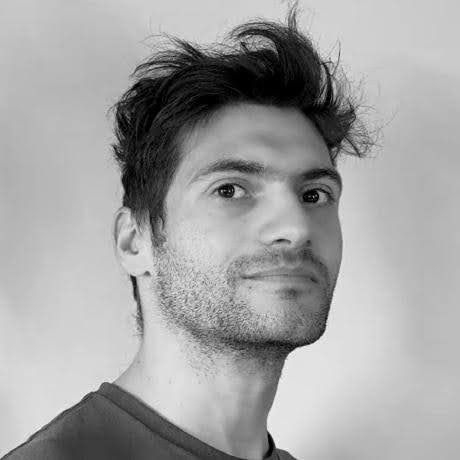
I am a researcher and technologist working towards a better-informed society. My background spans academia, public service, and the co-operative and charity sectors, across applied research, software engineering, science outreach, and community tech initiatives. While my past work focused on AI applications in astronomy and healthcare, my current research interests lie in digital libraries and commons, computer-supported cooperative work, and collaborative knowledge graphs.

A Wikimedian since 2022, I am fascinated by the successes and limitations of Wikipedia and peer production more generally. I am exploring the potential of collective modelling to shape more effective and equitable systems for producing knowledge and informing decisions. In particular, I am passionate about building better tooling for collective claim-checking, impact assessment, ideation and value alignment. I value collaboration towards shared goals, so if these problems interest you too, please get in touch.

Beyond reliable information, shouldn't everyone also have access to — and a say in — quality housing, food, healthcare and education? I have been active in the UK and French housing co-operative movements, and in the popular education charity Réseau Salariat, developing ideas and experiments such as Food social security and the Wage for life. There is much to learn from these living examples of strengthened collectives and public services, and I am eager to push these guiding questions further as current digital and economic transformations make them ever more relevant.

Everyone should have access to lifelong, quality education and training in a changing world, and to community spaces for collective learning and building. Taking part in this programme is a way for me to continue (un)learning, to (net)work towards (dis)solving problems unconventionally, and to challenge and refine my understanding of the sociotechnical landscape in order to better contribute to it. It is also about collective development: envisioning and experimenting together with building blocks for our futures.

website | github | orcid

Topics they ❤️

Given the plethora of highly interesting ideas, projects, domains, and disciplines that our rich world is built of, how can one choose what to work on?

There is an argument in favour of long-term projects (missions): there are some affairs in the world today that seem to be solvable only with substantial persistence and patience. These issues, which are both limited to a single discipline but more frequently across multiple, seem to require considerable multi-year commitment before meaningful progress can be achieved.

Therefore: the question of what to work on flips: it's not only what one wants to work on but also what needs to be worked. Yet, one is unlikely to devote one's life to something merely because it is needed, without also finding it compelling. We are interested in the intersection.

How does one choose a mission if they decide they want to work on one? The answer is nontrivial because of the requirements:

(a) it has to be something that is needed in the world -- (usefulness dimension)
(b) it has to be something in which they have above-average competence (only insofar as the good outcome is realised) -- (aptitude dimension)
(c) it has to be something they want to work on -- (preference dimension)
(d) it has to be something they want to work on long-term — a successful mission becomes one’s life’s work -- (commitment dimension)

The difficulty of the answer lies in the inexact comparison of the degree of each of these dimensions per issue. For example, here's a list of issues:

  1. Alzheimer’s
  2. Economic stability of Western countries
  3. Mental health of the young population

Let's reflect on each dimension.

(a) Usefulness: they are all extremely important; maybe one could claim economic stability is more important due to its impact to much more of the population of a country but that wouldn't be a convincing claim
(b) Competency: judging one's competency for each of these can be quite hard insofar as what skills are required for each problem/solution is genuinely unclear (even if a problem seems medical or economic, the practical path to the solution can require enterpreneurship or campaigning skills)
(c) Preference: people are interested in more than one disciplines. Helping people with medical problems can be fascinating and rewarding but so can scheming plans for eradicating homelessness.
(d) Commitment: all of these issues seem so distant and commitment a fairy tale unless one has already spent some time on them

I think this demonstrates the heart of the problem of choosing a mission. There are convincing arguments that each of the dimensions can be both very low and very high for someone. It's just very hard to say! So what do we do? I think our past experience is the best place to start.

  1. Which country-level or global scale problem keeps coming back to your mind?

  2. Is there a discipline or skill you feel you have a natural talent for?

  3. What is more likely to work out depending on who you know and where you are? Try not to be biased when answering this. The point is the good outcome for the world! (For example, don't feel guilty if you are the child of the prime minister or something; whatever power you have, use it for the benefit of all)

  4. What issue can really grab you? What do you see could be your life's work?

I feel these are good thinking paths to reflect and understand such a mission project. I've already been verbose but here are some more aspects:

  • If one feels their reflections yield little insight maybe there is a lack of experience. So try new things! Experiment, do things you wouldn't normally do!
  • It's worth thinking about one's mission intentionally. Find a weekend, clear your schedule, go on a walk, and just think about this — no other expectations other than spending time on thinking.
  • Choosing is better than not choosing, even if the choice ends up being suboptimal. That's not to say one should rush a choice. Take a few years to think about this, experiment, try things out. But I would argue in favour of choosing a mission, eventually.
  • I am not saying everyone should have a mission. Such an approach to a career/life is not for everyone. But I think it is for the people that are here at Newspeak House.
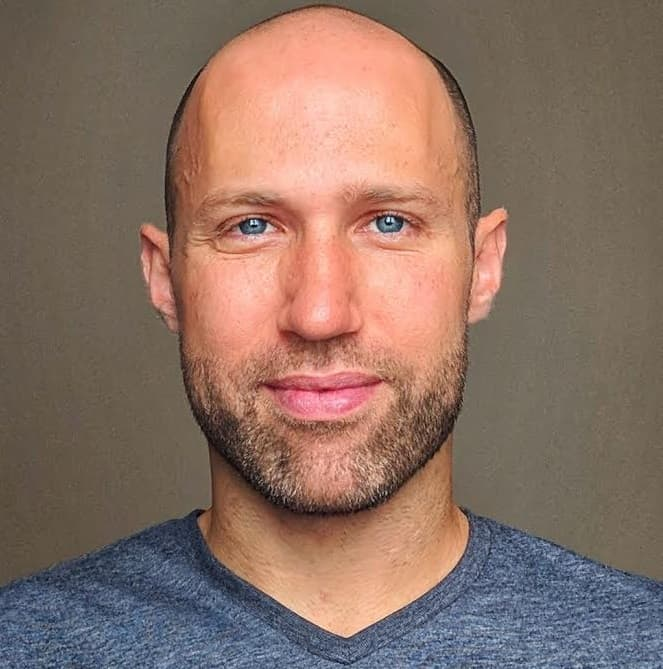

Last year I teamed up with Georgia Bullen, Executive Director of Superbloom Design, to offer the cohort a session on Funding 101 for Civic & Political Tech. We covered a lot of ground in just an hour, including candid takes on the funding landscape, entity and legal eligibility types, and winning strategies. Now I work for a foundation, so hopefully it'll be even better!

A casual, ask-the-expert session on how projects actually get funded in the real world with Georgia Bullen and Matt Stempeck.

​If you’ve ever thought “I have an idea… now what?”, this is for you.

​We’ll discuss the practical side of getting a project off the ground: where funding comes from, how to find opportunities, what early-stage teams should prioritize, and what makes an application stand out when you don’t yet have a track record.

​This session is especially relevant for fellow candidates thinking about what happens after a prototype: turning something scrappy into something sustainable.

​Topics we’ll likely touch on:

  • ​Where to find funders and active opportunities

  • ​What first-time projects should look for (and avoid)

  • ​Legal structures and setup basics

  • ​Signals of credibility when you’re unknown

  • ​Partner development and early traction

  • ​What strong grant applications actually look like

​Georgia is the Executive Director of Superbloom, where she works at the intersection of technology, movements, and public interest infrastructure, supporting teams building tools for civic participation, accountability, and collective action. Her work spans fundraising strategy, ecosystem building, and helping early-stage projects navigate the path from idea to impact.

​Matt Stempeck is a civic technologist and researcher focused on how technology can strengthen democracy and support real-world civic action. He is the founder of the Civic Tech Field Guide, a global collection of tools and organizations working in the public interest. He is faculty at Newspeak House (the London College of Political Technology) and has held roles across government, academia, and industry, including at Microsoft and Cornell Tech. His work focuses on helping projects move from ideas to impact, with an emphasis on practical strategies for participation, funding, and movement-building.

Collective intelligence as governance of AI, and AI for collective intelligence.

This topic covers the distinction between democracy and collective intelligence, why you might choose one over the other, and where they trade off. How does human CI and artificial CI intersect? What can societies of humans and agents can produce? What are the open questions?

Some examples

On human & agent societies

Givers Gain is the only event I will go to that has the word "networking" in the description.

The aim of the session is to make helpful introductions for people attending the session, by combining the networks of each individual that attends. The basic principle being "I may not be able to help you, but I probably know someone who can".

Anyone can run one of these sessions. It works best with groups between 10-20 people in size. Too few and the network isn't big enough, too big and the session becomes unwieldy. Closer to 20 is probably the best size if you can get it.

The session works in 2 rounds. In the first round, people take turns describing themselves and the kind of person they'd like to be introduced to. Then there's a break, and people think if they have any introductions to make. Then in the second round, people take turns sharing the introductions that they can make.

How To Describe Yourself

You have 90 seconds in total, so you need to be succinct. The template to follow is:

  • Your name (so people can make the introduction. Contact details are shared at the end)
  • Your organisation or practice (the domain of life your introduction is for)
  • Why you're good at what you do (why people should want to be introduced to you)

How to Describe Your Desired Introductions

You need to describe the kind of person you want to meet, the more specific the better. It might feel like being specific is ruling people out, but it actually isn't. People find it easier to create a partial match with more information than a perfect match with less information. Being specific helps people make the partial matches.

The template that I'm familiar with uses 3 levels of introductions, called :

  • Bread and butter. This person is your day-to-day business, you meet and work with this kind of person all the time, but it's always good to know more of them.
  • The Cream. This is the kind of person that if you met them, it would give you a great quarter, or a great year. It's your normal business, but it's a big substantial chunk.
  • The Dream. This is the kind of person that could take your organisation or practice to a whole new level.

Ideally you'd have your bread and butter, cream and dream ready before your turn in the round. It takes some practice to be able to think of them and present them within the time limit.

Giving Referrals

While people are introducing themselves and describing their ideal introductions, take notes. You'll have time to think of people during the break.

The referrals should be to people, not business ideas. "Have you tried calling local shops?" is not a referral, for example.

If you give someone a referral, it's your responsibility to act on them. It can be as simple as sending an email that says "I met someone at a networking event who wanted to meet people like you, can I introduce them to you?". All you need to do is make the connection.

After the Session

After the session, keep your notes in your back-pocket, because you may come across or think of connections later and ideally this can be a regular group you attend and you make it better by creating more connections.

I would be happy to run a Givers Gain session for the cohort and faculty to demonstrate how it works.

Asymmetric information arises when one party knows more than another. Understanding the implications of this will help you understand everything from why private health insurance is difficult to why socialising with new people is hard.

Asymmetric information occurs in a range of contexts:

  • the buyer doesn't know if your car has a hidden fault
  • the health insurer doesn't know if you have a hidden condition
  • your car insurer doesn't know if you bother locking your car
  • your boss doesn't know if you're working or scrolling Tiktok
  • you don't know whether or not your new acquaintance is a weirdo

The first three are hidden facts. The second two are hidden choices. Economists study these situations because they can lead to markets unraveling and collapsing. There are also a range of ways to mitigate them including: warranties, references, qualifications, reviews, medical questionnaires, insurance excesses.

For a seminal paper on this issue, see: The Market for "Lemons": Quality Uncertainty and the Market Mechanism (1970)

Causality is a branch of statistics which economists specialise in. It lets us study all kinds of interesting questions, like the impact of minimum wage on jobs, an extra year of education on income, whether a drug works, smoking bans on smoking rates, pornography on sexual assault.

Let's talk through causal analysis intuitively as well as nerding out on causality theory, e.g. the work of Judea Pearl.

See A Crash Course in Good and Bad Controls (2022), The Book of Why (2019) and Causality (2009).

With the reach of generative AI, the term “slop” has risen in prominence. It represents a rejection of thoughtless content, often perceived to be low in quality or creativity.

Developers have always taken a view about the amount of effort they put in to a task - with a direct effect on the quality of code they deliver. This is a calculation based on deadlines, availability, resources, reputation, and plenty of other factors.

Opinion is strongly divided about AI-assisted coding. Some argue it supports increased productivity. Others cite poor quality outputs and unexpectedly high cost.

What does poor quality code look like?

I have been exploring the outputs from some generative AI coding tools. Some traits are pretty clear:

  • Use of obscure and made-up terms

  • Code mingled with narrative comments

  • Spaghetti code

  • Long or difficult to read functions

  • Inflexible, hard-coded assumptions

  • Dependencies on old libraries, difficult to upgrade

These issues are also referred to as technical debt.

Does it even matter?

Arguably, if code is only ever to be written by one person (or agent), then idiosyncrasies don't matter. Provided the developer knows where everything is, who cares if nobody else can figure it out? This may well be a naive position...

  • Do you trust your coding agent to get everything right?
  • What happens when you run out of credit?
  • Do you want to be able to maintain it yourself?
  • Are you sure nobody else will look at the code?

What can we do about it?

Over time, technical debt builds up in every project and the solution is to refactor the code - a sense-making process in which developers rewrite the offending parts. Solo developers and small teams working in isolation are particularly vulnerable to technical debt, but all teams experience it.

Running code reviews and writing code that any person can quickly understand is a good preventative measure. Some examples of established practices:

  • Clear and meaningful variable names

  • Use of well established design patterns

  • Use of existing frameworks, rather than re-inventing the wheel

  • DRY (Don’t Repeat Yourself)

  • KISS (Keep It Simple Stupid)

  • YAGNI (You Ain’t Gonna Need It)

  • SOLID (principles for object oriented development)

  • Separation of concerns (a precursor to the Single Responsibility Principle)

  • Clean Code (and opinionated superset of principles and approaches)

How are coding agents any different?

Coding assistants work alone. They aren't trained to expect code review nor do they have code quality metrics. As they work, they develop personal shorthand and assumptions, which then shapes and styles the code they produce.

I have been collating a set of guidance, skills, and scripts for coding assistants, to raise the quality of their outputs. It's available here: instantiator/dev-qual

For this topic, we’ll discuss factors that contribute to code quality, and how they can be measured and applied - both to AI-assisted and human developed coding. With some metrics in hand, I’ll support you to compose rules for your language or framework of choice, or enhance those already found in dev-qual.

Very much in the spirit of this programme, I vibe coded the platform you're currently using over the last couple of months with one of the fellows from last year. It's fully multi-tenant, so if you fancy setting up your own college now you can - I recommend it!

Scope-wise, the idea is for this platform to be the primary way that you engage with faculty, not a home for all of the communication in the programme; that's for you to make for yourselves, and it's why only faculty can post here. Otherwise though, let me know if you have any feedback or ideas!

I can't say much about the place before I got the keys in 2011, but I'm happy to give my account of what happened after that. When the college started, the house was practically a ruin; no heating or hot water, a chunk of the roof was missing, the front door was broken and didn't lock!

Reid Hoffman famously said "If you're not embarrassed by the first version of your product, you've launched too late", and Newspeak House was no exception. Much like it feels with AI today, it was obvious that there was something important happening with technology and politics, people needed a place to meet to talk about it, and this was the best we had.

The history that is written is a combination of the events held here (newspeak.house/events) and the people who inhabited it (newspeak.house/fellowship); maybe you can ask your favourite model to give you an overview. Otherwise, feel free to ask some questions below and I'll do my best to tell you a story!

No, I don't have the answers of how to completely successfully go against the enormous power of Big Tech companies. But I can talk about the various types of efforts being deployed, some case studies (I list a few below, largely as examples), and where they might work together - including internationally, and by bringing in parties who do not normally focus on political technology.

  • Investigative Journalism: From the Facebook Papers to 404 Media
  • Political stands: From social media age bans to Palantir.
  • Public pressure: From Cambridge Analytica to the Anti Data Centre Movement
  • Regulation: From antitrust to tech regulation
  • Internal efforts: From Project Maven to Trust & Safety
  • Lawsuits: From chatbot harms to social media addiction.
  • External Research: From Crowdtangle to the Coalition for Independent Technology Research


I can also talk about some of the disadvantages and discomforts that may be involved, for instance where there is division of what "success" looks like, or trade-offs between (e.g.) completely accurate and truly engaging messaging.

There is growing appetite for alternative ways of designing social media to give users ways to escape X, Facebook, TikTok and the like - and not just in the political technology community. In some quarters, particularly in Europe, there is growing political attention to this topic with high profile initiatives like rebuild.net (championed by former EU Commissioner for Competition Margrethe Vestager) and #SaveOurSocials. Bluesky in particular is being used and discussed ever more widely.

There are various theories of change for how these platforms could displace existing Big Tech and/or protect democracy - many of which are perhaps over-optimistic and need to be challenged and refined.

I can discuss with Fellows about some of the core innovations and methods underlying alternative social media design - such as interoperability and federation, "public value" AI systems, pro-social design, and middleware.

I can also discuss framing questions around the hoped-for benefits of the design. Who do you hope uses it, and how, in order to achieve your desired change (and is that realistic)? What is your conception of your user groups and their needs, and does that need refining or researching? What existing tech, if any, are you hoping to displace - and if so, how?

Some material for starters:

https://www.betterconflictbulletin.org/

https://www.journalofdemocracy.org/articles/the-future-of-platform-power-making-middleware-work/

https://www.prosocialdesign.org/

https://www.oliver-marsh.com/sideways-looks-35-a-better-internet-part-1-also-hayfever/

https://www.oliver-marsh.com/a-better-internet-part-2-also-mermaids/

The problem of addressing false and misleading content online has a long history, but it became supercharged particularly after 2016. It has spawned much terminology - mis/disinformation, malinformation, FIMI, influence operations - and a range of countermeasures, from fact-checking to media literacy to regulations. New techniques - from fake accounts to deepfakes LLM poisoning - keep emerging, generating new countermeasures but also causing new panics.

The topic has become a major one in political technology discussions, and one which constantly generates new efforts and ideas - many of which do not engage well with existing discussions. There have also been changing views on the nature of the problem itself. Is the risk that minds will be changed in ways that swing elections, or cause mass violence, or even just sow distrust? Or targeted operations to deceive elites or radicalise vunerable individuals? Is the veracity or reliability of information really the best way to address online discourse? Should we be focused more on polarisation and radicalisation than deception - or are these all inextricably related anyway? Or is this problem all overblown anyway, with risks of bad solutions - some of which may threaten freedom of speech?

I can help fellows who wish to engage with "disinformation" navigate this history, and work on an informed basis through core questions: What do I think the problem is? Is my proposed solution meeting the right audiences? Has anyone else tried what I want to do? What might critique or resistance to my solution be?

Some material for starters:

https://www.oliver-marsh.com/sideways-looks--29--ai-pril-fools-also-dating-data/

"Why misinformation must not be ignored": https://pubmed.ncbi.nlm.nih.gov/39666498/

"In the age of AI, keep calm and vote on": https://www.politico.eu/article/artificial-intelligence-elections-ballots-vote-chinsinau-seattle-policymakers-technology/

Economic theory often seeks to identify a model's "equilibrium" - a stable state towards which the systems trends and then rests. However, many economic, political and social systems have multiple equilibria. This provokes questions: which equilibrium will emerge, what determines that outcome, and how stable is it?

Understanding this illuminates the robustness and fragility of the systems on which we rely. It also explains why seemingly arbitrary features can be highly influential.

For example...

  • Why a bank can be healthy one day and collapse with a bank run next.
  • How and why power within an organisation can be concentrated on a single individual.
  • Why political norms can remain entrenched for decades until suddenly they are not.
  • How your life could change from going great to collapsing quicker than you hoped (and, more optimistically, vice versa).

Organising events in Newspeak Hall is one of the great perks of studying at Newspeak House; a fully equipped event space that holds up to ~100 people. It's hosted thousands of events for the college, everything from meetups to conferences, unconferences, dinners, hackathons, parties, exhibitions, lectures, co-working, debates, book launches, concerts, world cafes, fishbowls, screenings, workshops, and roundtables.

If you're interested in designing something together, I am happy to offer advice and support with event design, facilitation, logistics, catering, promotion, community strategy, and almost anything else you might need. Don’t worry if you don’t have a very clear idea of what you’d like to do yet - we can figure that out together.

I also manage the diary of the hall; it's a busy programme of community events, private hires, and events organised by fellows and faculty. As Fellowship Candidates, you will book dates through your agent. You might not be able to secure a specific exact date, but usually we can find a slot. Typically single day events are booked around a month in advance.

Finally, events should always be considered as part of a wider community strategy. I've written a short guide on how I typically approach this, though community-building is a fast-moving field with many open questions...

Most good work dies in an inbox. People spend weeks on a project, a proposal or an idea, and then thirty seconds on the message that's supposed to get someone to engage with it. Getting things in front of people is a genuine skill and one you can learn.

I've spent years operating in ecosystems where nobody has to reply to you: MPs, funders, journalists, party staff, senior volunteers, busy organisers. I can help fellows with the practical craft of cut-through: writing emails people actually answer, WhatsApps that get a response rather than a "seen", subject lines, timing, length, asks that are easy to say yes to, and knowing when a message should be a call instead. This also includes the wider game of visibility, how to warm someone up before you ask, when to use an intermediary, how to follow up without being annoying, and how to make your work legible to people with no time.

I can help fellows think about questions like: Why is nobody replying to me? What's the actual ask here? Who should this come from? How do I get my project in front of the person who can act on it?

A lot of people understand UK politics formally but not operationally. I can help fellows understand where decisions actually get made: the relationship between parties, MPs, special advisers, local government, campaigns, funders, members, parliamentary structures and informal networks.

My background includes working in parliament, running Labour Together, convening election review processes and spending years operating between campaigns, think tanks and politicians. That means I can help translate abstract questions (“How do you influence Labour?” “Who matters?” “What does Parliament actually do?”) into practical strategy. I’ve run sessions on navigating UK political systems, identifying pressure points and understanding the difference between formal constitutional power and real-world political leverage.

Politics rarely works the way the diagram says it does. A lot of strategy is understanding timing, relationships, legitimacy, incentives and institutional rhythms.

One of the things I spend a lot of time helping people with is moving from “this is unfair” to “this is changeable”. Political systems often look impossible until you identify where decisions, incentives and coordination failures actually sit.

I can help fellows map systems and identify leverage: who controls implementation, who shapes narratives, where informal veto points exist, where legitimacy matters, and where small interventions create outsized effects. This includes practical tools for actor mapping, coalition design, identifying hidden decision-makers, sequencing campaigns and understanding institutional incentives. I’ve run sessions that focus less on ideology and more on operational politics: how things move in practice.

I can help fellows think through different routes to change: insider versus outsider strategies, coalition building, narrative pressure, institutional entrepreneurship, campaigning around moments of opportunity and understanding how influence accumulates. This includes practical questions like: Who needs persuading? What kind of evidence matters? When should you campaign publicly versus privately? How do you build influence without formal authority?

I’m particularly interested in helping people understand that lobbying is rarely just meetings, it’s often about creating conditions where a decision becomes easier to take.

A model might be an equation, a map, a simulation, a story or a physical arrangement of stones. A Zen garden is not a landscape, yet it preserves or evokes something important about one. Metaphors work similarly: describing a career as a ladder or life as a journey creates an implicit model with particular structures, directions and possibilities. What happens when we make those assumptions explicit?

This topic weaves around the two core topics, Systems Thinking: Understanding Political Dynamics and Building Evidence: Data Science in the Age of AI. Those topics introduce ways to model systems and build evidence from data; this one turns those methods back on themselves. What assumptions are built into a model? What does it make visible, and what becomes harder to see? The aim is not to retreat from systems thinking or empirical evidence, but to use them more imaginatively and self-consciously.

Play gives us a way to explore and test models without treating them as settled truths. Roger Caillois distinguished competition, chance, simulation and vertigo, alongside a spectrum from spontaneous play to formal games. We can compete models against one another, introduce chance, inhabit them through role-play or deliberately destabilise their categories. Play both creates temporary systems of rules and allows us to bend, replace or step outside them.

I have spent much of my career constructing mathematical and computational models, but models need not begin with mathematics. We would build models of ourselves using metaphors, diagrams, objects, stories or games, then allow other people to interpret and disrupt them. The aim is to become more imaginative and self-conscious model-makers, better able to see what any representation reveals, assumes and excludes.

Core reading

I want to explain why communication is so interesting to me.

The sequence "Connect, Communicate, Cooperate" describes the necessary order for a group to form, order itself and take action in the world.

A collection of people needs to have some kind of connection in order to come together, whether that's living in the same place, working for the same company or having the same beliefs or interests.

Then they need to be able to talk to each other effectively. If their communication isn't respectful and effective the group will disperse.

Finally, they need to take action in the world through cooperation, by working together to achieve something.

What I want to highlight is that communication is unlike connection and cooperation because it doesn't have the same link to reality. You have to connect around something that already exists, and you have to cooperate around something that you're bringing into existence out of already existing parts, but with communication you have boundless freedom and possibility to explore within a group. If it can be conceived by the human mind, then it can be used in the process of communication.

There is a new category of software, coming now, after agents harnesses the multiplayer harnesses!

(It's always like that with games, isn't it? First they release single-player and then people want multi-player! Pokemon on Gameboy, GTA, Elder Scrolls, etc.)

How does it work? Visualise this: you are part of team that works on a project (either software project or non-software). You want, while inside Claude Code, to mention a teammate to ask them something, let them know about something, or anything else. How do you do it? You can't! Agent harnesses like Claude Code and ChatGPT Codex do not have such a feature.

Actually, Anthropic does offer a version of this inside Slack (they call it Claude Tag)

But in any case, people are building their own open source self-hosted versions of such tools:

  • Centaur.run (lives inside slack like Claude Tag)
  • QM (either Slack and on the web)
  • Windmill (designed around vibe-coded apps rather than a chat-driven harness)
  • Cloudflare OS (built on top of Cloudflare Workers but could be adjusted to work self-hosted with celld)

This is a rapidly progressing category of software! Things will probably be very different in 3 months.

This topic builds on both Building Evidence: Data Science in the Age of AI and Listening to Politics at Scale. It applies the same questions about representation, sampling, classification and inference to an especially difficult and politically contested problem. Misinformation is not a single observable property of a post. An algorithm might examine language, compare claims with evidence, score the history of a source, trace patterns of diffusion or look for coordinated behaviour. Each method detects something different, and none gives us a simple mechanical test for truth.

The difficult cases expose the politics inside the technical problem. Who defines the ground truth? Is a sincerely mistaken claim the same as deliberate deception? How should a system handle satire, contested interpretations or knowledge that is still changing? A detector can also become a political instrument if its errors fall unevenly or if nobody can challenge its decisions.

I have worked on research involving bots, online communities and the spread of contested information. I can help you compare content-, source-, bot- and coordination-based methods, then design and test a practical detection process on difficult cases. The aim is to understand what a detector is really detecting, evaluate its errors and identify where human judgement and political power enter the system.

Core reading

  • Francesco Pierri et al., “One Year of COVID-19 Vaccine Misinformation on Twitter: Longitudinal Study” (2023).
  • Salvador Lopez-Joya et al., “Dissecting a Social Bot Powered by Generative AI: Anatomy, New Trends and Challenges” (2025).