
Topic
Sign in
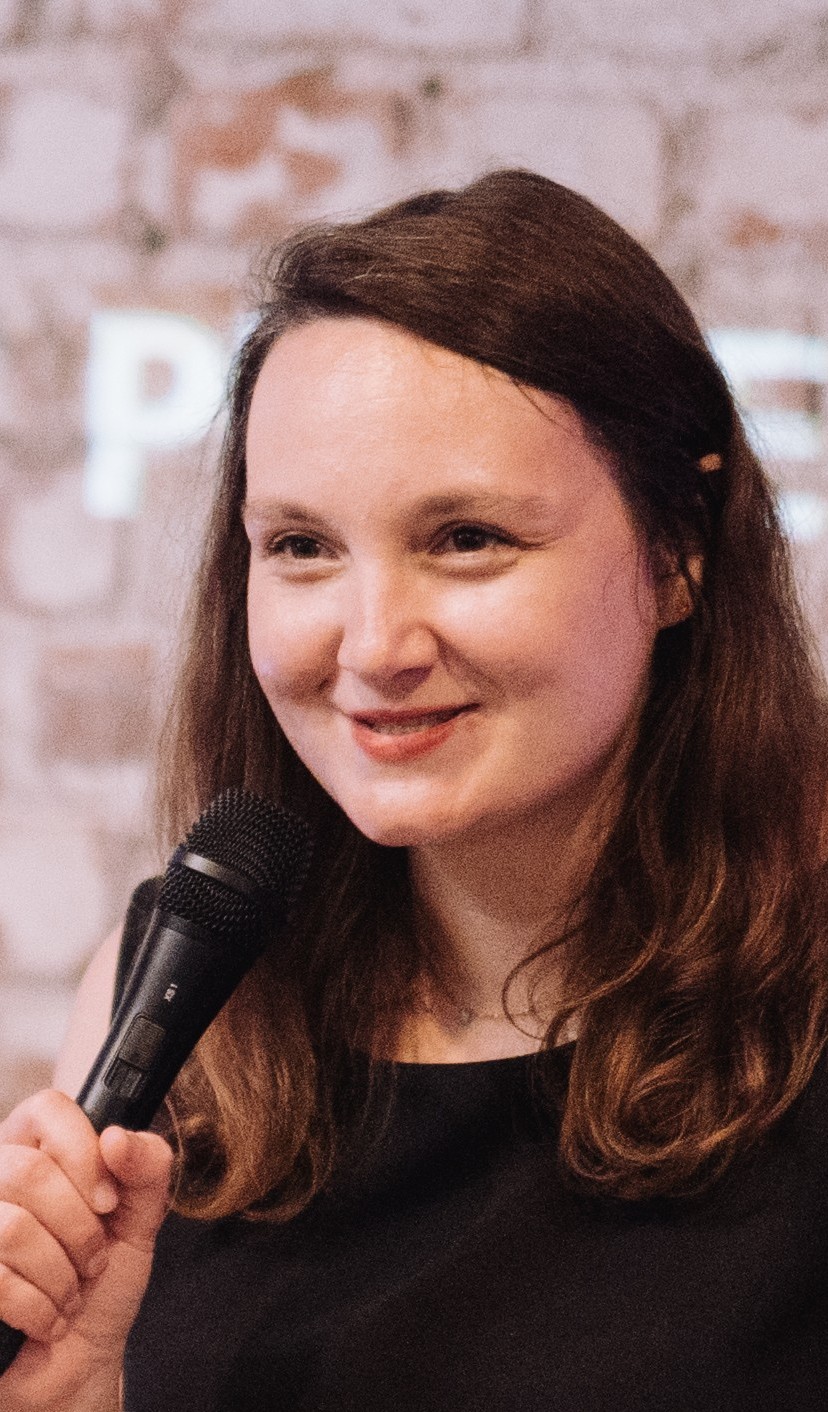
Tess Buckley

Tess Buckley

Fellowship Candidate

I'm a digital ethicist and musician working at the intersection of memory (individual & collective), movement (public protest & friction) and music (jazz & celtic), building systems and facilitating experiences that help people reimagine collective futures and relationships to each other.

‘Key’ words that would get a conversation going include: embodiment, friction, identity, memory, agency…

My research and civic interests span a few threads I keep returning to: AI assurance and ethics in practice, the human infrastructure needed for responsible innovation, disability and design (particularly how facial recognition, hiring tools, and training datasets fail people with facial differences), and (closest to my heart right now) responsible technology in music. I've published on operationalising ethical principles in AI music generation and written on ableism in biotechnologies, harmful media tropes, and the philosophical frameworks used to "fix" disability. In 2021 I co-led Community Credits, an artivism project on making curb cuts visible as public art, honouring the disabled communities who fought for infrastructure everyone now benefits from. I am currently writing & excited about: “Embodied vocality, facial difference, and the ethics of voice technologies” - an autoethnography on performing with facial paralysis and chronic pain, and what that teaches about voice tech, authenticity, and flattening.

Academically, I hold a MA in AI and Philosophy from Northeastern (valedictorian, specialised in ableism in biotechnologies) and a BA from McGill (International Development x Philosophy x Communications, specialised in ownership and authorship in multiplayer models). Professionally, I started out in event production and convening by co-founding École Publique, an experimental creative collective in Montreal running accessible, political-minded events, and hosting two radio shows on CKUT 90.3FM as well as supporting an alternative radio platform project. After my postgrad, I worked as an AI Ethics Senior Analyst on a dataset on corporate digital responsibility that was paid for by investors that wanted to understand portfolio risks before placing capital, I then supported a specialised model for sustainability disclosure. I'm currently Senior Programme Manager in Digital Ethics and AI Safety at techUK, working across UK government, regulators, civic society and 1,000+ tech companies to make ethical principles operational through assurance and standards. Alongside this I sit on the board of HiQuu, a patent-pending multisensory performance infrastructure, and have joined BRAID UK’s Stakeholder Forum. In 2024, I thoroughly enjoyed curating a public three day symposium on AI x Music at Conway Hall for the Bloomsbury Festival with permanent and programmed activities. I'm also a released musician (an EP and three singles out, with a second EP landing fall 2026) and I still take on the odd crochet commission as "@sslow_fashionn" (I love heritage craft & analogue skills & boats).

Right now, mid-way through a summer residency at Stochastic Labs in Berkley, California, I'm working at the intersection of music and memory, some projects include: a hand-sewn textile "book" encoding words with diodes, microcontollers and conductive thread in Baudot code, an immersive hanging installation of strands that ‘sing’ when approached, touched and tangled, a sensor-rebuilt version of my Nana's bodhrán frame drum, and a live "sing-back" chamber that makes collective remembering and process audible. Alongside a collective playlist tool for recalling personal stories inside shared songs, a community workshop that teaches attendees about offline small language models through textile craft, and a pair of crocheted, connection-triggered garments built for contact improvisation which pose the question: what does intimacy/touch sound like? Across all of it, the throughline is the same: identity and memory aren't things we hold alone, they're made through friction, touch, and connection with other people, and worth deliberately rebuilding as shared, participatory experience.

I'm genuinely excited to weave these threads together and expand my practice with the Newspeak House cohort this year. My focus is on grassroots movements, and aiming to breathe more life into a long-form essay nine months in the making: "The Public Reimagining for AI Justice: Strategic Lessons in Empowering and Organising to Overcome Centralised Power from Past Civil Rights Movements." The chance to sit inside a community so deliberately built around tech, politics, and public life and to keep asking strange, sincere questions alongside people doing the same feels like exactly the kind of friction I am looking for and quite frankly makes good work possible. 

Cheers to liminal and entangled becomings >

tesssbuckley @ gmail.com | website | linkedin

Topics they ❤️

I define a decision as the process of selecting one out of two or more alternatives.

In many cases, it can be valuable to put some work into generating as many ideas as possible. This is especially important for making decisions amidst disagreement — it takes some real creative work to find an idea that everyone will agree to.

In addition to finding creative ideas to reach agreement, you also simply want ideas that are good! If you are designing a technology, or planning a campaign, you don't just want to settle on the first viable idea that comes along. You want to push yourself and your group to come up with the best possible idea.

Colloquially, the process of coming up with ideas is known as "brainstorming." For design purposes, you must address two key tensions in brainstorming.

On the one hand, you want to maintain as much diversity as possible in your process — the more diverse your ideas are, the more likely you are to find a good one. If all of your ideas are very similar, you're not really exploring the possibility space. Thus, a good design practice might be to keep all of your group members isolated, so they don't start to herd together around the same set of ideas.

On the other hand, people inspire each other — we "riff" on each others ideas — once I hear an idea from you, it sparks an idea from me that I would not have thought about on my own.   So we don't actually want to keep people separate, do we? We want to keep them together, so they can bounce ideas off each other.

This is the tension you must consider in your design process — balancing diversity and creative synergy.

Another technique for generating ideas is crowdsourcing. The idea of crowdsourcing is that we can recruit members outside of a group to contribute ideas, often through a competition where the best idea gets a prize.

The advantage of crowdsourcing is that it puts a lot more people on the problem—and more people means more chance of finding a good idea. A very popular website for crowdsourcing is Kaggle.

One interesting idea I recently read (no link available) about crowdsourcing is that the type of feedback matters — sometimes, you might want to give feedback on the quality of the solutions, and sometimes you might want to give feedback on the way that people are designing the problem.   Each approach has different advantages.

These are a few examples of design principles you might consider, and we can discuss others.

With respect to developing your facilitation practice, I teach a very specific set of techniques for managing idea generation.

With the reach of generative AI, the term “slop” has risen in prominence. It represents a rejection of thoughtless content, often perceived to be low in quality or creativity.

Developers have always taken a view about the amount of effort they put in to a task - with a direct effect on the quality of code they deliver. This is a calculation based on deadlines, availability, resources, reputation, and plenty of other factors.

Opinion is strongly divided about AI-assisted coding. Some argue it supports increased productivity. Others cite poor quality outputs and unexpectedly high cost.

What does poor quality code look like?

I have been exploring the outputs from some generative AI coding tools. Some traits are pretty clear:

  • Use of obscure and made-up terms

  • Code mingled with narrative comments

  • Spaghetti code

  • Long or difficult to read functions

  • Inflexible, hard-coded assumptions

  • Dependencies on old libraries, difficult to upgrade

These issues are also referred to as technical debt.

Does it even matter?

Arguably, if code is only ever to be written by one person (or agent), then idiosyncrasies don't matter. Provided the developer knows where everything is, who cares if nobody else can figure it out? This may well be a naive position...

  • Do you trust your coding agent to get everything right?
  • What happens when you run out of credit?
  • Do you want to be able to maintain it yourself?
  • Are you sure nobody else will look at the code?

What can we do about it?

Over time, technical debt builds up in every project and the solution is to refactor the code - a sense-making process in which developers rewrite the offending parts. Solo developers and small teams working in isolation are particularly vulnerable to technical debt, but all teams experience it.

Running code reviews and writing code that any person can quickly understand is a good preventative measure. Some examples of established practices:

  • Clear and meaningful variable names

  • Use of well established design patterns

  • Use of existing frameworks, rather than re-inventing the wheel

  • DRY (Don’t Repeat Yourself)

  • KISS (Keep It Simple Stupid)

  • YAGNI (You Ain’t Gonna Need It)

  • SOLID (principles for object oriented development)

  • Separation of concerns (a precursor to the Single Responsibility Principle)

  • Clean Code (and opinionated superset of principles and approaches)

How are coding agents any different?

Coding assistants work alone. They aren't trained to expect code review nor do they have code quality metrics. As they work, they develop personal shorthand and assumptions, which then shapes and styles the code they produce.

I have been collating a set of guidance, skills, and scripts for coding assistants, to raise the quality of their outputs. It's available here: instantiator/dev-qual

For this topic, we’ll discuss factors that contribute to code quality, and how they can be measured and applied - both to AI-assisted and human developed coding. With some metrics in hand, I’ll support you to compose rules for your language or framework of choice, or enhance those already found in dev-qual.

Some time ago, I started building an AI negotiation coach. A negotiation coach is someone who helps a person prep for a negotiation via the sokratic method and, on a limited basis, expert advice. It follows the principle "I am an expert in negotiation, but you are an expertin YOUR negotiation."

I never finished this, as detailed below. I offer this project up to anyone who is interested in building it, or some version of it, or building a completely different thing inspired by it. I can tell you how to do negotiation coaching, and advise you on the lessons I learned so far about building with LLMs.

I abandoned this project after realizing two things:

  1. Building things is not a priority for me (The hard part isn't building, it's testing and quality control!)
  2. I was not entirely sure how to do negotiation coaching

Since then, two things have happened

  1. I have begun doing negotiation coaching, and developed a practice
  2. AI has gotten a lot better

The URL below shows the half-baked app. It shows the basic logic and flow, but it uses old models, has no quality control and I honestly don't even remember what process it's attempting to follow.

https://planning.negotiation.solutions/

I can't say much about the place before I got the keys in 2011, but I'm happy to give my account of what happened after that. When the college started, the house was practically a ruin; no heating or hot water, a chunk of the roof was missing, the front door was broken and didn't lock!

Reid Hoffman famously said "If you're not embarrassed by the first version of your product, you've launched too late", and Newspeak House was no exception. Much like it feels with AI today, it was obvious that there was something important happening with technology and politics, people needed a place to meet to talk about it, and this was the best we had.

The history that is written is a combination of the events held here (newspeak.house/events) and the people who inhabited it (newspeak.house/fellowship); maybe you can ask your favourite model to give you an overview. Otherwise, feel free to ask some questions below and I'll do my best to tell you a story!

Much of my professional work has involved working between different professions - in particular I have interfaced between officials (in governments and regulators), academics, and civil society. But also even within government I found it useful to understand differing contexts between departments and (e.g.) analysts vs. policymakers - and develop skills to understand and navigate them.

I can talk to Fellows about practical skills and approaches that can be useful in collaborating across different mindsets and professions. This will include considerations of different incentives and pressures, and methods for learning from engagements, building in particular on thoughts I began in this post:

No, I don't have the answers of how to completely successfully go against the enormous power of Big Tech companies. But I can talk about the various types of efforts being deployed, some case studies (I list a few below, largely as examples), and where they might work together - including internationally, and by bringing in parties who do not normally focus on political technology.

  • Investigative Journalism: From the Facebook Papers to 404 Media
  • Political stands: From social media age bans to Palantir.
  • Public pressure: From Cambridge Analytica to the Anti Data Centre Movement
  • Regulation: From antitrust to tech regulation
  • Internal efforts: From Project Maven to Trust & Safety
  • Lawsuits: From chatbot harms to social media addiction.
  • External Research: From Crowdtangle to the Coalition for Independent Technology Research


I can also talk about some of the disadvantages and discomforts that may be involved, for instance where there is division of what "success" looks like, or trade-offs between (e.g.) completely accurate and truly engaging messaging.

There are numerous opinions and camps around the ethics of various technologies (most strongly and recently, AI), which can create frictions even amongst political technologists who are aligned on other values - let alone people who do not consider themselves political technologists. I can provide advice for Fellows who wish to discuss or navigate polarised views around tech. I will not attempt to convert Fellows to any particular perspective, nor help them to do so with others. I will instead help them consider how they can locate their own work, projects, and views within the existing space; and engage with & prepare for potential criticisms and opposition.

My experience in this topic: Besides my broader work in tech accountability and safety, also at the NGO AlgorithmWatch I was responsible for a lot of work at the intersection of differering views on tech, and a spectrum of organisations who took different approaches and stances. I developed AlgorithmWatch's principles for use of Generative AI, building on surveys which showed diverging views of AI in our organisation. I was also responsible for our research strategy, much of which challenged technologies while also often using (and sometimes encouraged use of) the same technologies.

Organising events in Newspeak Hall is one of the great perks of studying at Newspeak House; a fully equipped event space that holds up to ~100 people. It's hosted thousands of events for the college, everything from meetups to conferences, unconferences, dinners, hackathons, parties, exhibitions, lectures, co-working, debates, book launches, concerts, world cafes, fishbowls, screenings, workshops, and roundtables.

If you're interested in designing something together, I am happy to offer advice and support with event design, facilitation, logistics, catering, promotion, community strategy, and almost anything else you might need. Don’t worry if you don’t have a very clear idea of what you’d like to do yet - we can figure that out together.

I also manage the diary of the hall; it's a busy programme of community events, private hires, and events organised by fellows and faculty. As Fellowship Candidates, you will book dates through your agent. You might not be able to secure a specific exact date, but usually we can find a slot. Typically single day events are booked around a month in advance.

Finally, events should always be considered as part of a wider community strategy. I've written a short guide on how I typically approach this, though community-building is a fast-moving field with many open questions...

What are the different forms and ways in which the collectives and political activities you work with are imagined? Getting clear about what metaphor is in play can help us stay honest when it comes to generalizations.

Metaphor often guides processes, obscures assumptions, and impregnates practical processes.
Revealing what the imagined pictures being used in politics are can be an excellent first step in figuring out what on earth is going on out there.

Most good work dies in an inbox. People spend weeks on a project, a proposal or an idea, and then thirty seconds on the message that's supposed to get someone to engage with it. Getting things in front of people is a genuine skill and one you can learn.

I've spent years operating in ecosystems where nobody has to reply to you: MPs, funders, journalists, party staff, senior volunteers, busy organisers. I can help fellows with the practical craft of cut-through: writing emails people actually answer, WhatsApps that get a response rather than a "seen", subject lines, timing, length, asks that are easy to say yes to, and knowing when a message should be a call instead. This also includes the wider game of visibility, how to warm someone up before you ask, when to use an intermediary, how to follow up without being annoying, and how to make your work legible to people with no time.

I can help fellows think about questions like: Why is nobody replying to me? What's the actual ask here? Who should this come from? How do I get my project in front of the person who can act on it?

Political communication increasingly isn’t just about having the strongest message, it’s about understanding how information moves. I’m interested in the relationship between message, messenger, medium and distribution: why some political ideas spread while others disappear, why the same message lands differently depending on who delivers it, and how platforms shape what people see, trust and act on. Most political actors obsess over the first and neglect the other three which is usually why their ideas disappear.

Some things I've learned from testing this in practice:

  • Messenger often beats message. In our crowdsourced message testing, the most persuasive messages came from people who shared demographics and political history with the audience, not from professional comms people. In our pilot work distributing broadcast clips into Reform-adjacent spaces, a named, working-class trade unionist's account outperformed an anonymous "in-group" account on every metric — roughly 5x the views — while avoiding the platform bans that killed the anonymous ones. Authenticity is a distribution strategy, not just a virtue.
  • Distribution Mechanics that grab attention are different depending on what platform you are on. If you want something to grab attention on TikTok you might make a very short video with a shocking hook. If you want to grab attention in a whatsapp group locally, asking a question and telling a "gossip like" story is way more effective.
  • Proximity drives salience. Ads featuring local candidates consistently beat national politicians; in one pilot, everyone who scanned a QR code on a leaflet lived within 1km of the local issue it discussed. People pay attention to politics that is recognisably theirs.

Through my work across campaigns, organising, experimentation and political technology, I’ve explored how political attention forms in practice , from local Facebook groups and messaging apps to campaign content, community networks and conversational spaces. I can help fellows think about questions like: How do people actually encounter politics today? When does messenger matter more than message? How do platform incentives shape behaviour? Why do some issues suddenly become politically salient? How do trust and legitimacy get built online? And how do you design political interventions that create participation rather than simply visibility?

I’m particularly interested in moving beyond broadcast models of politics towards understanding politics as something relational and distributed, built through networks, conversations, repeated interactions and trusted messengers rather than centralised communication alone.

A lot of political and organisational problems are not really persuasion problems, they're legitimacy problems. People often know what needs to happen but disagree on who gets to decide, whether the process was fair, or whether they trust the people leading it. I'm interested in how legitimacy gets constructed in practice: through participation, transparency, shared ownership, evidence and creating processes people recognise as fair. Following Martin Conway, I treat legitimacy as historically contingent, socially constructed and contested — the interesting question is never "is this legitimate?" but "how did it become legitimate, and why then?"

For example, the covid memorial was not legitimate but it was made so. This was done by making sure the first volunteers wore flouresent jackets, had a sign put up and by the afternoon multiple front bench politicians had visited it. Then the council accepted it and paid for its upkeep as a historic memorial. Its legitimacy was constructed. Technically everyone could have been arrested for criminal damage.

Another example in the #Honourtheoffer campaign which was crearting legitimacy through organising information. When Oxford alumni felt colleges weren't honouring their access commitments, the concern was fragmented across dozens of colleges with decentralised decision-making, which meant if one fell, they all would. A hashtag gave people shared language and over 8,000 signed the petition, but the pivotal move was mundane: a public spreadsheet listing every college against its commitments, updated openly and pitting them against each other. The spreadsheet didn't just record reality, it organised it and whoever structures the information becomes trusted to interpret it. League tables, polling and Wikipedia all work this way.

Across my work I’ve repeatedly operated in environments where authority is fragmented such as campaigns, parties, community groups, MPs’ offices, networks and coalitions. I can help fellows think about questions like: How do you make decisions people will actually follow? How do you create buy-in without formal power? How do you design participation that is meaningful rather than performative? How do you create legitimacy for new technologies or organisational change?

A lot of people understand UK politics formally but not operationally. I can help fellows understand where decisions actually get made: the relationship between parties, MPs, special advisers, local government, campaigns, funders, members, parliamentary structures and informal networks.

My background includes working in parliament, running Labour Together, convening election review processes and spending years operating between campaigns, think tanks and politicians. That means I can help translate abstract questions (“How do you influence Labour?” “Who matters?” “What does Parliament actually do?”) into practical strategy. I’ve run sessions on navigating UK political systems, identifying pressure points and understanding the difference between formal constitutional power and real-world political leverage.

Politics rarely works the way the diagram says it does. A lot of strategy is understanding timing, relationships, legitimacy, incentives and institutional rhythms.

One of the things I spend a lot of time helping people with is moving from “this is unfair” to “this is changeable”. Political systems often look impossible until you identify where decisions, incentives and coordination failures actually sit.

I can help fellows map systems and identify leverage: who controls implementation, who shapes narratives, where informal veto points exist, where legitimacy matters, and where small interventions create outsized effects. This includes practical tools for actor mapping, coalition design, identifying hidden decision-makers, sequencing campaigns and understanding institutional incentives. I’ve run sessions that focus less on ideology and more on operational politics: how things move in practice.

I can help fellows think through different routes to change: insider versus outsider strategies, coalition building, narrative pressure, institutional entrepreneurship, campaigning around moments of opportunity and understanding how influence accumulates. This includes practical questions like: Who needs persuading? What kind of evidence matters? When should you campaign publicly versus privately? How do you build influence without formal authority?

I’m particularly interested in helping people understand that lobbying is rarely just meetings, it’s often about creating conditions where a decision becomes easier to take.

A lot of civic and political technology fails because it solves an imagined problem rather than a real one. Through Campaign Lab and product experimentation I’ve spent years thinking about how political tools get adopted and why they usually don’t.

I can help fellows move from idea → user → workflow → adoption → scale. That includes discovery, prototyping, testing in live environments and designing for exhausted campaigners rather than ideal users. All too often technologists want to create perfect solutions and go through extended processes involving lots of user time and energy. When this approach meets politics it often fails.

I’m particularly interested in questions like: Why do organisers abandon tools? How do products fit into existing workflows? When should you build versus adapt? How do you know if a product is creating value? When should you work with partners to embed something?

My starting point is that conflict is not a failure state: conflicts are necessary to politics, inevitable, and in fact creative. Politics is the reconciliation of paradox — it doesn't deny differences, it holds them. And conflict isn't always anger; often the worst kind is stuckness, a cycle of stasis and indecision. Most governance systems were built precisely to get unstuck: the Labour rule book exists because trade unionists and middle-class intellectuals with limited communications had to coordinate through enormous disagreement.

Over the years I've collected a toolkit of approaches beyond voting for resolving conflict and stuckness — getting concrete about interests rather than fighting at the values level; separating the minimal from the substantial; going process by process; thinking creatively about legitimacy beyond formal votes; constructing shared purpose or shared identity; building coalitions of the willing; repairing the relational; spotting when a fight is a proxy for something else; using stories; and, occasionally, harnessing constructive ambiguity. Each has different moral implications and costs, and knowing which to reach for is most of the craft.

I learned much of this running Labour Together through Labour's most divided years. We found format shapes what's sayable: roundtables built around a shared meal let members from opposing factions have conversations a CLP meeting's for-or-against structure makes impossible — the format did the bridging. And shared analysis has to come before shared strategy: the 2019 election review worked because a cross-factional commission and a survey of 11,000+ members meant everyone had co-produced the analysis and no one could dismiss it as spin. Campaign Lab applies the same craft to a different boundary, creating environments where technologists and campaigners can experiment together.

I can help fellows think through questions like: When is disagreement useful? How do you stop groups fragmenting? How do you build consensus without flattening differences? When do you compromise versus hold the line? That includes practical approaches to facilitation, coalition governance, designing decision-making processes, and creating enough trust for experimentation. I've spent a lot of time in spaces where people care deeply, disagree strongly and still need to move together.

I've spent a lot of time trying to understand what politics looks like when you stop starting from Westminster and start from people's everyday lives. Between 2014 and 2024 the proportion of people with low or no trust in MPs rose from 54% to 76% and my working theory is that trust isn't rebuilt through one big act but thousands of small ones, most of them local. People engage with issues they can see from their window: in our QR code leaflet tests, 92% of school-petition scans came from households within 400m of the school, and 72% of shop-consultation scans from within 100m of the proposed site. Campaign Lab research also found links to local newspapers are shared five times more in local Facebook groups than links to national news. The local level is where abstract politics becomes tangible.

Through Campaign Lab we've built infrastructure for working at this level: a register of local Facebook groups by constituency, social listening on community conversations, and analysis of how issues emerge and travel through local digital spaces, from Facebook groups and Nextdoor to community WhatsApps.

The framework we use for turning all this into strategy is Listen → Act → Communicate.

Listen through casework clustering, local groups, local news and petition data to find what's actually salient (distinguishing quick reactive wins (flytipping on George Street) from long-term proactive work (the stalled hospital)).

Act by choosing concrete actions over abstract campaigns, scored against target relevance, resource, achievability and salience.

Communicate by closing the loop with the specific people the action mattered to, through the channels they already use, ideally via endorsers because it's always better when someone else says you're good than when you say it yourself.

The step everyone forgets is the third one: plenty of good local work happens and nobody ever hears about it.

I can help fellows think about questions like: How do people experience politics outside election periods? How do local identities shape issue salience? How do you design interventions that feel genuinely local rather than nationally templated? And how do you build the listening infrastructure (human and technical) that makes any of this systematic rather than accidental?

A model might be an equation, a map, a simulation, a story or a physical arrangement of stones. A Zen garden is not a landscape, yet it preserves or evokes something important about one. Metaphors work similarly: describing a career as a ladder or life as a journey creates an implicit model with particular structures, directions and possibilities. What happens when we make those assumptions explicit?

This topic weaves around the two core topics, Systems Thinking: Understanding Political Dynamics and Building Evidence: Data Science in the Age of AI. Those topics introduce ways to model systems and build evidence from data; this one turns those methods back on themselves. What assumptions are built into a model? What does it make visible, and what becomes harder to see? The aim is not to retreat from systems thinking or empirical evidence, but to use them more imaginatively and self-consciously.

Play gives us a way to explore and test models without treating them as settled truths. Roger Caillois distinguished competition, chance, simulation and vertigo, alongside a spectrum from spontaneous play to formal games. We can compete models against one another, introduce chance, inhabit them through role-play or deliberately destabilise their categories. Play both creates temporary systems of rules and allows us to bend, replace or step outside them.

I have spent much of my career constructing mathematical and computational models, but models need not begin with mathematics. We would build models of ourselves using metaphors, diagrams, objects, stories or games, then allow other people to interpret and disrupt them. The aim is to become more imaginative and self-conscious model-makers, better able to see what any representation reveals, assumes and excludes.

Core reading

I want to explain why communication is so interesting to me.

The sequence "Connect, Communicate, Cooperate" describes the necessary order for a group to form, order itself and take action in the world.

A collection of people needs to have some kind of connection in order to come together, whether that's living in the same place, working for the same company or having the same beliefs or interests.

Then they need to be able to talk to each other effectively. If their communication isn't respectful and effective the group will disperse.

Finally, they need to take action in the world through cooperation, by working together to achieve something.

What I want to highlight is that communication is unlike connection and cooperation because it doesn't have the same link to reality. You have to connect around something that already exists, and you have to cooperate around something that you're bringing into existence out of already existing parts, but with communication you have boundless freedom and possibility to explore within a group. If it can be conceived by the human mind, then it can be used in the process of communication.

Political systems can be understood through a set of mathematical and mechanistic ideas that help make sense of how they behave over time. Concepts such as homeostasis, autopoiesis, growth, equilibrium, feedback, and phase change give us ways of describing how political processes stabilise, amplify, or transform. Rather than treating politics as purely contingent or narrative-driven, these tools allow us to see recurring structural patterns: how actions generate responses, how those responses feed back into the system, and how certain configurations persist while others break down or reorganise.

Institutions can be understood in similar terms. Some behave in a homeostatic way, actively counteracting disturbances in order to maintain a stable state. Others exhibit growth dynamics, expanding their reach, resources, or influence until they encounter constraints or diminishing returns. In some cases, organisations take on autopoietic characteristics, reproducing the internal rules, roles, and cultures that sustain them, even when their original purpose has weakened or disappeared. These are not just abstract or playful analogies: they point to the fact that political systems have strong quantitative foundations, where votes, resources, and participation are all measurable. Thinking in these terms helps build a more precise understanding of why political systems sometimes appear stable, sometimes become unstable, and sometimes shift abruptly into new forms. In this topic, we will use guided reading and writing to explore how these mechanistic and systems-based ideas can be applied to better understand real political systems.

I have spent much of my career building mathematical and computational models of biological and social systems. We can learn the fundamentals of systems thinking by mapping political systems and experimenting with simple models of their behaviour. The aim is to develop a practical vocabulary for recognising feedback, stability and structural change—and a set of tools that can be applied to political questions.

Core reading

  • Donella H. Meadows, Thinking in Systems: A Primer (Chelsea Green, 2008).
  • Mitchel Resnick, Turtles, Termites, and Traffic Jams: Explorations in Massively Parallel Microworlds (MIT Press, 1994).

Developing and strengthening bonds, connection and solidarity among groups of common interest or goals can result in large scale, meaningful change. I’ve set up networks among environmental sensing development communities, game designers, election technologists and UK democracy practitioners and activists and I’ve worked to strategically convene a range of groups towards shared goals and outcomes. I’m also a member of a variety of communities of practice around network development, such as FITO.

I can offer practices, principles, approaches and guidance on setting up and developing networks. These include establishing network purpose, mapping key stakeholders, establishing a pipeline of outputs, undertaking relational meetings and tailoring strategic interventions to your context, such as convening, weaving, connection events etc.